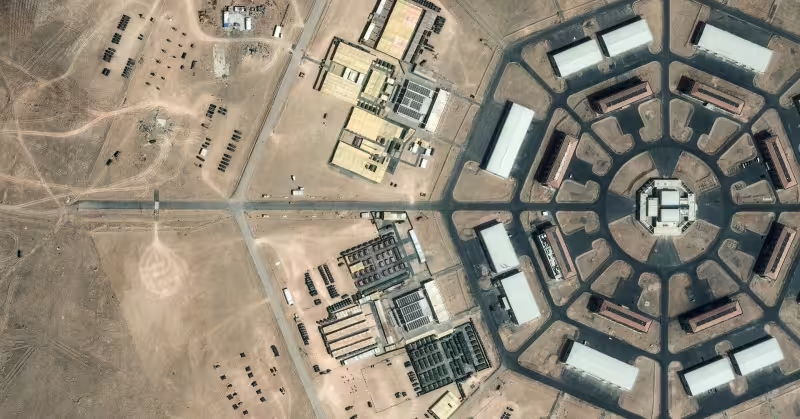
reviewed satellite images showing China building a sprawling web of launch pads, bunkers and communications nodes near isolated nuclear silos in a remote desert, and one analyst who examined the imagery called the buildout "being built on a grand scale, covering thousands of square kilometers of desert beyond the silo fields."
The imagery shows more than 80 launch pads and three octagon-shaped installations clustered near the Hami nuclear silo field in northwest China, plus two concrete pads and other infrastructure that three security analysts who assessed the images for said could support mobile missile launchers, air-defence batteries, and a range of support functions.

Alexander Neill, one of the analysts, said the pattern of construction and the spread of sites suggested some facilities may serve electronic warfare, satellite communications and command operations, and added: "we’re looking at a very considerable enhancement and diversification of China’s strategic nuclear deterrent."
The numbers are stark: more than 80 pads and three octagon installations spread across thousands of square kilometers of desert beyond the known silo fields, according to the imagery review. The scale and character of the sites — many small, dispersed concrete pads with nearby bunkers and communications nodes — mark a substantial new layer around the core silo fields in Xinjiang and Gansu provinces.
’ review, and the assessments by three security analysts, describe the network as a significant upgrade in Beijing’s efforts to ensure second-strike capability. Analysts told the construction appears designed to protect and operate China’s land-based nuclear forces, which are centered on silo fields in the northwestern Xinjiang region and Gansu province.
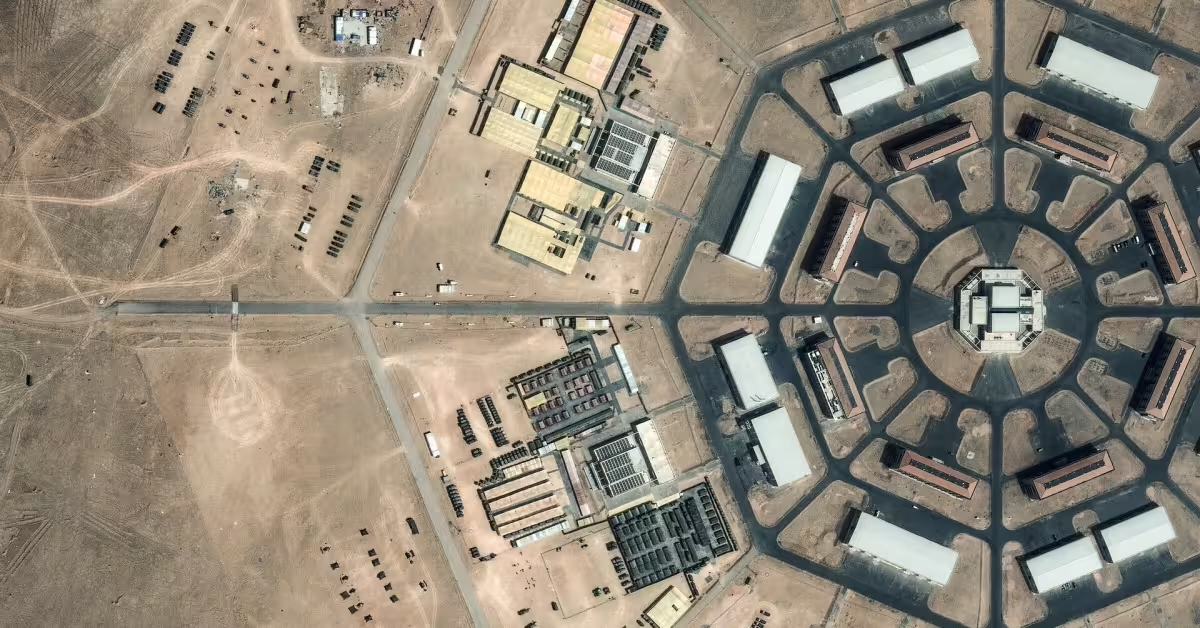


The development was not previously reported, and China’s defense ministry did not respond to questions about its nuclear program and the developments revealed in the satellite images. The images come against the backdrop of known facts about Beijing’s posture: China’s nuclear missiles can already reach any city in the United States, and China maintains a no first use policy.
The buildout raises hard questions about how dispersed launch and support infrastructure could change operational practice. The analysts who reviewed the imagery for said the pads could be used by an expanding fleet of mobile missile launchers and air-defence batteries and that the octagon-shaped installations and other nodes could host communications and command systems intended to make the forces more survivable and harder to target.
Tension in the reporting comes from what the satellite trail reveals about domestic cost and secrecy. In 2022 three villagers in Sichuan province wrote to local authorities asking why their land was being seized and why they were being forced out of their homes; three years after the evictions found the village had been demolished and new infrastructure built at Site 906 in Sichuan. Those episodes underline how China’s remote construction projects can be carried out with little public explanation.
The most consequential fact is simple: satellite images that had not been previously reported show a deliberate, large-scale network of launch pads, bunkers and communications nodes near China’s nuclear silos, and analysts say the network materially enhances Beijing’s ability to operate and protect its land-based deterrent. If so, the new sites will complicate how outside powers assess and plan for Chinese nuclear forces.
Alexander Neill summed up the import plainly: "We can see this infrastructure is being built on a grand scale, covering thousands of square kilometers of desert beyond the silo fields," he said. The satellite record now available to points to a clear conclusion: China has been quietly erecting a dispersed support system for its nuclear forces that represents a significant upgrade in capability and redundancy.