



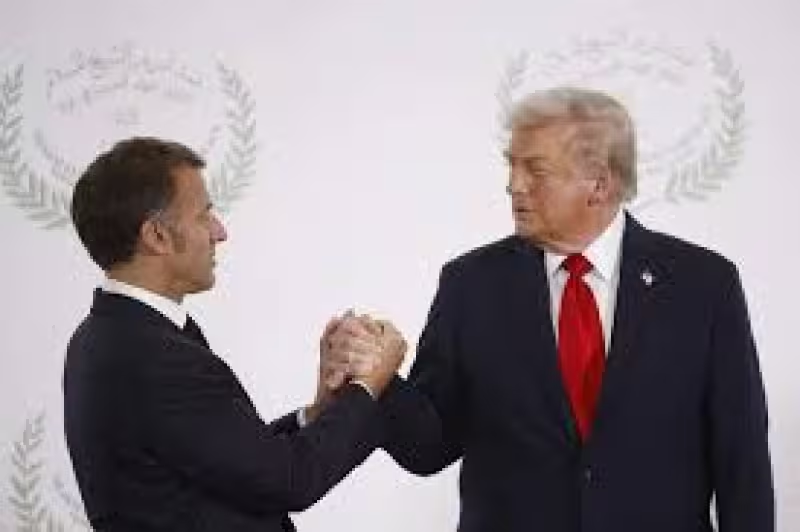
President Emmanuel Macron has invited Donald Trump to be the guest of honour at a dinner at the Palace of Versailles on Wednesday night to mark the 250th anniversary of American independence.
The Élysée says Versailles was chosen as a historic symbol of Franco‑American friendship and that the evening is meant to commemorate France’s role in the American revolution, not to stage a gala. Trump will be shown the palace’s temporary exhibition on the history of French‑US relations and will tour the Hall of Mirrors before the dinner.

The choice of venue and timing carry weight: the 2,300‑room palace is a deliberate, high‑profile setting intended to link history with diplomacy as the G7 summit winds to a close in Évian‑les‑Bains. French officials describe the dinner as a way to encourage Trump to remain for the full length of the summit and to keep talks on key disputes alive.
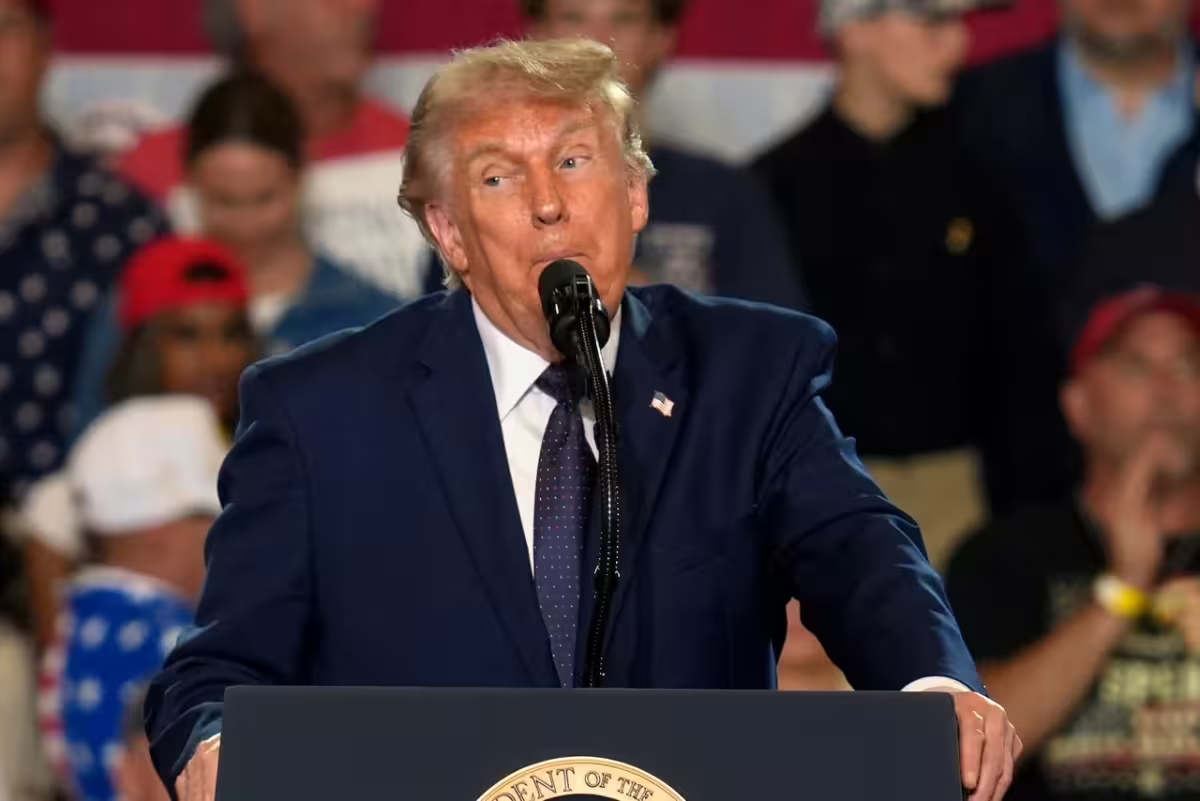
That aim sits against a backdrop of public friction between the two leaders. Trump has publicly taunted Macron in recent months — mocking the president and his wife earlier this year, saying the United States would have "no choice" but to slap 100% tariffs on French wine unless Paris dropped a digital services tax, and asserting to fellow leaders on the summit’s final day, "I’m the boss." Macron has replied that he will stay firm on the digital tax and described his approach to negotiations as pragmatic, saying it is through firm and respectful discussion that one gets results.
Macron’s office frames the dinner as a sober commemoration. The president himself called the meeting pragmatic and insisted it was simply a moment to mark France’s role in American independence, not an exercise in flattery. Trump, for his part, has lavished praise on the site, saying Versailles is the "real deal" and that he is a fan of beautiful places.
But in Paris the invitation has prompted sharp criticism from the left and from some centrist voices who see the scene‑setting as excessive. Fabien Roussel called Macron "very naive" and "obsequious," accusing the president of rolling out the red carpet while the country was under economic pressure. Mathilde Panot said the flattery was failing, and Éric Coquerel warned of "grovelling" to a United States he described as increasingly aggressive and imperialist. Nathalie Loiseau also questioned whether flattery would work on a leader who has repeatedly insulted France and threatened tariffs.
The complaint is straightforward: a dinner at Versailles is a symbolic olive branch, but symbols do not resolve specific policy fights over trade or digital taxation. Critics argue that hosting Trump at one of France’s most resonant historic sites risks undercutting Macron’s insistence that he will remain firm on the digital services tax and other disputes.
Practical details matter for what happens next. The visit will come on Wednesday night as the G7 wraps up; the palace tour and the Hall of Mirrors stop precede the dinner. Officials hope the ceremony will anchor Trump’s attendance through the summit’s end and give negotiators extra room to press on tariffs and taxation before leaders disperse.
The decisive question is whether Versailles will be a successful diplomatic nudge or merely a staged encounter that leaves core disagreements intact. Macron is betting that a high‑profile, historically framed meeting will keep Trump at the table long enough for substantive discussion; his critics say the gesture risks looking like capitulation to a president who has publicly derided France. How much the dinner changes the dynamics over tariffs and the digital tax will determine whether the Versailles gamble paid off.



