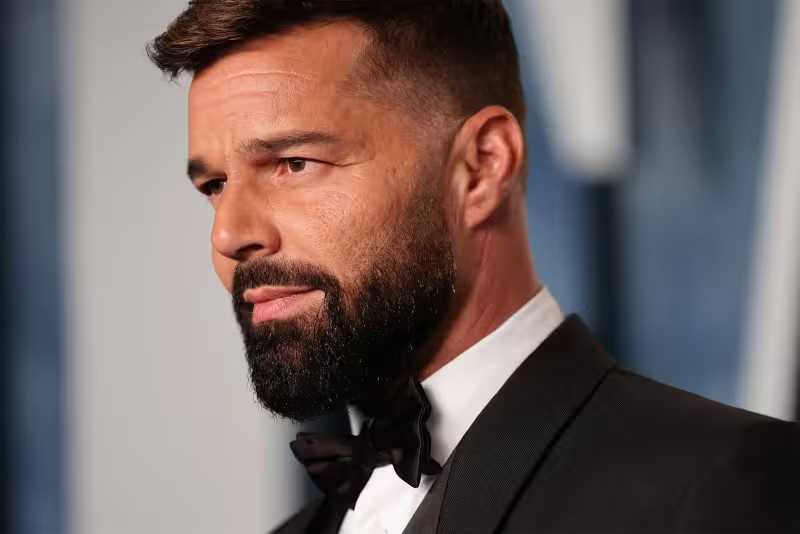
Ricky Martin is one of the most important Latin pop artists of the modern era, known for helping bring Latin music into the global pop mainstream. Born Enrique Martín Morales in San Juan, Puerto Rico, he began as a young performer, became a member of Menudo, built a successful solo career, crossed into English-language pop, worked as an actor, and became a public advocate for children's rights. The Recording Academy identifies him as a former Menudo member and a Grammy-recognized artist whose career helped shape the international visibility of Latin pop.
Early Life and the Start of a Public Career
Ricky Martin's journey into the entertainment industry began at a young age. Like many aspiring performers, he started by going through auditions, receiving training, and participating in structured performances. His experience with Menudo provided him with a rigorous introduction to pop music, choreography, touring, media attention, and the discipline necessary to perform for large audiences.

Menudo was not just a boy band; it was one of the most prominent Latin pop groups of its era, with a fan base that extended across Spanish-speaking markets and beyond. For Martin, being in that environment offered an important early lesson in how music can transcend borders, languages, and cultures.
The experience also helped him understand the relationship between image, performance, and audience connection. Those lessons became central to his later career as a solo performer.
From Menudo to Solo Artist
Leaving a successful youth group can be challenging for any performer. The public often remembers the artist as a child star, while the artist must work to create a more mature identity. Ricky Martin successfully navigated this transition by building a solo career that maintained the energetic appeal of his early years while showcasing him as a more well-rounded adult performer.
His Spanish-language solo work helped him become a major figure in Latin America and among Spanish-speaking audiences. Songs such as "María" and "La Copa de la Vida" showed his ability to combine rhythm, movement, and theatrical pop performance.
"La Copa de la Vida," also known as "The Cup of Life," became especially important because it connected Latin pop with a global celebratory sound. The Recording Academy has described Martin's 1999 Grammy performance of the song as a major moment for both his career and the wider visibility of Latin music.
The Breakthrough of "Livin' La Vida Loca"
"Livin' La Vida Loca" became Ricky Martin's signature international hit and one of the defining pop songs of the late 1990s. Its success was not only the result of a catchy chorus. The song arrived at a moment when English-language pop audiences were becoming more open to Latin rhythms, bilingual influence, and international pop stars.
The track combined dramatic vocals, Latin-influenced rhythm, pop-rock production, and a performance style built for television and live stages. Martin's image, movement, and charisma made the song feel like a full cultural moment rather than only a radio hit.
Its success helped change expectations inside the music industry. Ricky Martin showed that a Latin artist could reach a mass global audience while keeping a strong connection to Latin pop identity.
Why Ricky Martin Matters in Latin Pop History
Ricky Martin was not the first Latin artist to reach international listeners, but he became one of the most visible faces of Latin pop's global expansion. His rise helped open mainstream space for Spanish-language and bilingual music at a time when global pop culture was still heavily centered on English-language artists.
His influence can be seen in how later Latin artists moved between languages, markets, and musical styles. Today, Spanish-language songs regularly appear on international charts, streaming platforms, and festival stages. Martin's success helped prepare audiences for that broader shift.
His importance also comes from the way he presented Latin pop as energetic, polished, and commercially powerful. He did not treat Latin identity as a limitation. He made it part of the appeal.
Acting, Television, and Stage Work
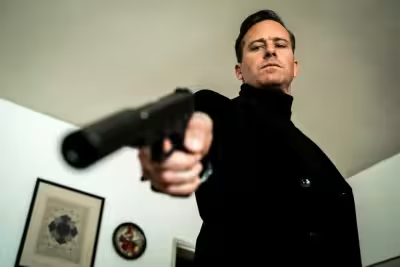
Ricky Martin's career has also included acting and theater. The Recording Academy notes that he appeared as Miguel Morez on "General Hospital" in the 1990s. His screen and stage work helped expand his public image beyond pop music.


Acting requires a different kind of performance discipline. Music often depends on rhythm, voice, and physical presence, while acting depends on character, timing, and emotional control. Martin's ability to work in both areas helped him remain visible across different entertainment formats.
This range has been important to his longevity. Many pop artists are remembered mainly for one period or one sound. Martin's career has continued because he has worked across music, television, theater, and public life.
Public Advocacy and Humanitarian Work
Ricky Martin's public identity also includes humanitarian advocacy. UNICEF states that he was appointed a UNICEF Goodwill Ambassador in 2003 and has supported work focused on children's rights, including protection from trafficking and exploitation.
The Recording Academy also notes that he founded the Ricky Martin Foundation, which is dedicated to defending children's and youth rights and denouncing human trafficking. This work has become an important part of how many people understand his public role beyond entertainment.
For a celebrity, advocacy carries responsibility. Martin's long association with children's rights issues has connected his fame with a wider public purpose.
A Lasting Cultural Image
Ricky Martin's image has changed over time, but several qualities have remained consistent: rhythm, movement, confidence, and direct audience connection. His best-known performances are built around energy and precision, but also warmth. He projects the polish of a global star while maintaining an accessible public presence.
That combination explains why his career has lasted across generations. He became famous during a specific pop era, but his influence reaches beyond that period. He represents a turning point in global pop culture when Latin music became harder for the mainstream industry to treat as separate or secondary.
Ricky Martin's legacy is not only that he had hit songs. It is that he helped change what global pop could sound like, who could lead it, and how Latin artists could be understood by international audiences.
FAQ
Question: What is Ricky Martin best known for?
Ricky Martin is best known as a Puerto Rican singer, actor, and performer whose major songs include "Livin' La Vida Loca," "María," and "La Copa de la Vida."
Question: Was Ricky Martin in Menudo?
Yes. Ricky Martin was a member of Menudo before becoming a successful solo artist.
Question: Why is "Livin' La Vida Loca" important?
"Livin' La Vida Loca" became one of the major international pop hits associated with the late-1990s Latin pop explosion and helped introduce Ricky Martin to a broader English-language audience.
Yes, Ricky Martin is involved in humanitarian work. UNICEF appointed him as a Goodwill Ambassador in 2003, focusing especially on children's rights and protection from exploitation.