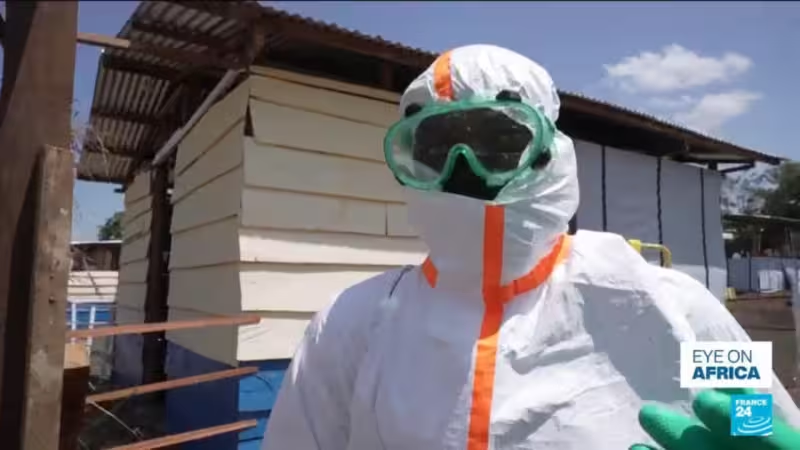
Authorities in eastern DRC said they were searching this week for a six-year-old Ebola patient and her mother after armed men stormed Wanamahika Hospital in the city of Butembo and removed the child from care.
Local health official Dr Lubambo Maboko Gaston said the assailants were "very angry" and carried knives, and health teams do not yet know whether the men were known to the child. Officials have appealed publicly for the mother and girl to return to a health centre, warning that leaving treatment risks a deterioration in the child's condition and could spread the disease to family members.

The abduction comes amid a string of attacks on Ebola treatment facilities in the current outbreak, which has so far produced about 840 confirmed cases and nearly 200 deaths. Health workers say such incidents make it harder to find and monitor contacts of infected people and to persuade sick relatives to accept care.
Last month, police in Mongbwalu fired shots into the air when angry crowds tried to reclaim bodies from a health facility, and days earlier people set fire to isolation tents in a hospital in Rwampara after being prevented from taking the body of a man believed to have died of Ebola. Those confrontations, officials say, reflect deep fear and suspicion about treatment centres that now threatens response operations in urban areas.
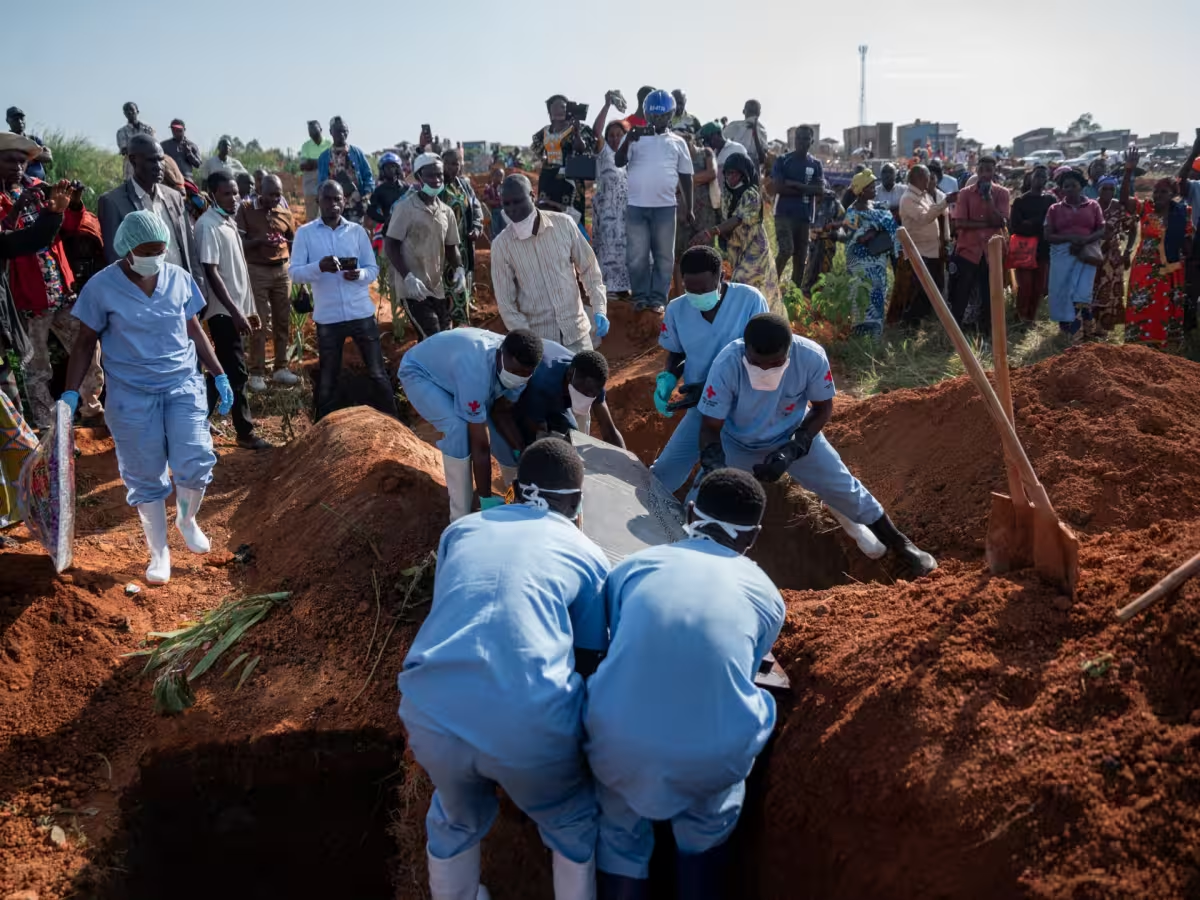
Community leaders and response coordinators have repeatedly blamed misinformation for the hostility. Long‑time outreach worker Luc Malembe said many people in remote communities still do not accept the outbreak is real; some believe it is invented by outsiders or that hospitals and NGOs are profiting from the crisis, a perception he called tragic and dangerous for public health.
Public health experts warn the stakes are high. The outbreak has been driven by the Bundibugyo species of Ebola, for which there is currently no approved vaccine, and the World Health Organization has said a jab could take months to develop. Jean Kaseya of regional health authorities warned the situation could escalate into one of the largest outbreaks on record if response teams do not rapidly locate contacts and bring them into care.
Kaseya has stressed that many contacts of infected people remain untraced and that the epidemic is unfolding in insecure, densely populated towns with active mining and trade—conditions that complicate surveillance and isolation. The Congolese health ministry says it has stepped up surveillance systems, contact tracing and treatment infrastructure and has set up dedicated centres in several affected towns, but officials acknowledge gaps remain.
Health workers say attacks like the Wanamahika raid both reflect and reinforce a dangerous cycle: fear and rumours fuel hostility toward clinics, which in turn drives patients away from care and leaves contact lists incomplete. That dynamic makes it harder to break chains of transmission when a pathogen with no immediate vaccine option is circulating in an urban environment.
For now, the immediate priority for authorities is locating the child and her mother and returning them to care so health teams can complete contact tracing around them. The wider, more urgent question is whether response efforts can regain enough trust to prevent further seizures of patients and bodies—without that trust, officials warn, containment of an outbreak that has already killed almost 200 people will become substantially more difficult.