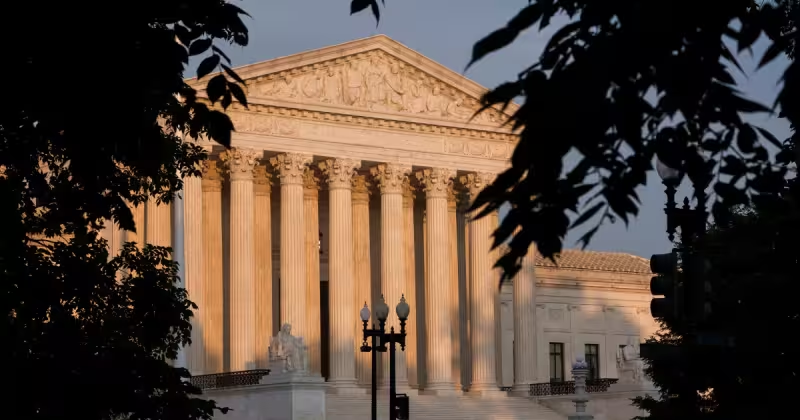
The Supreme Court is expected to rule in the coming fortnight on President Donald Trump’s bid to narrow birthright citizenship in the united states, a case that would strip citizenship from children born here to parents without legal status or to temporary visitors.
The timing is concrete: the court has 20 cases left this term and the next ruling day is set for Thursday, leaving only a handful of scheduled opinion days before the term ends at the end of June. The case landed in the public eye earlier this year when Trump attended oral argument in April — the first sitting president to do so for a birthright citizenship dispute — and has remained a priority for the administration.

If the high court endorses Mr. Trump’s position, the direct effect would be immediate and specific: babies born on U.S. soil to parents who lack legal status or are in the country as temporary visitors would not automatically receive American citizenship. That single shift would alter an established reading of the Fourteenth Amendment and touch hospitals, courts and immigration systems across the country.
The court considering it is not small news in itself. The justices sit with a 6-3 conservative majority, and observers note that the current term still contains two dozen merits decisions before it wraps. Earlier this term the court rejected a major Trump trade policy — blocking sweeping tariffs in February — and last fall refused to immediately permit the president to remove Lisa Cook from an independent agency post after he sought her removal amid allegations she denies. Those rulings are a reminder that a conservative majority does not always deliver uniformly to a sitting president.

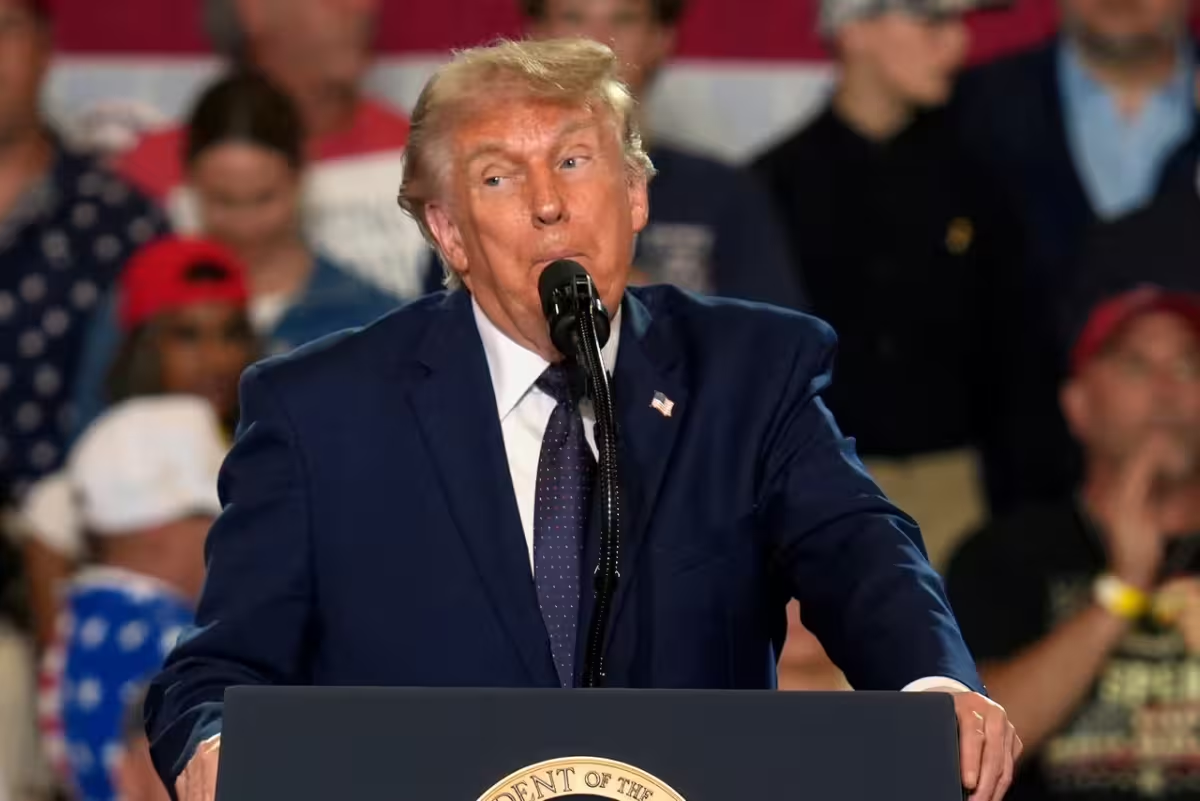
Outside the courtroom, Mr. Trump has framed the issue in stark terms. He has called birthright citizenship a burden on the country, portraying it as economically unsustainable and an anomaly among powerful nations, and he has pressed the high court for a broad reinterpretation. At the same time, legal analysts who track the justices’ work warn that a push for a sweeping new reading faces hurdles even with the court’s composition. As one observer put it, the Court may trend toward executive power overall, but there remain losses along the way.
Practically, readers should watch two things on Thursday and in the following fortnight: the form of the ruling and its scope. A narrow decision might limit eligibility only for a specific class of parents; a broad ruling could reach across immigration categories and set a precedent for future challenges to longstanding constitutional interpretations. The court’s calendar makes a ruling plausible on Thursday, but if the majority seeks a more complex opinion it could arrive on any of the remaining opinion days before the term closes at the end of June.
The stakes are both legal and immediate. A decision for the challengers would require federal and state agencies to adjust policies about documentation, social benefits, and civil status for millions of people; a decision rejecting the challenge would preserve the current rule that birth on U.S. soil confers citizenship regardless of parental status. Either outcome would quickly become a flashpoint in politics and in lower-court litigation over implementation.
The unresolved question — the one that will determine how the rest of the term reads — is straightforward: will a 6-3 conservative majority take the step of overturning or substantially narrowing the long-standing interpretation of the Fourteenth Amendment to uphold Mr. Trump’s proposal, or will the justices decline to rewrite the rule that has governed citizenship by birth? The answer arriving in the coming fortnight will settle that central uncertainty and determine whether the president’s campaign to redefine birthright citizenship succeeds at the country’s highest bench.