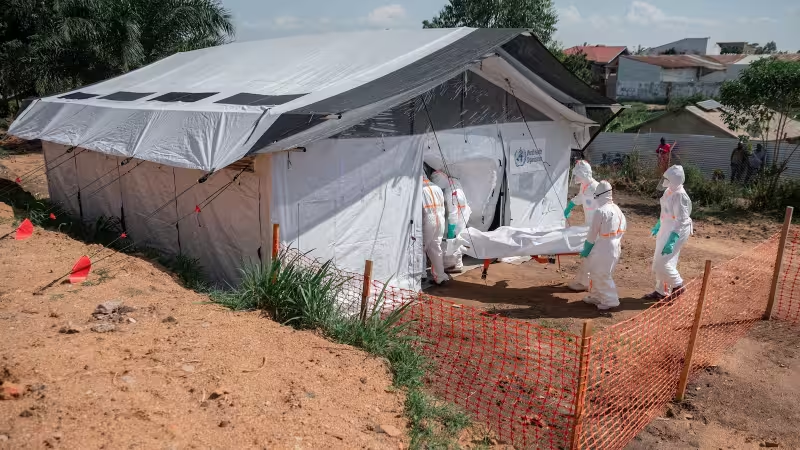
The Democratic Republic of Congo reported a record single-day increase in confirmed Ebola cases on June 13, with 72 new infections as the outbreak reached its one-month mark.
That surge brought the national total to 782 confirmed cases and 181 deaths, including 29 fatalities reported on June 13. Health officials said the majority of cases remain concentrated in Ituri, North Kivu and South Kivu provinces.

Officials also reported that the number of affected health zones climbed to 31, and that Nia-Nia in Ituri and Mabalako in North Kivu each recorded cases for the first time, widening the map of transmission within eastern Congo.
The outbreak has crossed borders: Uganda has reported 19 confirmed cases linked in large part to cross-border transmission from the DRC and two deaths, an expansion that has intensified regional concern about control measures.
Despite the new one-day high, the backbone of containment—contact tracing—is underperforming. Health teams have followed up on just 56.5% of identified contacts, far below the World Health Organization’s 90%–95% target for effective containment.
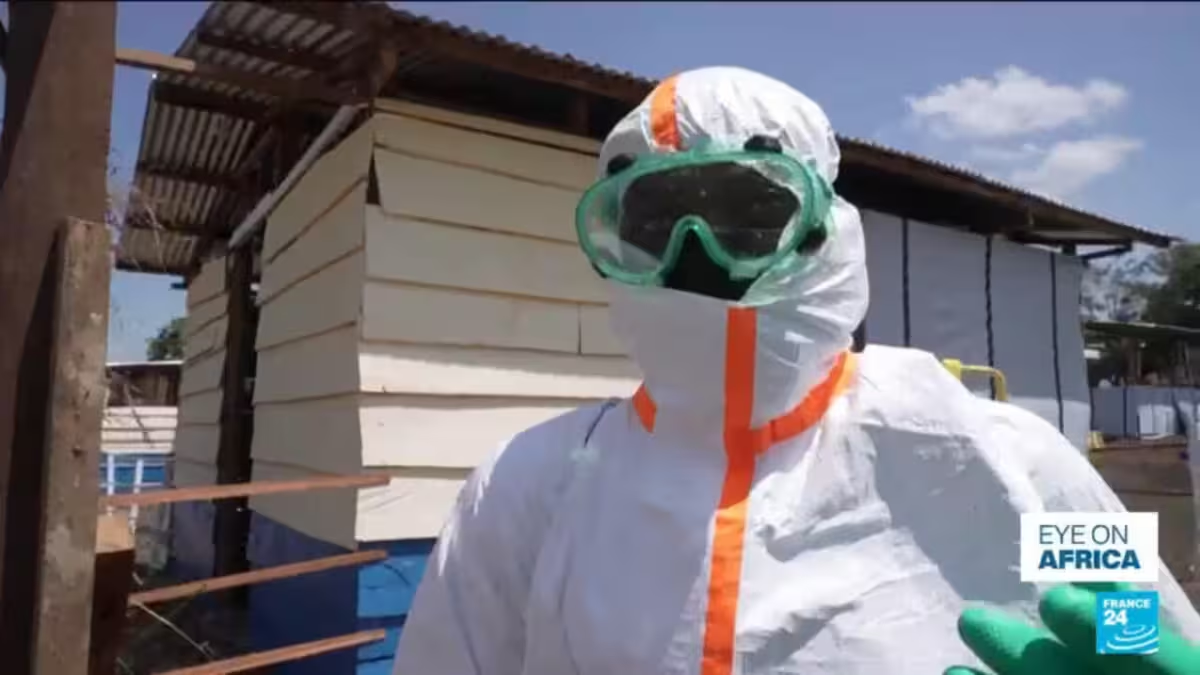

That gap matters now because household spread appears to be rising. United Nations agencies warned last week that children in eastern DRC could become increasingly affected as transmission shifts into homes, and humanitarian workers are already confronting the practical consequences on the ground.
Douglas Noble, who has been briefed on the response, warned that as household transmission grows “we must be prepared for increasing household transmission which means we may see more children affected in the days ahead,” adding that the youngest have borne a disproportionate share of deaths and dislocation.
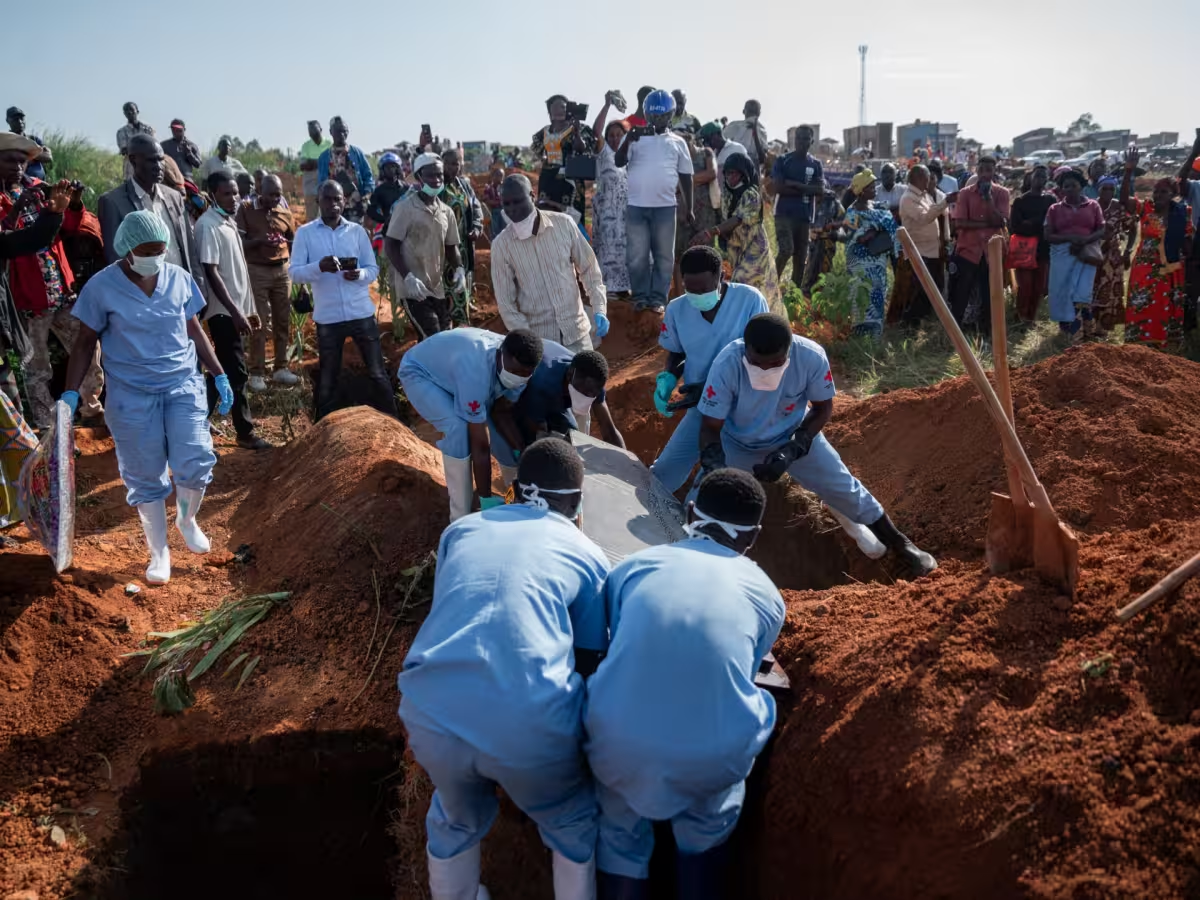
U.S. support for response and research has moved in parallel: the U.S. State Department announced plans to provide $50 million to the Coalition for Epidemic Preparedness Innovations to help develop vaccines and treatments against the Bundibugyo strain of Ebola, and said it has committed more than $270 million directly to the Ebola response. U.S.-funded partners have screened more than 6,300 people in Ituri, are supporting 100 health facilities and have carried out 200 safe burials—measures intended to slow spread and reduce risky practices that drive household transmission.
But the arithmetic of containment is unforgiving. With transmission present in more than 30 health zones and contact follow-up at barely over half of identified contacts, outbreaks can seed new chains before teams reach exposed people. New first-time reports in Nia-Nia and Mabalako illustrate how quickly the pattern can change when tracing and follow-up lag.
The immediate question is operational: can contact tracing and isolation be scaled quickly enough to blunt further spread into homes, schools and additional health zones? Officials have not set a timeline for when the outbreak will be contained, and the current metrics suggest that containment will require rapid improvement in tracing coverage and deeper penetration of prevention work where families live.
Containment now depends less on a single intervention than on synchronizing testing, tracing, safe burials and vaccination or treatment research—and doing so in communities where the youngest are increasingly at risk. Until tracing reaches the WHO benchmark and household transmission is checked, the outbreak’s path will be driven by gaps in those systems rather than by the numbers reported on any single day.