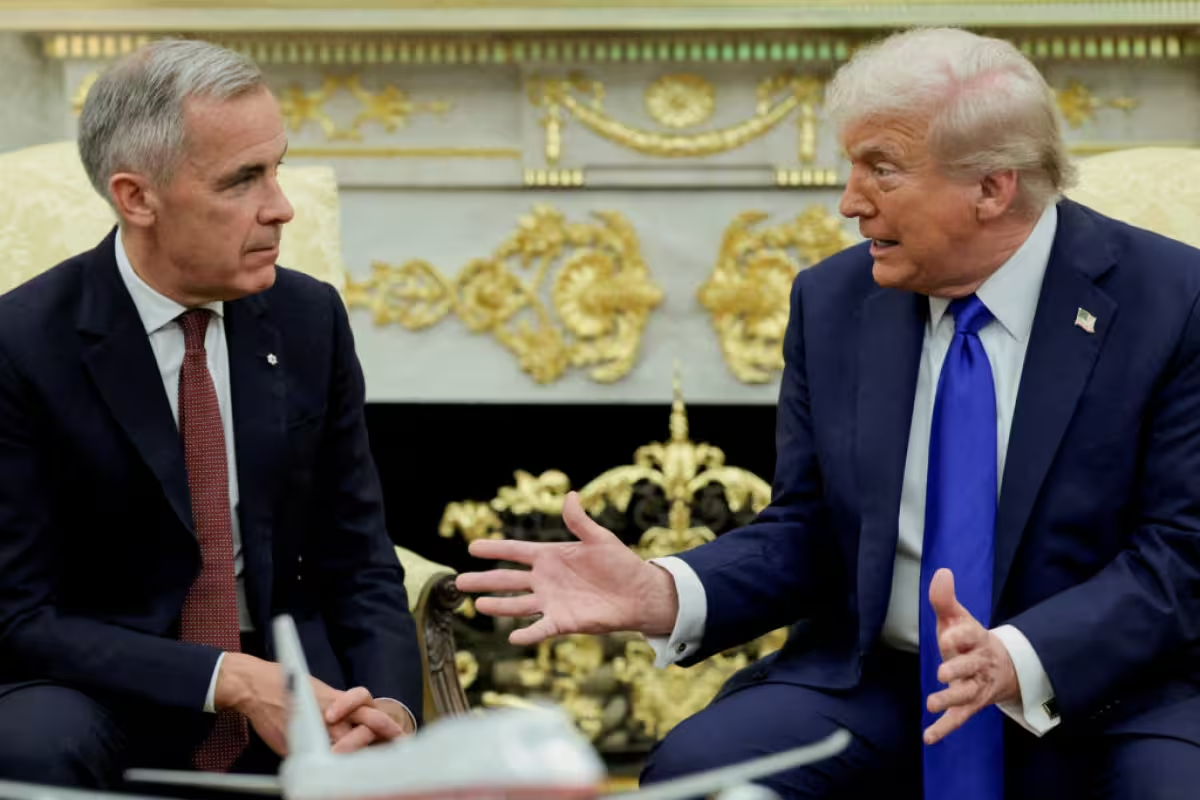
"It's fantastic to be back, I've been here twice, but no one noticed the last few times I came, so it's a great thrill," Mark Carney said on Sunday as he stood in the parish churchyard of Aughagower, County Mayo, surrounded by cousins who traced their family to the cottage his grandparents left for Canada in 1925.
Carney spent the second day of his visit to the Republic of Ireland moving between public and private roles: Saturday in Dublin with Taoiseach Micheál Martin, a Sunday morning meeting at Westport House with Irish President Catherine Connolly, and a family reunion in Aughagower where he met more than 20 relatives, attended Mass with his wife Diana Fox Carney, and planted an Irish oak in the cemetery.

The numbers gave the visit its weight. More than 20 cousins turned up for Mass and the cemetery ceremony; Pat Carney and Maureen O'Malley, who are first cousins of Carney's father, were among them. After the service, Carney thanked people for coming, encouraged visits to what was once the family sweetshop and the local pub, and — half in jest — reminded the crowd of a previous career as a gardener as he set to planting the sapling while his wife quoted Christy Moore's Don't Forget Your Shovel.
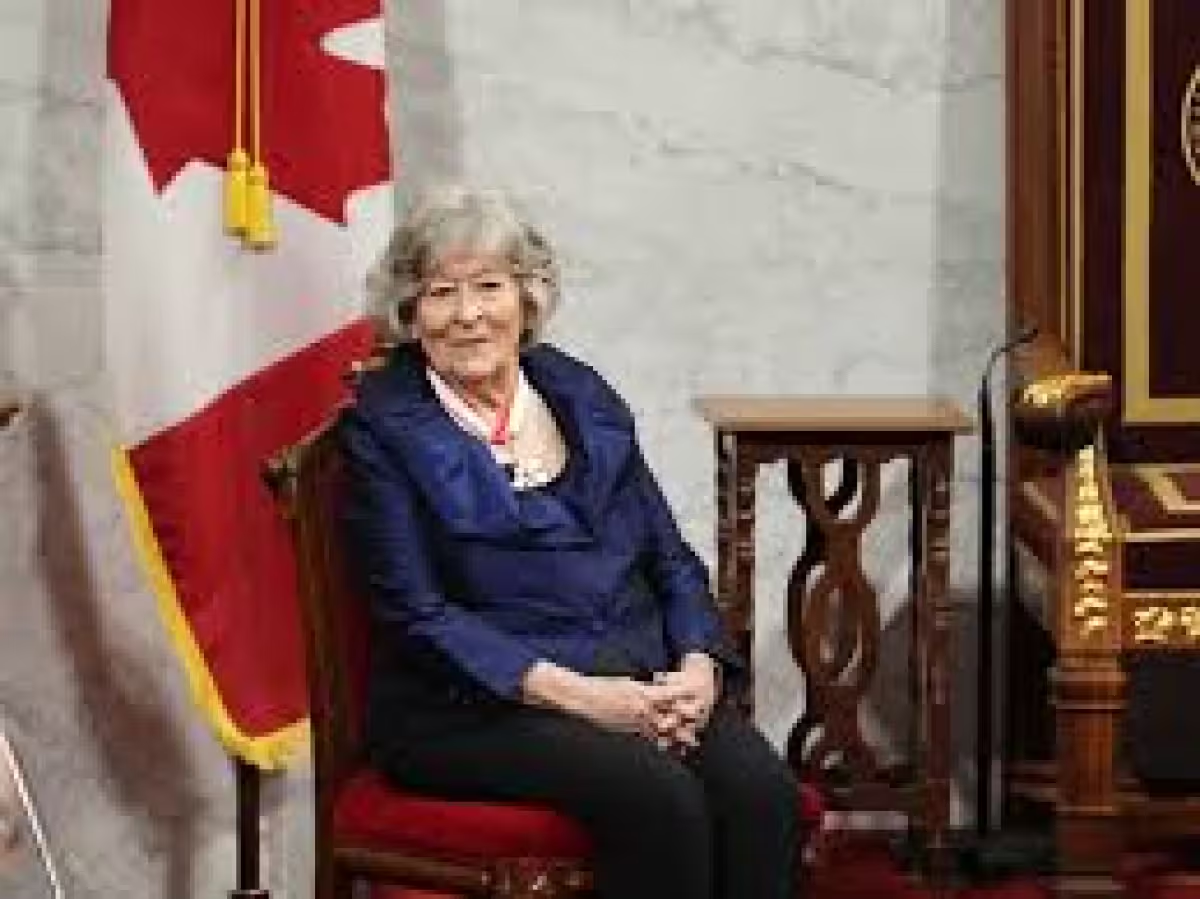
Rosaleen Heraty, whose family has kept the local memory of the Carneys and Morans alive, supplied the clearest detail tying the present to the past: Robert and Nora Moran left Aughagower in 1925. Heraty described being struck by what she called an "uncanny likeness" between Carney and his grandfather Robert when she recognised him on television during his time as Governor of the Bank of England. "Imagine, his grandson is the prime minister of Canada," she said, and added that the Carney and Moran families had been tenant farmers on the estate of Lord Sligo.
Context makes the reunion more than a photo op. The Carney homestead in the townland of Ayle was a thatched cottage with two windows in front; nine people once lived in two rooms before a third was added. The Moran home in the nearby townland of Mace North sat close enough that generations of the two families shared a landscape of smallholdings and common memory — the direct link between a global public figure and the community assembled around him on Sunday.
The visit carried a human friction. Carney's joke that he'd been to Aughagower twice before but had gone unnoticed underlines the odd geography of fame: a man can be both a local grandson and an international official whose presence in his ancestral village changes the meaning of a familiar lane. Heraty recalled how family members brushed off earlier visits — "She hardly missed a beat and just said 'ah yeah, we haven't seen them for years'" — and Sunday erased that distance when cousins who had only known the name gathered to meet the man in person.
There was no attempt to turn the day into a political event. The sequence of meetings — Dublin with the Taoiseach, Westport House with the President, then the family rites in Aughagower — read as a trip that ran the scale from state to kin. Carney's repeated reference to his Irish ancestry as "a big part of who I am" framed the personal moments at the graveyard and the oak-planting as acts of memory rather than ceremony.
The unresolved question after Sunday is straightforward: no further family or official events have been confirmed for the rest of his Ireland visit. For Aughagower the consequence is clear and immediate — a rural village that once saw a family leave in 1925 spent a Sunday meeting the grandson of those emigrants, sharing stories and photographs, and putting down a tree meant to mark the return. Whether Carney's visit will lead to more sustained engagement with relatives or with the place itself remains unconfirmed; for now the oak and the photographs are what tie a prime minister to a thatched cottage with two windows and the memory of nine people living in two rooms nearly a century on.