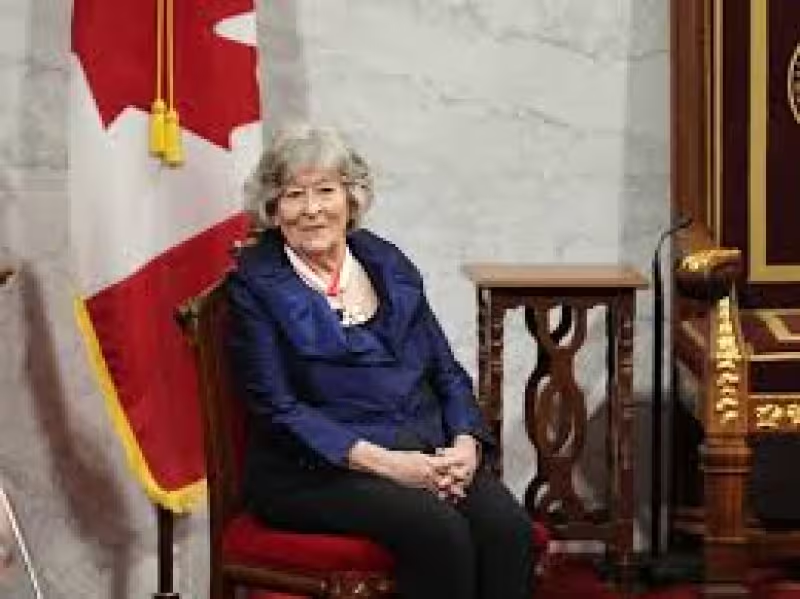
Louise Arbour was installed as Canada’s 31st Governor General in Ottawa on Monday, June 8, 2026, following a swearing‑in ceremony and an oath in the Senate.
Arbour, a retired Supreme Court justice, took the throne after her oath in the Senate of Canada and delivered a speech during the installation. The ceremony combined the constitutional formalities of swearing an oath and taking the throne with ceremonial elements — notably a drum circle that was part of the proceedings at the Senate.

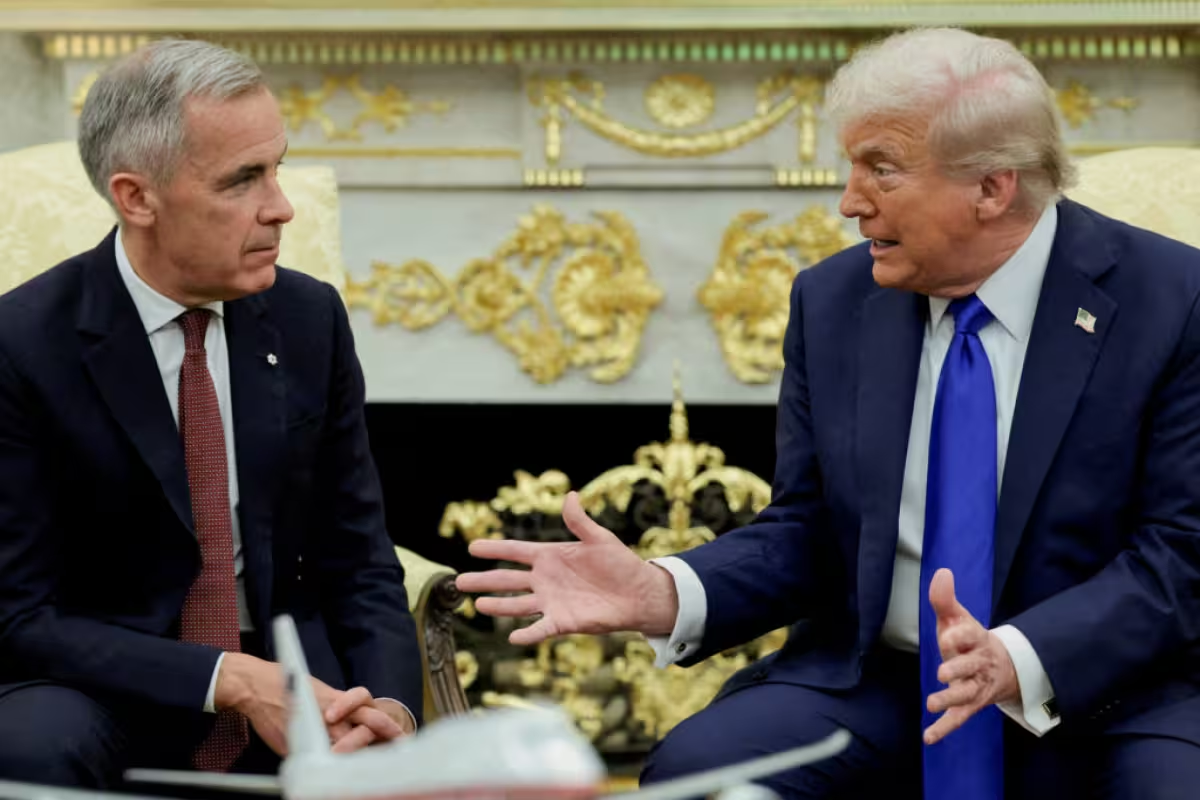
Prime Minister Mark Carney attended the installation in Ottawa with his wife, Diana Fox Carney. The attendance of the prime minister underscored the office’s role at the heart of federal governance: the Governor General is the representative of King Charles in Canada and performs the vice‑regal functions that keep the federal state running.
The numerical fact is simple: Arbour is Canada’s 31st Governor General. The timing is specific and immediate — the installation occurred on Monday, June 8, 2026 — and the place is the Senate of Canada in Ottawa, where she formally took up the office after swearing the oath prescribed for the position.

Context is short but central. The Governor General stands as the king’s representative in Canada, performing duties that range from granting royal assent to legislation to state ceremonial roles; those constitutional and symbolic responsibilities did not change the day of the installation. Arbour arrives at the vice‑regal post as a retired justice of the Supreme Court, a background that frames expectations about her legal and institutional experience but says nothing about the priorities she will set from Rideau Hall.
One clear gap remains in the public record: the full text and substance of Arbour’s installation speech are not provided in the account of the ceremony. The facts confirm that she spoke in the Senate and that she took the throne after her oath, but they do not record what she pledged, which themes she emphasized or what agenda, if any, she outlined for her term.
That absence matters because installation addresses traditionally offer the new Governor General an early chance to define how they will approach the office’s mix of constitutional duty and public engagement. The ceremony itself signaled a blending of form and culture — the drum circle at the Senate was an explicit ceremonial choice — but without the speech text, the outward intentions and immediate priorities of the new vice‑regal remain unspecified.
For now, the immediate consequence is simple and official: Louise Arbour will serve as Governor General, representing King Charles in Canada. The next concrete public act to watch will be the release or publication of her installation remarks, which will be the first substantive evidence of how she intends to use the office. Until that text is made available, assessment of her priorities or style will be limited to her record as a retired Supreme Court justice and to the symbolic notes struck at the installation ceremony itself.