



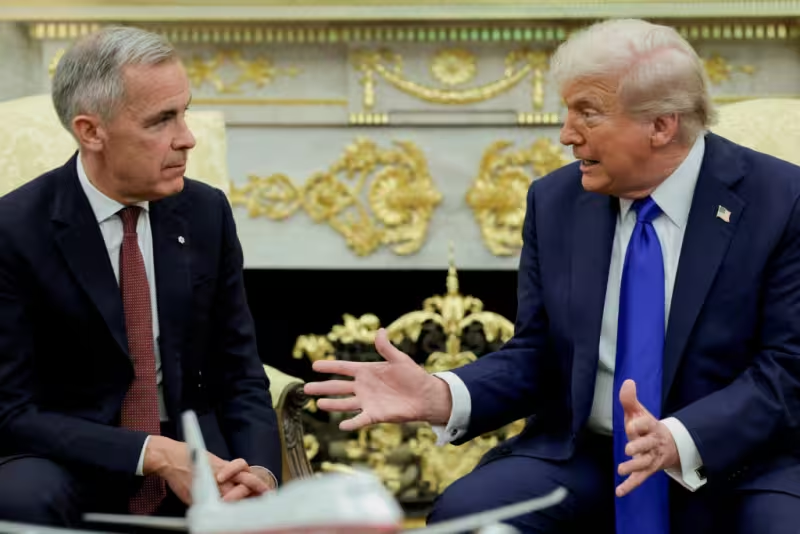
Mark Carney arrived in Europe on Friday ahead of the G7 summit in Evian-les-Bains and signalled a noticeably less confrontational tone toward U.S. President Donald Trump as Ottawa eyes a critical trade review next week.
The shift matters because the summit comes just days before the scheduled July 1 review of the U.S.-Mexico-Canada Agreement and because roughly 70% of Canada’s exports go to the United States. Trump said this week he "may not renew the deal," and his public barbs — including the line that "the U.S. doesn't need anything that Canada has" — have hardened the political backdrop for bilateral talks.

That exposure is plain in the calculations behind Carney’s diplomatic pivot. Historian Robert Bothwell put it starkly: Canada is affected "than anybody else because we are more exposed to the United States." For Ottawa, the task is immediate: use the G7 to blunt rhetoric that could scuttle a pact central to Canada’s economy while keeping open the technical and political channels that could secure an extension or a reworking of the agreement.
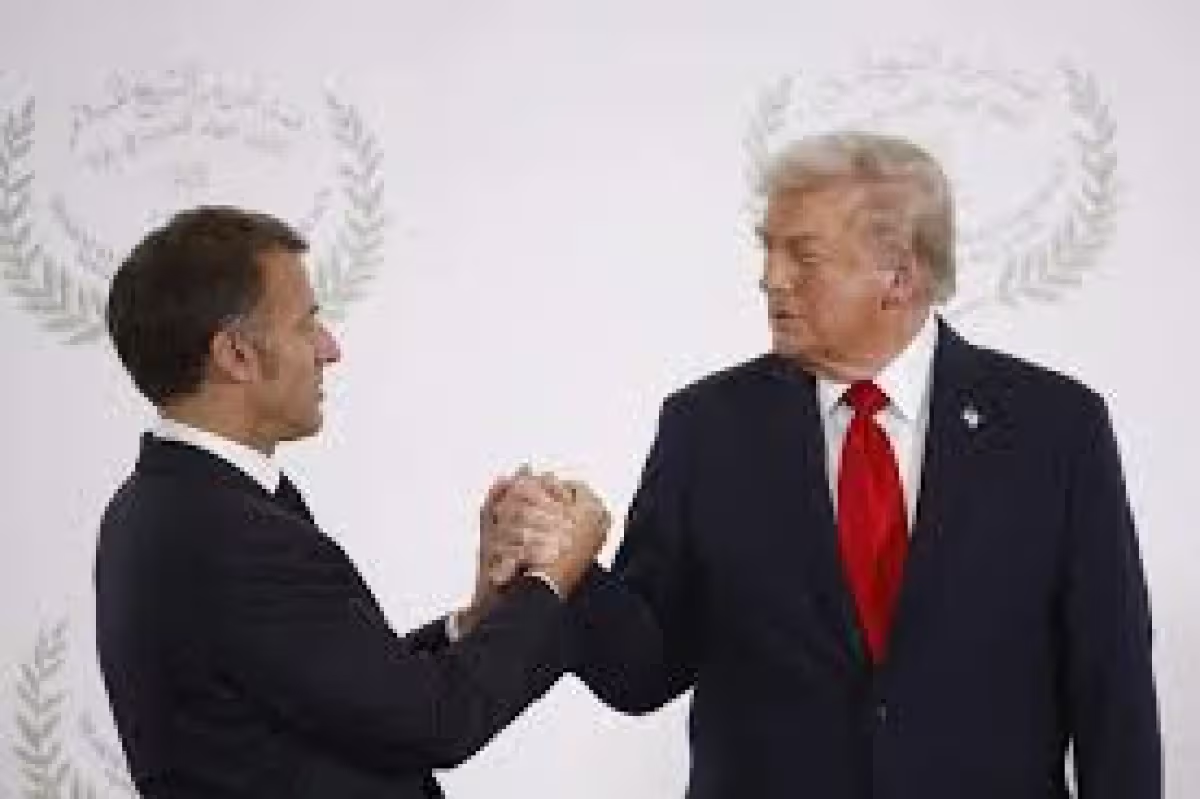
Carney arrived from Paris, where he met French President Emmanuel Macron on Friday. In that meeting, Carney told Macron the two governments "are determined to act in this way to strengthen our strategic autonomy in a world dominated by hegemonic powers and hyperscalers." Macron replied that France and Canada "share the same view of the world," reinforcing a public display of alignment ahead of the summit.
The toned-down line from Carney is notable because it contrasts with his rise to power. Carney won the job of prime minister in 2025 after promising to confront Trump; his January speech in Davos became a symbol of middle-power resistance when he condemned coercion by great powers. He has also set a domestic economic goal — to double Canada’s non-U.S. exports in the next decade — that depends on keeping cross-border commerce stable in the near term.
Those competing pressures explain the tactical choice visible in Paris and in Carney’s rhetoric. He cannot afford to retreat from the posture that won him office, and yet Ottawa cannot afford to enter July 1 without a strategy to preserve the trade lifeline with the United States. The G7 is Streetsville’s last extended forum with allies before the review; leaders often use such meetings to nudge one another and to build coalitions that can translate into bilateral leverage.
Practical details are straightforward. The G7 summit opens Monday in Evian-les-Bains, France. Delegations will spend the weekend and early week both behind closed doors and in bilateral corridors trying to shape how the United States views the economic and geopolitical consequences of pulling back from the agreement. For Canada, the immediate priority is to lower the temperature of public conflict while keeping pressure on technical negotiators to keep the lines of commerce running.
The friction in the picture is unavoidable: Carney’s more muted public posture appears aimed at keeping the pact alive, but it risks undercutting the hardline stance that helped him win the premiership. That contradiction — a leader elected on confrontation choosing conciliation at a critical diplomatic juncture — will be watched most closely in Ottawa and Washington over the next week.
What matters next is simple and stark. The summit is the last concentrated chance to rally support and shape the narrative before the U.S.-Mexico-Canada Agreement comes up for review on July 1. Whether President Trump follows through on his comment that he "may not renew the deal" remains the decisive unknown; how Carney balances his campaign promise with the economic imperative of protecting 70% of Canada’s export market will shape Ottawa’s immediate policy choices and the country’s trade outlook for the next decade.



