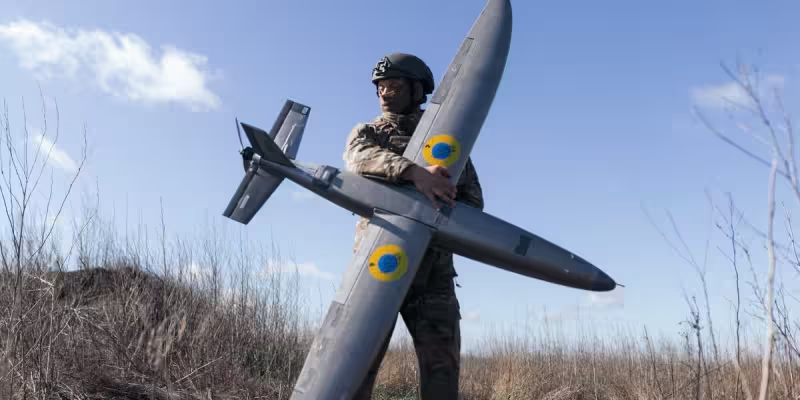
"In every sortie, everything that could go wrong went wrong," said Spring, a National Guard drone pilot who spends days at practice ranges and nights flying strikes on the southern front. She described a system she tested in early 2025 as practically cursed — a fixed‑wing mid‑range strike drone whose camera feed cut out, whose software stalled before takeoff, whose controls froze in midflight and whose batteries failed.
Spring has been testing mid‑range strike drones for Typhoon since early last year and has flown more than ten different types. The class she works with is typically fixed‑wing craft that can cover between 18 and 180 miles; she mostly specializes in systems that fly 40 to 60 km and must reliably reach targets 25 miles away and beyond.

The scale of Spring’s workload is itself a measure of how quickly this category has moved from lab to battlefield: she conducts up to 11 daily flights, each lasting 30 to 80 minutes, mixing time on the southern front with several days at test ranges. Prices for the systems she vets range from about $1,000 to $15,000, a spread that helps explain why manufacturers are rushing into the market and why quality varies so widely.
Analysts say mid‑range strike drones have given Ukraine a critical advantage by allowing strikes on logistics hubs, command posts and transport lines in rear areas Russian commanders had considered safe. Those strikes have helped produce a net loss of territory for Russian forces in the last few months, and pilots like Spring are the last filter between unproven kit and combat crews.

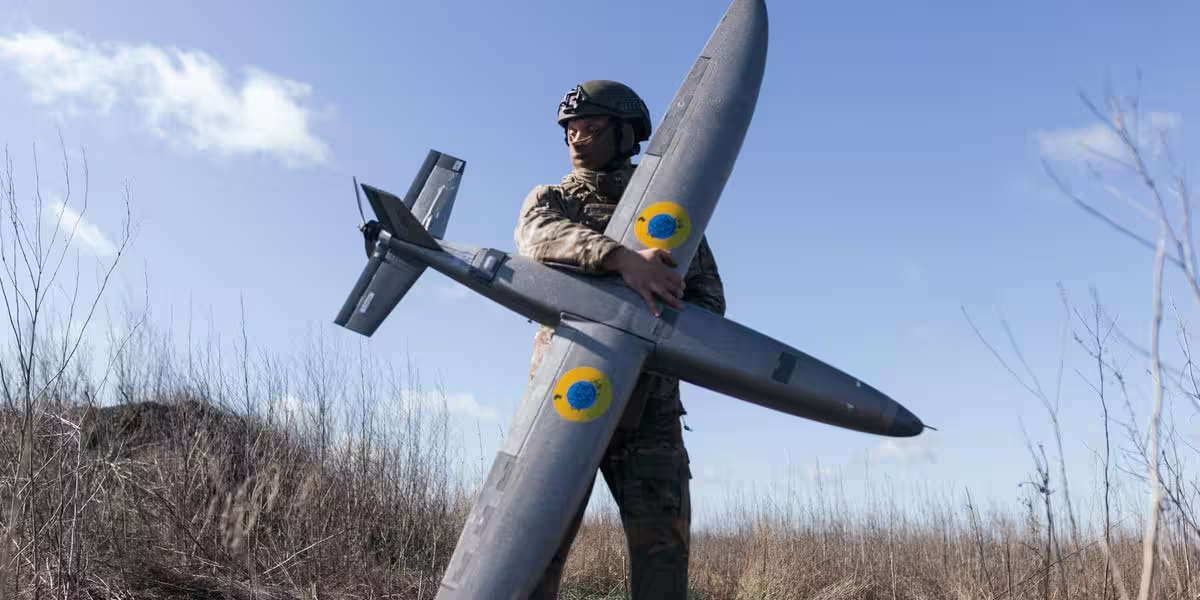
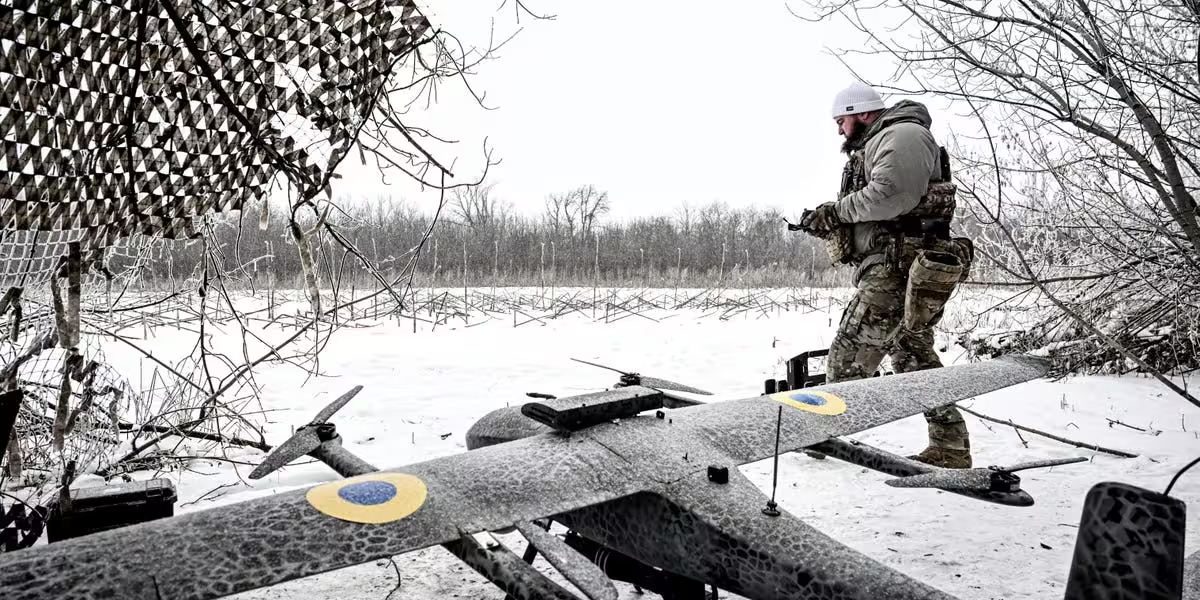
Spring walks through a formal sequence: clear at a test range, then bring the system to the front lines for further trials. Some platforms need only a few flights to win approval; others require dozens. She assesses endurance on long runs, checks whether the drone can resist Russian jamming, and watches for how the system behaves when connections drop — a growing reason some drones now include AI targeting so they can keep searching for targets after losing the pilot's link.
The friction in this work is constant. The early‑2025 system Spring labelled "practically cursed" failed across several categories: camera feed gone, software stalls, unresponsive controls and battery failures. Those are not cosmetic defects. A drone that glitches on approach or loses guidance under jamming can cost a unit time, ordnance and the opportunity to strike a high‑value rear target. Spring summed her stance bluntly: "If a manufacturer is not responsible, I do everything possible to prevent their system from reaching combat crews in our unit."
Not every system arrives broken. Spring said some drones clear testing quickly and enter service with minimal tweaks. But the tempo of Ukrainian demand — many makers producing at breakneck speed to meet a battlefield need — means crews must be selective. Spring has tested over ten types, and only a subset are combat‑ready after her vetting.
Operationally, the mid‑range class bridges a gap between short loitering munitions and longer‑range cruise missiles. Their price and availability allow Ukraine to press strikes deep into rear areas where supplies, command nodes and transport convoys move — targets that have amplified the effect of frontline counterattacks in recent months. Spring focuses on systems that can reliably fly the 25‑mile benchmarks analysts say are required to reach those logistics lines.
What happens next is both clear and unresolved. Spring will keep flying dozens of validation sorties at ranges and then trial them on the front lines; her daily routine continues to be the mainstay of whether a model reaches combat units. But the specific identity of the faulty system she tested in early 2025 remains unenumerated in public accounts, and the broader program milestones or next large deliveries are not specified. For now, Ukraine’s expanding campaign to deliver ukraine deep strike russian infrastructure effects is powered as much by pilots like Spring as by engineers — and by the painstaking, sometimes ugly work of finding which drones actually fly when the map goes red.