



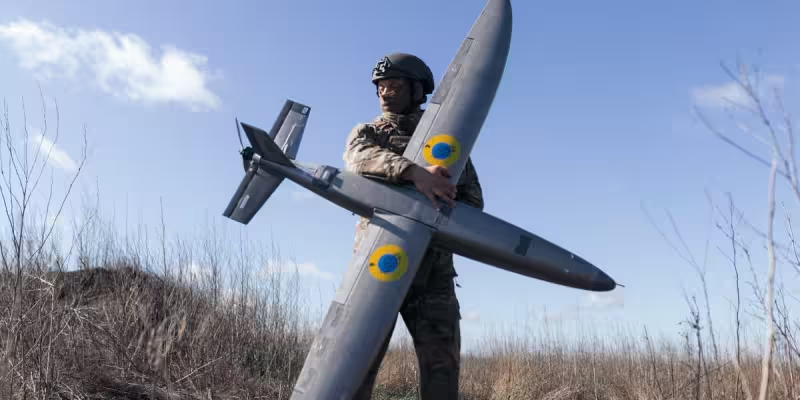
"In every sortie, everything that could go wrong went wrong," Spring, a Ukrainian National Guard drone pilot, said of the first mid-range strike system she tested in early 2025.
She found the fixed-wing drone's camera feed dropping mid-flight, software stalling before takeoff, controls going unresponsive after a few minutes and batteries failing — faults serious enough that the system had already been sent to the front for combat use before she finished testing it.

Spring has made those tests her daily work. Since early last year she has mixed time on the southern front with several days at practice ranges and has conducted up to 11 daily flights that last between 30 and 80 minutes as she evaluates more than 10 types of mid-range strike drones, most Ukrainian-made, for Typhoon.
Mid-range strike drones — fixed-wing systems that typically fly between 18 and 180 miles — are being deployed to hit logistics hubs, command posts and transports far behind the frontline. Analysts say that capability has become a critical advantage for Ukraine. Spring said the systems she clears must be able to strike reliably at 25 miles and beyond; she credits that reach with disrupting Russian supply routes and contributing to recent territorial losses for Russian forces.
Her testing is deliberate and staged. A drone first flies at a practice range until basic avionics, camera links and battery behavior hold. After range clearance, Spring brings the system to the front for further trials under live conditions, where she assesses performance after long-distance flights and gauges resilience to Russian jamming. Some models take a handful of flights to approve; others require dozens.

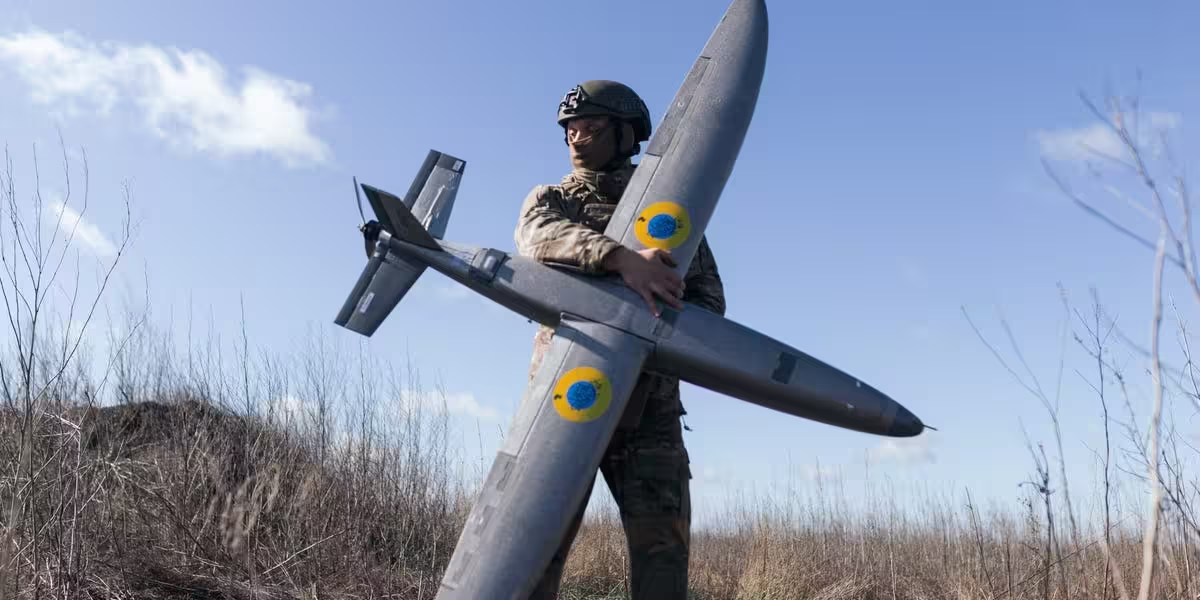
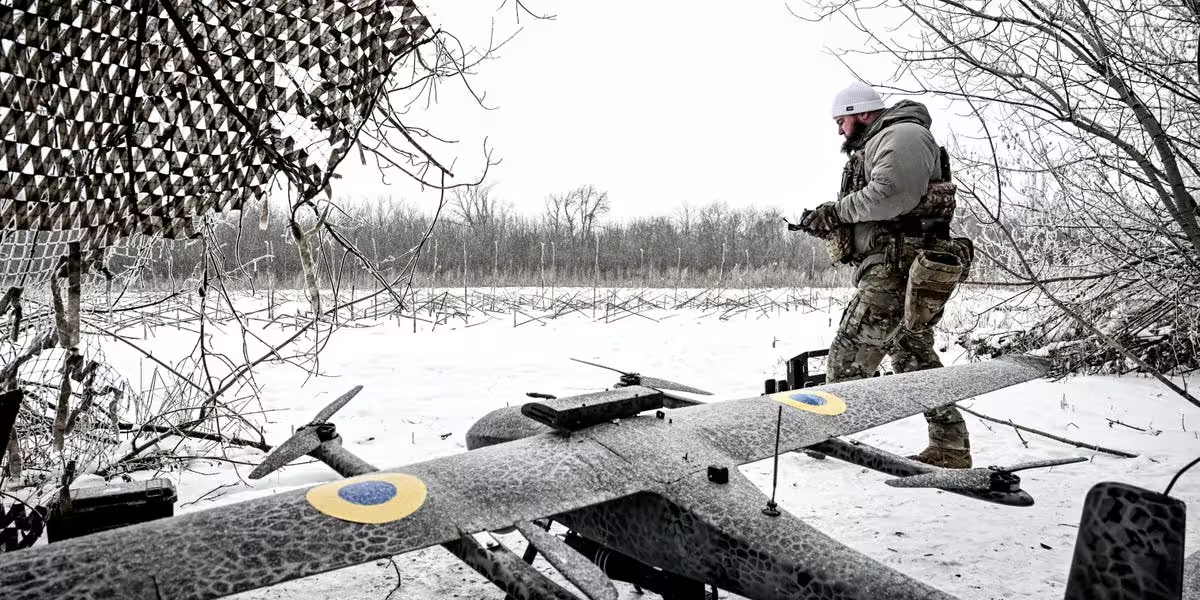
Spring described the specific failures that have been cropping up: camera feeds that stop mid-sortie, software freezes before takeoff that force aborts, control links that drop out a few minutes into a mission and batteries that die sooner than the spec sheet predicts. Some mid-range systems now include AI-assisted targeting that can keep a drone flying after a lost connection; Spring tests those features but still insists on human-verified reliability before a weapon system goes into combat.
Her role is practical and blunt. "If a manufacturer is not responsible, I do everything possible to prevent their system from reaching combat crews in our unit," she said. The implication is that without testers like Spring, frontline crews could receive equipment that appears capable on paper but fails under the routine stresses of combat — software glitches, contested electromagnetic environments and the wear of repeated sorties.
The breadth of equipment under review is wide. Spring mostly specializes in drones that fly between 40 and 60 kilometers, but the mid-range class she tests spans the 18-to-180-mile definition. Prices vary accordingly: the drones she evaluates run from roughly $1,000 to $15,000 apiece, a range that reflects different missions, components and levels of autonomy.
The uneven quality is partly a product of speed. Manufacturers are moving fast to supply a battlefield need; many new entries arrive at front-line units in quick succession. That speed, combined with a crowded field of developers, produces systems that work unevenly out of the box. Spring’s testing process is the frontline filter that separates systems that will survive jamming and long flights from those that shouldn’t be trusted with live crews.
There is a practical consequence: every faulty drone Spring stops from reaching combat crews represents one less failure the unit might have to absorb during an operation. But there is also a strategic one. As Ukraine leans more on upgraded ukraine drone capabilities to strike deeper and alter Russian calculations, the reliability of each delivery matters not just tactically but to the operational tempo of entire brigades.
Spring will continue to fly and vet new models at ranges and on the front, mixing practice sorties with missions near combat lines. The most consequential question left open by her account is how widespread these quality problems are across the mid-range fleet — and how many systems reach fighting units before a tester like Spring can evaluate them.



