



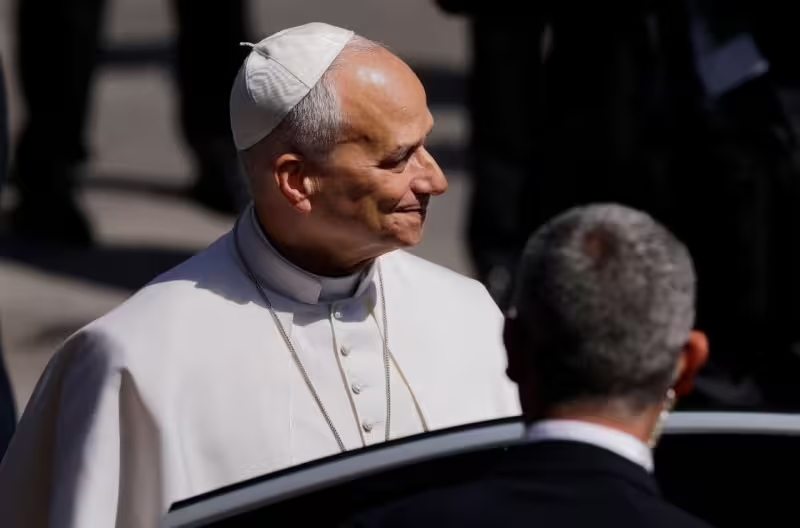
Pope Leo XIV will visit Uruguay in November as part of a tour that will also include Argentina and Peru, and he has issued his first encyclical on artificial intelligence and human dignity, titled Magnifica Humanitas.
The two moves — a regional trip set for November and the publication of an encyclical focused on AI — arrive together in a short span, presenting the first clear policy signals from Pope Leo XIV on both pastoral geography and a 21st-century moral question. FilmoGaz published the schedule for the tour, noting Uruguay as a November stop, and also ran the encyclical text, Magnifica Humanitas, as the pontiff’s first major statement on technology and human worth.

Magnifica Humanitas is framed in its headline as an encyclical about AI and human dignity; it is the first encyclical under Pope Leo XIV to take up that technological subject. The travel plan links three South American countries — Uruguay, Argentina and Peru — into a single circuit, suggesting a short but regionally focused itinerary for late in the year.
Those two facts matter now because they define what the pope is putting on his immediate agenda: the pastoral work of a regional tour and a doctrinal intervention on a topic that governments, universities and companies are debating worldwide. The timing gives both items real weight — the tour is a scheduled, date-bound event in November, and the encyclical is a formal papal text meant to guide Catholic teaching and public conversation.

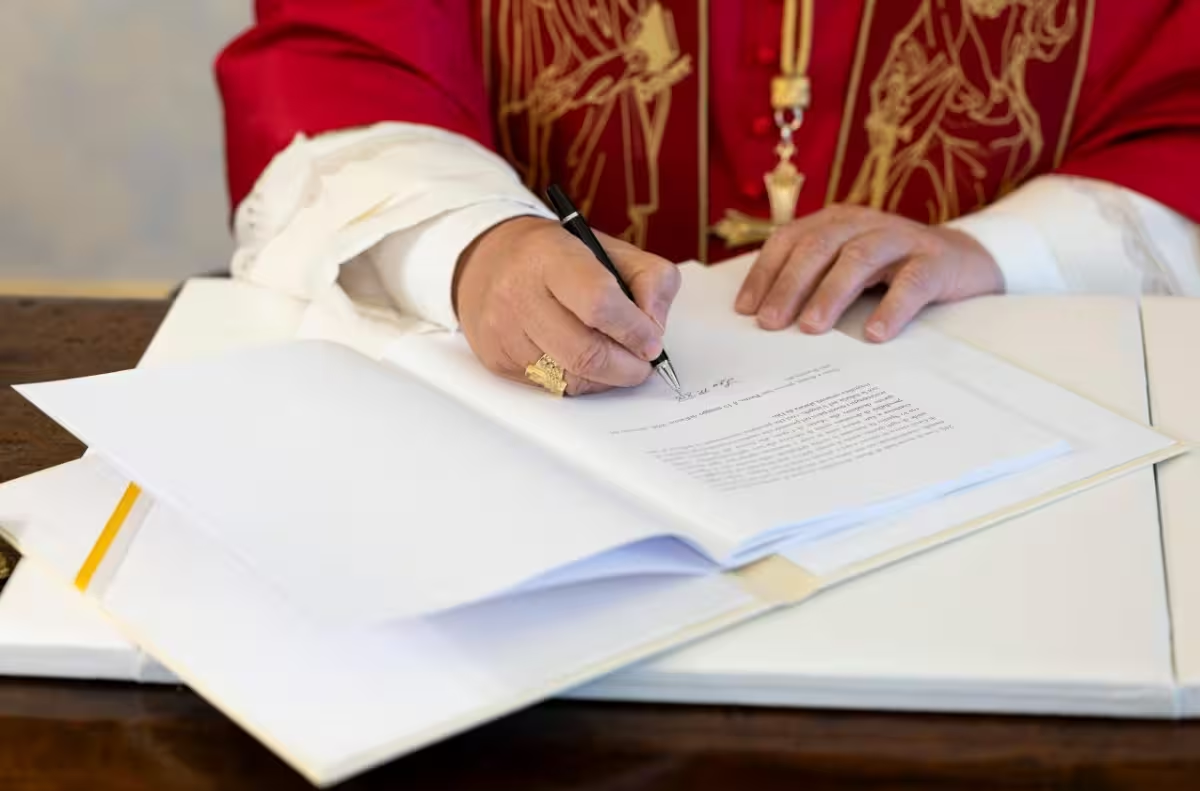
For clergy, civic leaders and Catholic communities in the three countries, the twin announcements set the calendar. Parishes and dioceses will have to plan liturgies, security and public events around the November dates, and bishops and lay leaders will begin preparing responses, study sessions and public messaging on the encyclical’s themes. FilmoGaz’s notices on the visit and on Magnifica Humanitas provide the basic anchors for those local preparations.
The friction in this story is practical and rhetorical. Practically, a tightly scheduled regional trip limits how much the pope can do on the ground in any one country; a short November stop in Uruguay will not allow for an extended campaign about complex technological ethics. Rhetorically, an encyclical aimed at topics like AI and human dignity is global in scope and requires sustained engagement across many forums — academic, political and religious — not just a handful of pastoral events.
That gap matters because it is the place where impact will be decided. Will Magnifica Humanitas remain principally a doctrinal text read and debated in seminaries and specialist forums, or will Pope Leo XIV bring its claims into public view as he visits Uruguay, Argentina and Peru? The itinerary gives him a platform; the encyclical gives him content. How those two are connected — whether sermons, speeches or public meetings during the tour reference the encyclical’s teachings — will determine whether the document shapes public policy conversations as well as ecclesial ones.
Local church leaders and civic authorities now face short, practical timelines: organize the November stops and anticipate any moments when the pope might address themes from Magnifica Humanitas. Media and academic groups that follow AI policy will likewise be watching for concrete references to the encyclical on the tour; a single speech or meeting that links the two could extend the papal message beyond Catholic audiences.
The most consequential unanswered question is this: will Pope Leo XIV use his November tour in Uruguay, Argentina and Peru to translate Magnifica Humanitas from a doctrinal text into a living public argument — and if so, how visibly and with what partners? The pope has issued a blueprint on AI and human dignity; whether the trip becomes the vehicle that carries that blueprint into the public square is the story now worth watching.



