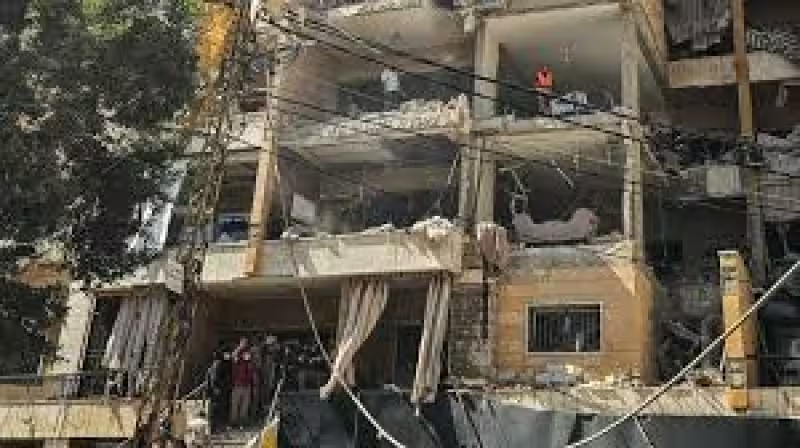
Israel struck the southern Beirut suburb of Dahieh on Sunday in the first attack on the Lebanese capital since a US-brokered truce last week, two air strikes hitting apartment buildings and killing two people while injuring at least 20, Lebanon's health ministry said.
The strikes tore open the lower floors of residential buildings and scattered concrete and twisted metal across the street below, rescuers and witnesses said; health officials said among the wounded were four women and four children.

Israeli leaders framed the operation as a direct response to Hezbollah fire. Prime Minister Benjamin Netanyahu said the strikes targeted "terrorist headquarters in the Dahieh district of Beirut, in response to Hezbollah's firing at Israeli territory," while an Israeli army Arabic-language spokesman posted on X that "Hezbollah terrorist infrastructure" was being struck.
The Israeli military also said it intercepted two projectiles that had crossed into Israeli territory. Hezbollah said its forces fired rockets at Yiftah Barracks and at troops near al-Marj Pond, calling those barrages a response to what it described as Israel's "violation of the ceasefire and the attacks on villages in southern Lebanon." Ebrahim Rezaie warned of "a decisive and painful response" to the Beirut strike.

Officials and witnesses noted this was the third strike on the capital since a ceasefire took effect on 17 April; the first two attacks targeted Hezbollah commanders. The appearance of dead and wounded civilians in Dahieh — a Hezbollah stronghold that is home to many families — raised immediate concern among diplomats and aid workers who had pushed to keep strikes off the capital under US pressure.
The timing complicates the truce narrative. The ceasefire has been in force since mid-April only in name at times, with both sides repeatedly violating its terms, and Israel had continued to intensify air strikes in southern Lebanon over the weekend. A week before 3 June, Israel's threat of a broad offensive on Dahieh triggered mass flight from the suburb and urgent American diplomacy.
The competing claims of retaliation deepen the uncertainty. Israel said it was answering Hezbollah fire; Hezbollah and its allies said they hit Israeli positions because of Israeli violations and attacks on southern villages. Iran also entered the exchange: Sunday night it fired missiles at Israel, saying it was responding to what it called increased Israeli attacks in southern Lebanon and Beirut’s suburbs.
The immediate consequence is heightened risk of further escalation. The strike struck a densely populated district and injured women and children, adding political pressure on both sides. Yet it remains unclear whether Israel will carry out more strikes in the capital or whether Hezbollah — backed by Iran — will answer with larger, coordinated operations that could widen the battlefield.
What happens next is the single, unresolved fact that now matters: whether the tit-for-tat that both sides frame as defensive will instead collapse the fragile restraint that diplomats pressed for after the US-brokered deal. For now, residents of Dahieh are left to count the dead and wounded, and governments and commanders must decide whether to let the ceasefire keep a line or let the exchange pull the conflict back into open escalation.