U.S. forces have counted nearly 1,000 commercial vessels passing in and out of the Strait of Hormuz during the roughly two-month ceasefire and have directly guided about 70 ships in and out of the Persian Gulf over a recent three-week span.
The raw numbers underline how much traffic has resumed even as the waterway remains quieter than before the war: the tally of nearly 1,000 vessels works out to about 17 ships per day during the period, compared with more than 100 ships per day before the U.S. and Israel launched their war on Iran on Feb. 28. Two independent counts reflect the gap: the U.S. Navy’s Joint Maritime Information Center recorded 558 cargo ships and oil tankers crossing from March 1 to June 3, while maritime data company Kpler counted 895 ships between March 1 and May 19.

How that movement happens matters as much as how many ships pass. Since April the U.S. Navy began mine‑clearing operations and sent two destroyers through the strait to re-establish freedom of navigation near Oman’s coast. An alternate lane along Oman’s shoreline has become an important corridor for commercial traffic as vessels avoid an Islamic Revolutionary Guard Corps–controlled lane established after the war began.
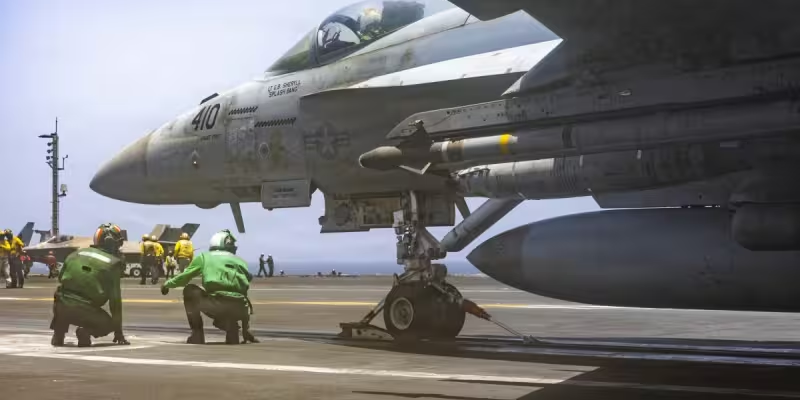
Washington’s role has been part technical, part visible and part deliberately downplayed. The U.S. military uses radar, drones and other sensors to keep an eye on traffic, and it advises ships on when to turn off Automatic Identification Systems and how to respond to Iranian threats. Over a recent three-week span, U.S. Central Command guided about 70 vessels in and out of the Gulf; Project Freedom, an initiative to help get more ships out with U.S. assistance, began last month but ended after only a few days.


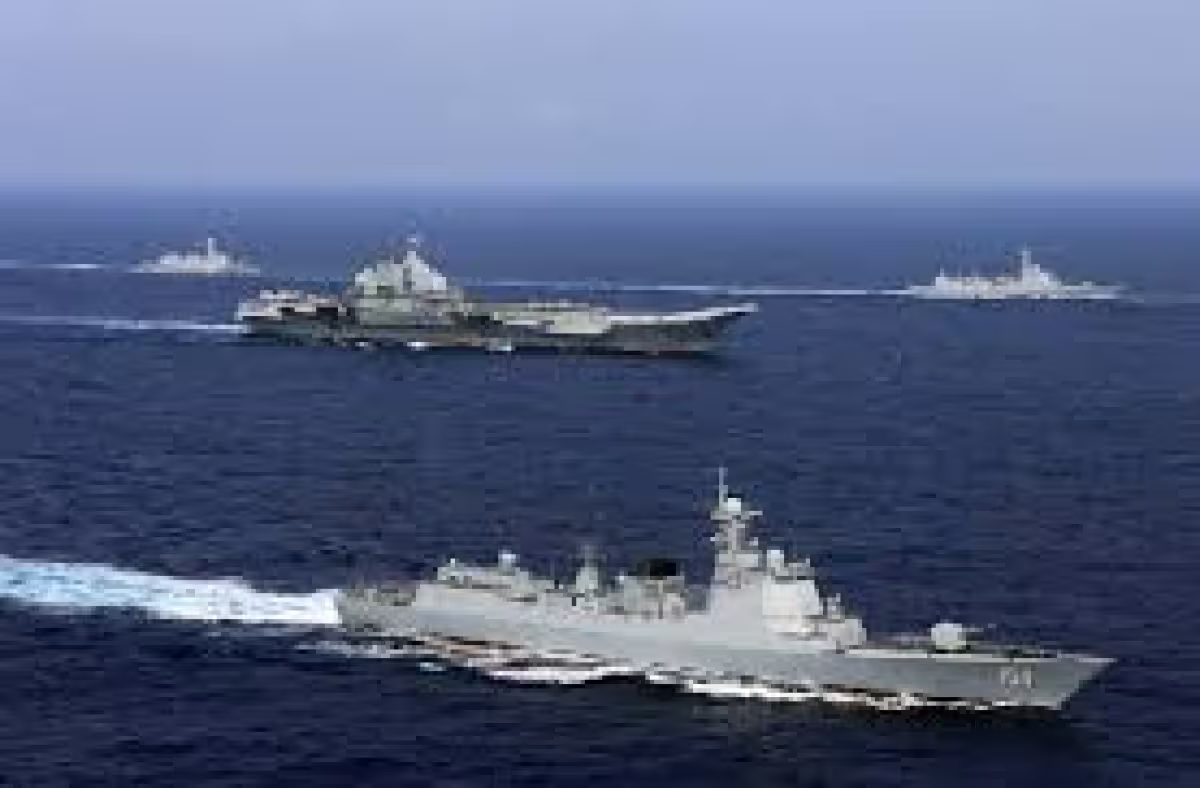
The friction in this picture is simple: Central Command insists it is not escorting ships even while it has guided dozens and offered practical advice. Officials say the U.S. is offering advice to commercial vessels and monitoring movements, but they draw a distinction between advising and formal escort missions. That distinction matters to shipping companies weighing risk and insurers pricing voyages, yet the actions on the water — mine clearance, destroyers reasserting navigation rights, and guidance to merchant captains — have real, immediate effects on which lanes vessels will choose.
There is also a sharper security backdrop. Last month the IRGC launched attacks into the Gulf and attempted to lay new underwater mines, and it has charged tolls on ships allowed through its lane while attacking vessels that crossed without permission. The U.S. answered force with force: mine‑clearing followed by the destruction of Iranian boats and strikes on missile sites that tried to engage U.S. aircraft. Last weekend the U.S. disabled a ship attempting to breach its naval blockade by firing a missile into the engine room and carried out self‑defense strikes in Goruk and on Qeshm Island; after Iran shot down a U.S. drone, fighter aircraft destroyed Iranian air defenses, a ground control station and two attack drones that threatened ships in transit.
For commercial operators the consequence is practical: large cargo and container ships make up most of the vessels counted, and masters are routing ships on the sea lane that appears safest. The alternate route along Oman’s coast has taken on outsized importance because of the IRGC lane’s risks. Yet the exact split — how many ships use the Oman route versus the IRGC‑controlled lane — remains unresolved. The nearly 1,000‑vessel figure likely includes ships that turned off AIS and those that took both lanes, but it does not answer which corridor is carrying the bulk of traffic.
That unanswered question is the story’s hinge. Counts show the strait is busier than it was at the depth of the crisis, but traffic remains far below pre‑war volumes and depends on whether U.S. monitoring and limited interventions continue. Project Freedom lasted only a few days; Central Command’s guidance over three weeks covered about 70 ships; whether Washington sustains that posture or moves to a more formal escort model will determine whether commercial traffic inches back toward normal volumes or stays constrained by risk.
Expect shipping and energy markets to watch one metric closely: will U.S. assistance be a short, tactical fix or the basis for a longer, steadier flow through the Strait of Hormuz? Until that answer arrives, the waterway will remain a contested corridor where counts and incidents — not assurances — set commercial calculus.