




Brandon Sonnier says he and co-creator Brandon Margolis went into CBS with a clear brief after Blue Bloods ended: create another police procedural anchored by family. They had pictured a Los Angeles law-enforcement professional moving to Boston to try to reconnect with an estranged son on the force — until the network asked a single, game-changing question that remade the series.
Margolis recounted the moment CBS floated the idea to their production partners: what if the cop from L.A. in their pitch were actually Danny Reagan? Sonnier still calls the suggestion “the best network note we’ve ever gotten.” The exchange turned an original, standalone drama into Boston Blue, a direct spinoff of the Reagan family world created during Blue Bloods’ long run.

The pivot is small in description but large in consequence. The premise CBS green-lit kept the core device — a veteran cop relocating to Boston to repair a fractured relationship with a son on the force — but replaced the anonymous stranger at its center with an existing franchise figure. That change plugged Boston Blue immediately into a 14-season legacy and gave the new show an inherited family dynamic the creators had been trying to preserve.
Sonnier frames what they were trying to keep: they wanted the procedural beats — the action, the investigations, the certainty that the good guys will usually catch the bad guys — married to the uncertainty inside a family. He said they love telling cop stories, but what brings audiences back is whether family ties will bend or break, and whether this is the last big fight between father and son. Tying the lead to Danny Reagan kept those emotional stakes while delivering franchise recognition.
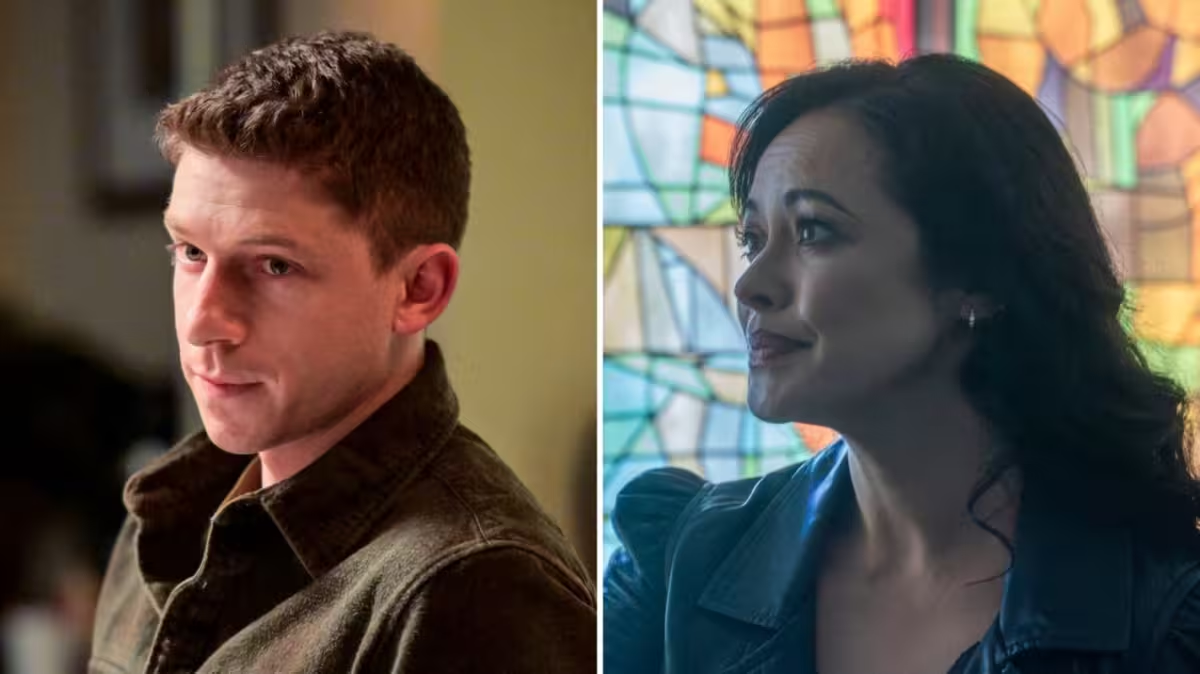
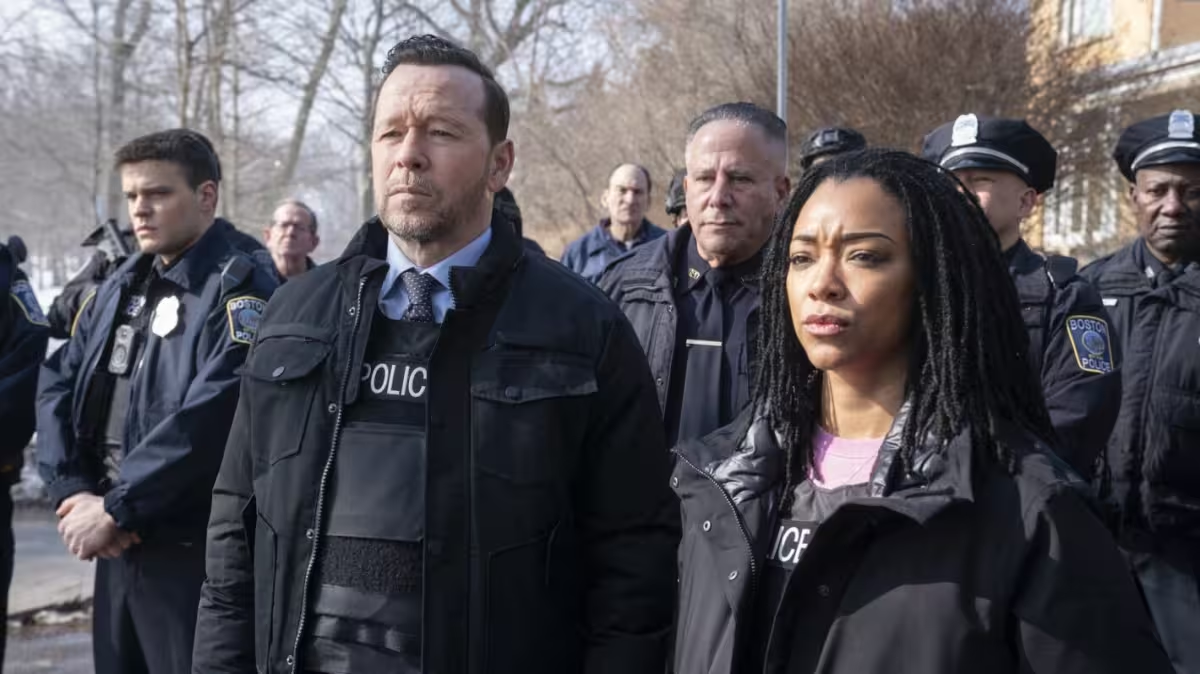
The tension at the heart of Boston Blue’s origin is straightforward: the series was conceived around a different lead and a new premise, and CBS intervened to make it a Reagan-family continuation. That move answered a programming need — replacing Blue Bloods’ family-centered procedural in the lineup — but it also raised an obvious question for viewers and creators alike: how much of the original pitch survived the change?
From the available details, the answer is practical. The family-centered reunion plot that drove the original concept remained the narrative engine; CBS’s note altered who occupied the center of that engine. By turning the L.A. cop into Danny Reagan, the network and creators stitched the new series into the franchise’s emotional geography while preserving the storyline about a father trying to reconnect with a son in Boston.
For Sonnier and Margolis, the shift appears to have been more opportunity than constraint. The Reagan name carried built-in stakes and audience expectations, but the showrunners kept their focus on character friction rather than franchise fan service. That approach explains why Boston Blue closed its first season on a cliffhanger and why its emotional throughline — family stress under police pressure — remains the program’s selling point.
Boston Blue’s practical future is clear: the series is returning for Season 2 on CBS in fall 2026. Creatively, the move that made it a Blue Bloods spinoff also gave the show a ready-made center of gravity. The remaining question is not whether the network tied the show to the Reagans — it did — but how the writers will use that tie to test the very family conflicts Sonnier said bring viewers back week after week.



