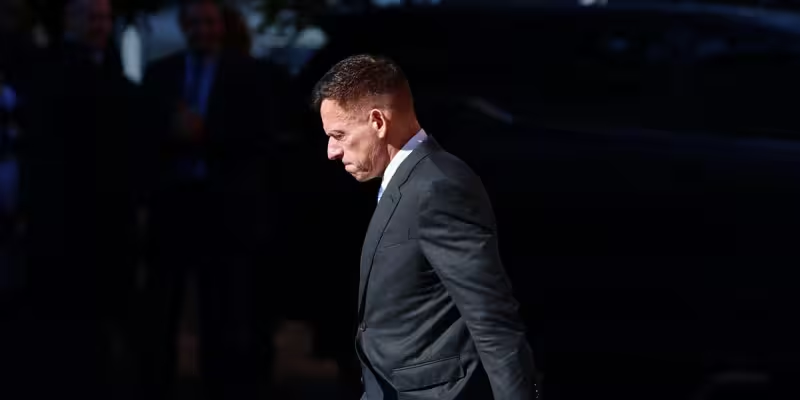
Peter Thiel has been spending more time in Argentina, where he enrolled his children in school and bought a home in one of Buenos Aires' wealthiest neighborhoods.
The move is precise and personal: a residence and school enrollment that put Thiel — the PayPal and Palantir cofounder and a prominent libertarian — physically in the Southern Hemisphere with his family. At the same time, a wider current among the ultrawealthy is measurable. Last year 142,000 high‑net‑worth individuals migrated to new countries, Henley & Partners found, and the firm expects that number to rise past 165,000 this year.

Observers point to several concrete shifts behind those figures. "There's a clear trend toward sovereign diversification," Charlie Garcia said. He listed the tools wealthy families now use: "multiple passports, multiple tax regimes, and at least one 'Plan B' jurisdiction in the Southern Hemisphere." Garcia added color to the conversations he's heard: "It sounds melodramatic until you've sat through the off‑the‑record dinner conversations," and he noted the geographic preference: "For that crowd, the Southern Cone looks like a literal and figurative safe distance."
Those patterns show up in migration flows. Last year New Zealand saw a spike in American applications after it relaxed rules around its golden visa investment program. Costa Rica and Thailand have also reported jumps in high‑earning migrants. Domestically, policy moves are sharpening incentives to consider an exit strategy: California legislators are weighing a ballot proposal that could impose a one‑time 5% tax on the net worth of billionaires residing in the state, and New York City has already passed a pied‑à‑terre tax targeted at expensive secondary homes.
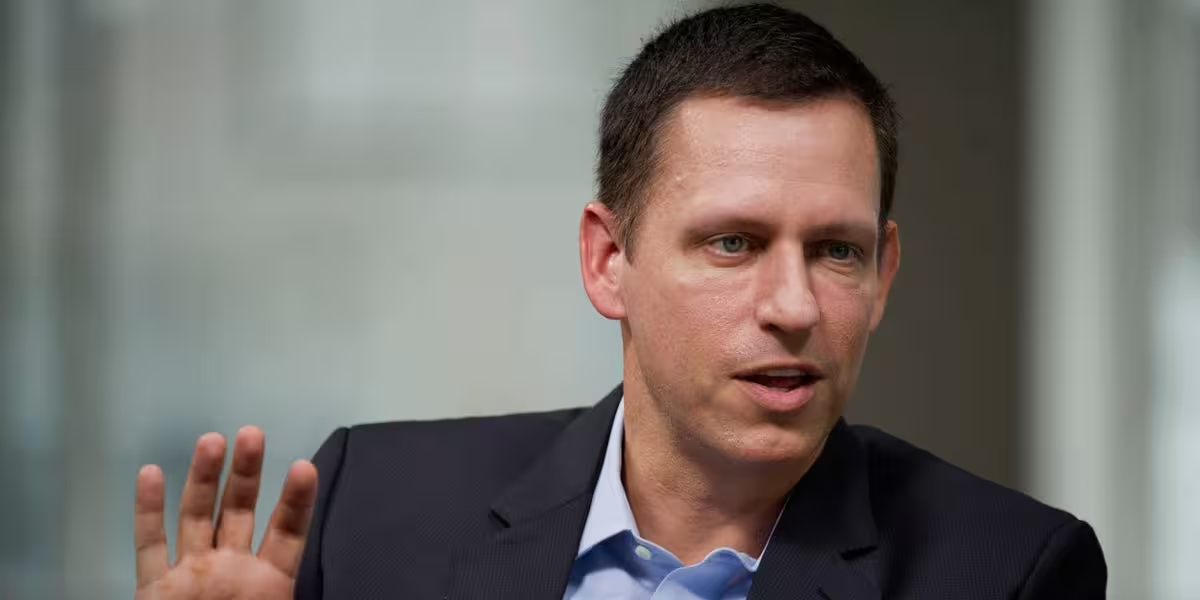

Thiel's choices fit that template without answering whether they are permanent. Buying one home and enrolling children are concrete steps that change daily life immediately. They also serve, under the model Garcia describes, as the kind of foothold an ultrarich family might use while maintaining options elsewhere.
That reasoning collides with the oddity of Argentina as a hedge. The country has a long history of inflation, currency crises, capital controls, and abrupt legal changes. Taken literally, those are the features most people trying to protect wealth would avoid. Taken strategically, some advisers argue, they make places like Buenos Aires useful as part of a diversified set of jurisdictions — not as a riskless shelter but as a geographic counterweight to concentrated exposures in North America or Europe.
There is a visible friction between choosing Argentina for distance and the country's own macroeconomic volatility. The choice amplifies the question that follows any high‑profile relocation: is the move a temporary play or the start of a permanent family relocation? In Thiel's case, that question remains open. Representatives for Thiel did not immediately respond to a request for comment.
The most consequential unanswered question is simple and specific: will Thiel convert a pattern of extended visits, property purchases and school enrollment into an enduring change of domicile for his family? The answer will determine whether his Argentina presence is a tactical backup inside a broader plan of sovereign diversification or the first chapter of a longer relocation for one of Silicon Valley's most prominent figures.