
A civil-rights group filed a federal habeas petition Tuesday seeking the immediate release of Anabella Gyasi and her 4-year-old son, who have been held in a locked room at Dulles International Airport for more than a week after arriving on May 19.
Searches for anabella gyasi dulles detention spiked after the ACLU of Virginia said Gyasi — who arrived with valid tourist visas — was kept in airport custody despite pregnancy-related bleeding and repeated pleas for basic care for her son.

Gyasi, 38, told officers she had come to the United States to obtain medical care for her child and had a scheduled pre-operation appointment at a children’s hospital in Ohio earlier this month. After landing at Dulles on May 19, U.S. Customs questioned the purpose of the trip and then took Gyasi and her son into CBP custody; they were held in a windowless room with a single bed, a toilet and a sink and kept locked 24 hours a day.
The ACLU’s petition says the pair were held more than a week in those conditions and that the child went without adequate food. On May 23 Gyasi pleaded with officers to be allowed to buy food for her son; she says her son cried from hunger that day and that CBP denied the request. ‘‘I would rather be deported than denied food,’’ Gyasi told officers, the petition says, and later signed a deportation order after being told she could have food and a shower only after she signed.


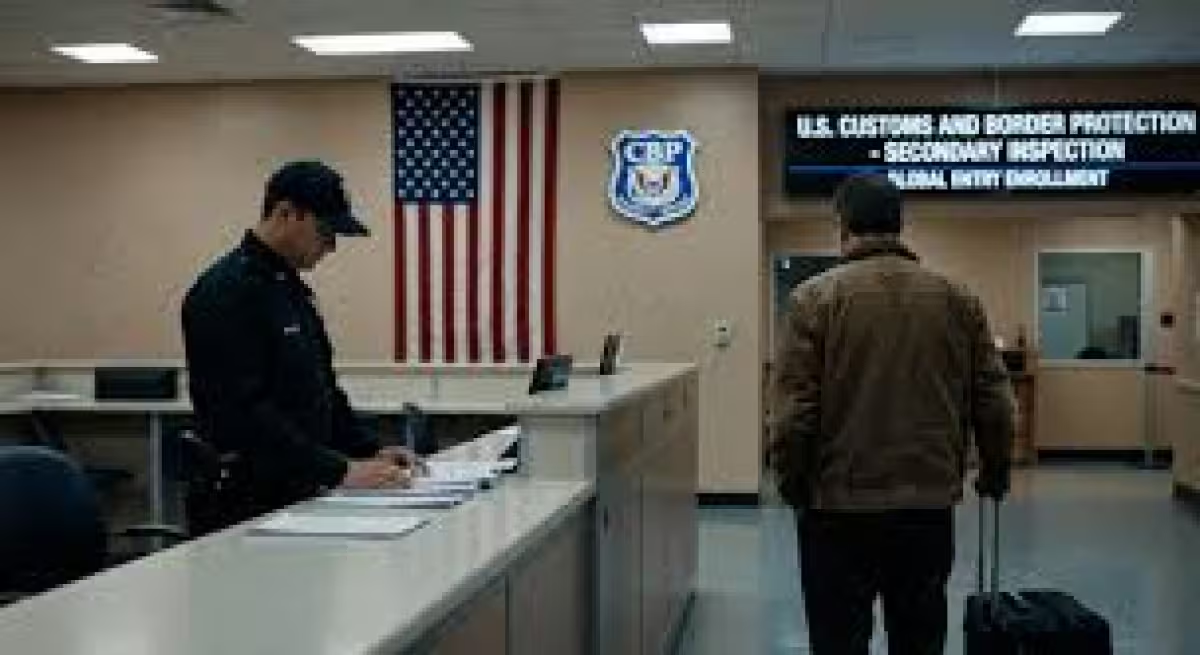
Medical evidence in the petition deepens the urgency. Gyasi was transported to the hospital twice during detention for vaginal bleeding and lightheadedness; doctors diagnosed pregnancy complications and high blood pressure, gave her medication to stop the bleeding and prescribed blood-pressure medicine, and confirmed she is pregnant. The ACLU of Virginia says neither Gyasi nor her son received medical screening or treatment when they were first taken into custody.
The case crystallizes the conflict between individual circumstances and a new CBP approach at ports of entry. The ACLU says CBP instituted a policy last month requiring physical custody of all asylum-seeking travelers arriving at ports of entry and has been converting nonpublic airport commercial rooms into holding areas without on-site medical services. The petition also points to a long-standing court settlement that requires children to be transferred out of detention within 72 hours — a rule the ACLU says was not followed here.
Gyasi’s travel history is part of why her detention has drawn attention. The petition notes she first brought her son to the U.S. in 2024 when he was 2 for specialist care; this month she scheduled the Ohio pre-operation appointment because her son has physical disabilities that affect the use of his hands. The ACLU of Virginia argues Gyasi legally traveled for necessary medical care and that her detention is endangering both her son’s and her own health.
The friction is stark: Gyasi traveled on valid tourist visas to obtain care for a child she says needs surgery, yet CBP placed her and the child into prolonged airport custody — in a locked room, with limited hygiene and food options, and without an initial medical screening. The petition frames that sequence as a departure from policies meant to protect at-risk people such as pregnant women and young children.
A federal judge will now consider the habeas petition, but the filings do not say whether Gyasi and her son have been released or whether the signed deportation order has moved them toward removal. The most consequential unanswered question is whether the court will enforce the 72-hour transfer rule and press CBP to exempt vulnerable travelers at ports of entry from the recent custody requirement — a ruling that could determine whether Gyasi and her son are freed to seek the medical care that brought them to the United States.