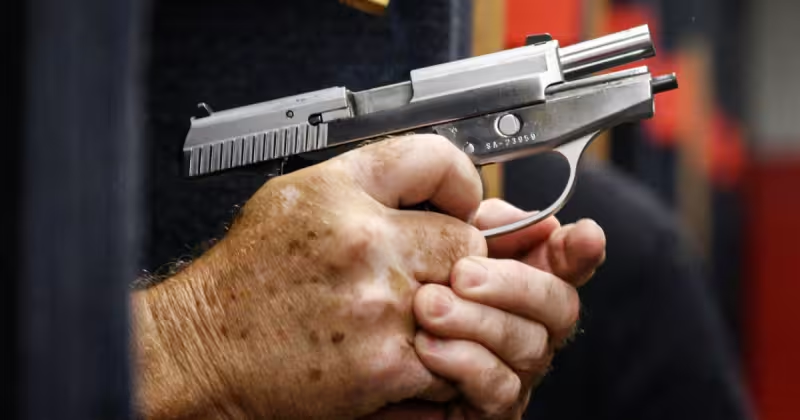
The Supreme Court on Monday rejected a challenge to New York's firearms liability law, leaving in place a 2021 statute that gives people a legal path to sue gunmakers for harm caused by their weapons. By declining to intervene, the justices let the law keep operating in New York for now.
The case had been brought by Glock, Smith & Wesson and the National Shooting Sports Foundation, all of whom argued the state law was written to sidestep the 2005 federal Protection of Lawful Commerce in Arms Act, which shields gunmakers from many lawsuits. New York Attorney General Letitia James urged the court not to take up the fight and said the statute still permits liability in some circumstances, including conduct that endangers the public health of New Yorkers.

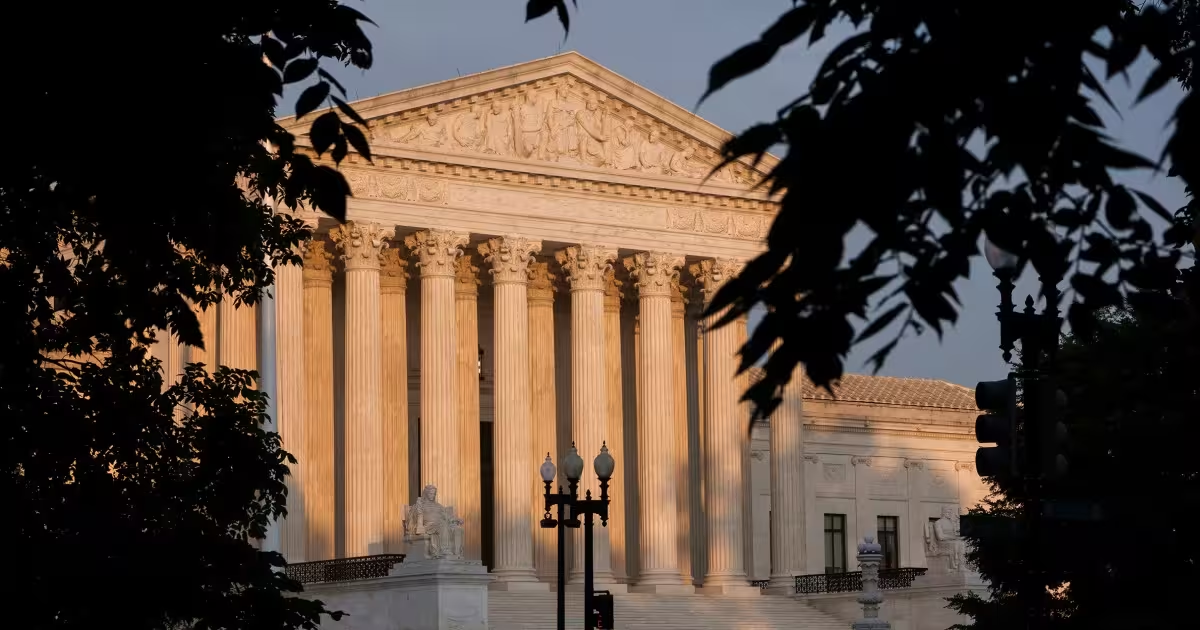

A federal judge in New York had already ruled against the gunmakers, and the 2nd U.S. Circuit Court of Appeals reached the same conclusion in a July 2025 ruling. The Supreme Court's decision leaves those rulings intact and keeps the state law alive after a fight that began almost as soon as Albany enacted it in 2021.
The dispute sits at the point where state gun regulation meets a federal shield written in 2005 to protect the firearms industry from broad liability. The gunmakers' lawyers argued the New York statute would make that shield meaningless, while the state countered that federal law still leaves room for some claims. The court did not explain its refusal to hear the case, but its conservative majority has generally backed gun rights and last year used the same federal law to throw out a lawsuit filed by the Mexican government against gun manufacturers.
For now, the practical result is simple: New York's law remains in force, and gunmakers still face the possibility of state-law claims over conduct tied to public harm. Any broader question about whether the statute will survive another challenge, or another appeal, remains unresolved.