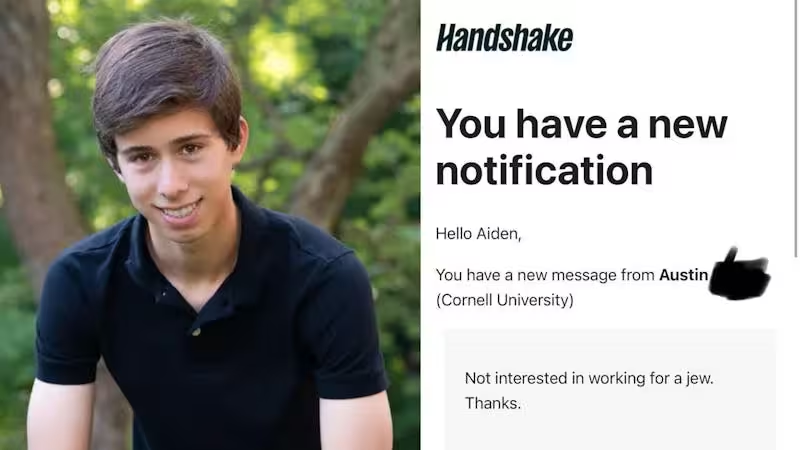
Cornell has reported Austin Franco ’28 to the Office of Civil Rights after he sent an antisemitic response to a job offer on Handshake, turning a private hiring exchange into a public campus controversy. The message, sent June 8, read: “Not interested in working for a jew. Thanks.”
Gabe Einhorn, the co-founder and CEO of the startup that accepted Franco for a growth and sales role, said the exchange began on May 26 when Franco applied to VrfyID and was accepted in the first round. Aiden Einhorn then asked him on May 29 to set up a time for a meeting, and Franco replied that same day with times he was available. Gabe Einhorn said he and Aiden offered two dates for students to attend, but Franco did not show up to either one.

When Aiden followed up again on June 8 about Franco’s attendance, Einhorn said Franco sent the antisemitic message. Gabe Einhorn posted a screenshot of the exchange on X that day, crossing out Franco’s name, and said the post drew more than two million views in less than a week. He said he shared it to “prove a point to people that antisemitism exists.”
Franco said he learned about the post on Monday morning and began facing doxxing and intimidation after it spread. He said people dug up personal information, contacted employers by email and phone, and sent threats. Franco also wrote on X on June 9 to respond to Einhorn’s post and the replies, saying he identified Gabe and Aiden as Jewish based on their names, LinkedIn and physiognomy. Einhorn, who described himself as a “proud Jew” and said he always wears a kippah, had previously posted about antisemitism while trying to film street interview content.
The post’s reach is what pushed the incident beyond a campus hiring dispute and into university discipline territory, but the next step remains unclear. Einhorn said he crossed out Franco’s name to avoid causing personal damage, yet comments on the post reportedly exposed Franco’s identity through photo editing software, a detail that deepened the fallout and helped fuel the harassment Franco says his family faced as well. Cornell’s report now puts the case in the hands of its civil-rights process, with no public word yet on whether that referral will lead to discipline or another outcome.