




He still remembers the Sundays. Ferran Torres says he used to cry every Sunday when his parents left him at Valencia CF’s residence, a child suddenly living apart from home — embarrassed, self-conscious and inventing where he was from to avoid explanations.
Those Sundays stand out because Torres’s career has kept moving since: he finished the 2025–26 season with 16 league goals and the Trofeo Zarra — tied with Lamine Yamal — and has added a Euro 2024 winners’ medal and multiple domestic titles with Barcelona to a résumé that began in a town of fewer than 8,000 people. The numbers are stark: three Supercopas de España, three La Liga titles and one Copa del Rey with Barcelona, plus international milestones that turned a Foios boy into a national figure.

Foios sits in l’Horta Nord, planted among orchards and described by neighbours as a place of tight streets and a strong neighborhood identity. Torres carries that origin into the nickname he earned on the pitch, 'el Tiburón', and into the way his hometown has reacted — a small town suddenly finding itself on football maps and schoolroom conversations as tourism and attention follow his progress.
His trajectory began early. He started kicking a ball at about six with his school team, and Valencia CF called him for trials roughly a year later. The childhood gift was obvious: he said he used to kick everything and people could see from a young age that he would play football. By his early teens, the picture changed — his parents divorced when he was 12 or 13, and he moved into Valencia’s residence with other players who were not from the city.
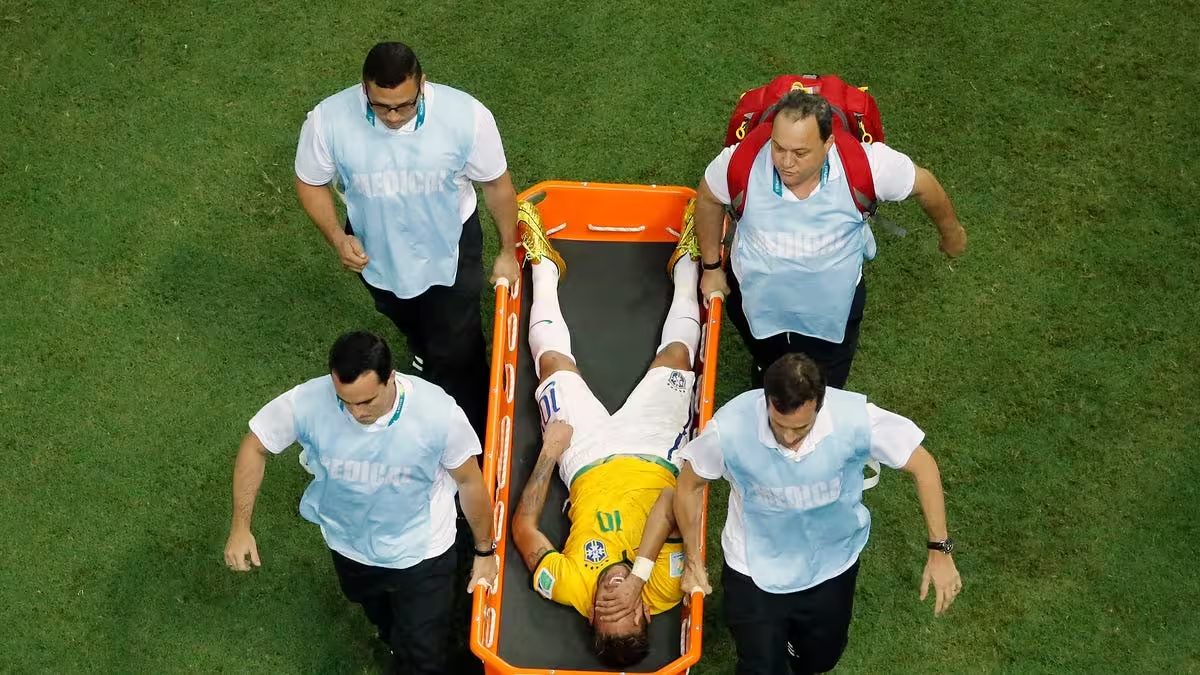

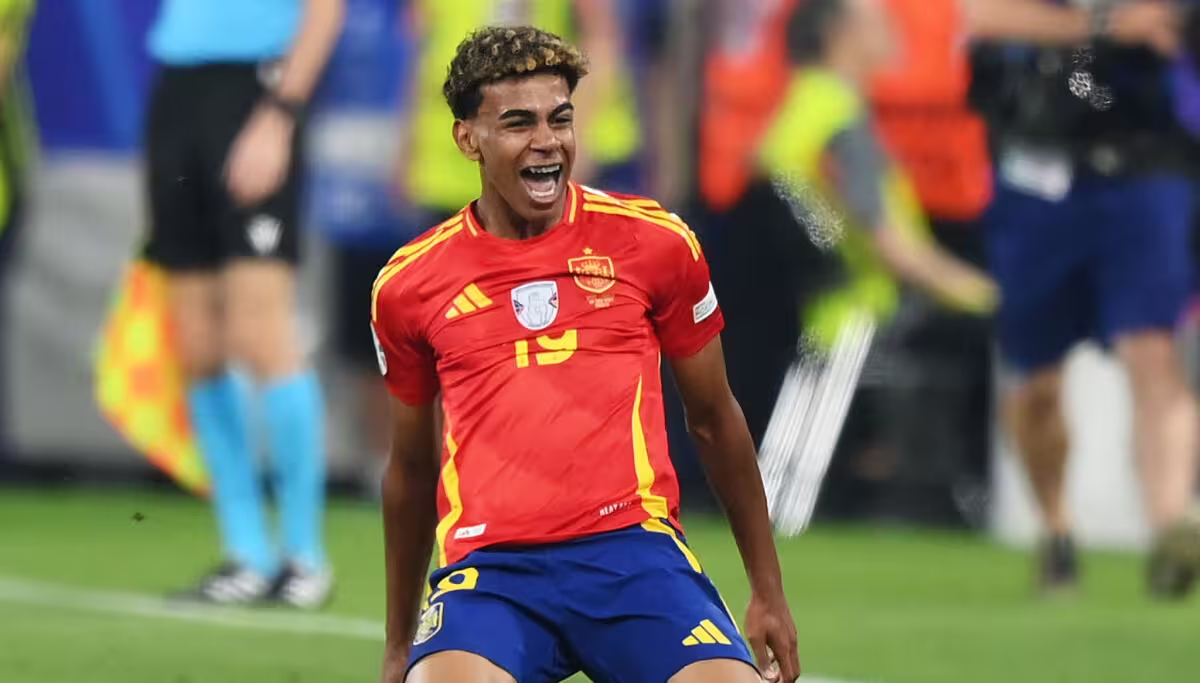
Those years in the residence produced the tension that complicates the hometown-talent story. Living among out‑of‑town teammates, Torres said, made him feel like an odd case; he felt ashamed to explain why he was there and tried to invent different origins. He has described having his family nearby but effectively distant as something that forced him to grow up faster: it was hard, he said, but it also matured him earlier than his peers.
The club and international timeline is compact and unusual. He rose through Valencia CF, then moved on to Manchester City in a deal reported at 25 million euros, and Barcelona secured him in the January 2021 transfer window. Internationally, Luis Enrique gave him his Spain debut in the last matchday of the Nations League in 2020; he later played a part in Spain’s Euro 2024 triumph. At club level his honours accumulated rapidly, and in 2026 he added the Zarra prizeto his individual haul.
Not all of the story is trophies and hometown pride. The profile of Torres acknowledges a period of poor continuity that required professional help — he has relied on a psychologist during a difficult spell — and that thread raises questions the public has not yet had answered. The image of a player rooted in a close community contrasts with the shame he felt while living away from home; the two facts coexist but do not fully explain one another.
That unresolved gap matters because Torres remains both a club and international asset. He is still a central figure at Barcelona and for Spain selection discussions — and his availability and form shape tactical choices at national level, with Luis Enrique reportedly considering him as contingency options should other forwards move on. The tiny town of Foios will likely keep watching: its orchards and neighborhood life have become part of the story fans tell when they talk about him.
The clearest unanswered question is not whether Torres can score or collect medals — he proved that in 2026 — but how long his struggles lasted and what his treatment entailed. Those details would change how the public understands the cost of his rapid rise and how Foios, proud and watchful, will frame the man it produced. Until he or his camp offers more, Torres remains a player shaped in public by goals and trophies and privately by the Sundays he cried when his parents left.



