



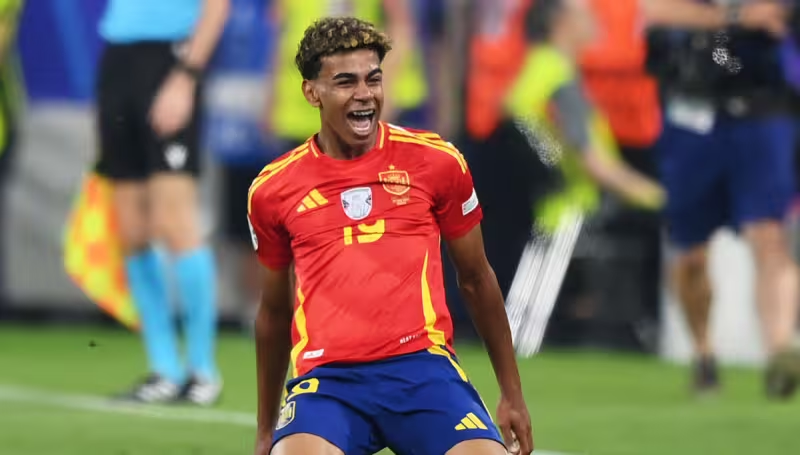
The 2026 World Cup is shaping up to feature a prominent contingent of African‑descended European players: named returnees include England’s Bukayo Saka and France’s Kylian Mbappé and Ousmane Dembélé, while debutants listed among those expected are Spain’s Lamine Yamal, Belgium’s Jérémy Doku and France’s Rayan Cherki — and names such as Jordan Ayew are part of the wider conversation around who will wear national colours in North America.
That list matters now because it ties a tournament nearly a year away to a long-running pattern on football’s biggest stage. European players of African ancestry first appeared at the World Cup in the 1930s; the postcolonial migration of the 1950s expanded the pool in ways that still shape squads today. Mozambique‑born Eusébio da Silva Ferreira, who moved to Portugal in 1960, became the clearest early example when he represented Portugal at the 1966 World Cup and won the Golden Boot.

By the 1990s the presence of African‑descended players carried obvious national and symbolic weight. France lifted its first World Cup on home soil in 1998 with a squad built around Zinedine Zidane, Patrick Vieira and Marcel Desailly; that side was fondly called Black‑Blanc‑Beur but also drew bitter backlash, including claims from Jean‑Marie Le Pen that the team was not truly French and taunts from opposition supporters who hurled questions of origin onto the pitch — Argentina fans shouted, "They play [for] France, but they are all from Angola… Their mom is Nigerian, their dad is Cameroonian."
The roster of names linked with 2026 places this generational story in plain view. Some players named as likely participants are familiar: Bukayo Saka returns after previous tournaments, and France expects Kylian Mbappé and Ousmane Dembélé to be among its leaders. Others would be World Cup debutants on the biggest stage: Spain’s Lamine Yamal, Belgium’s Jérémy Doku and Rayan Cherki for France are singled out as fresh faces who could alter game plans and public conversation alike.
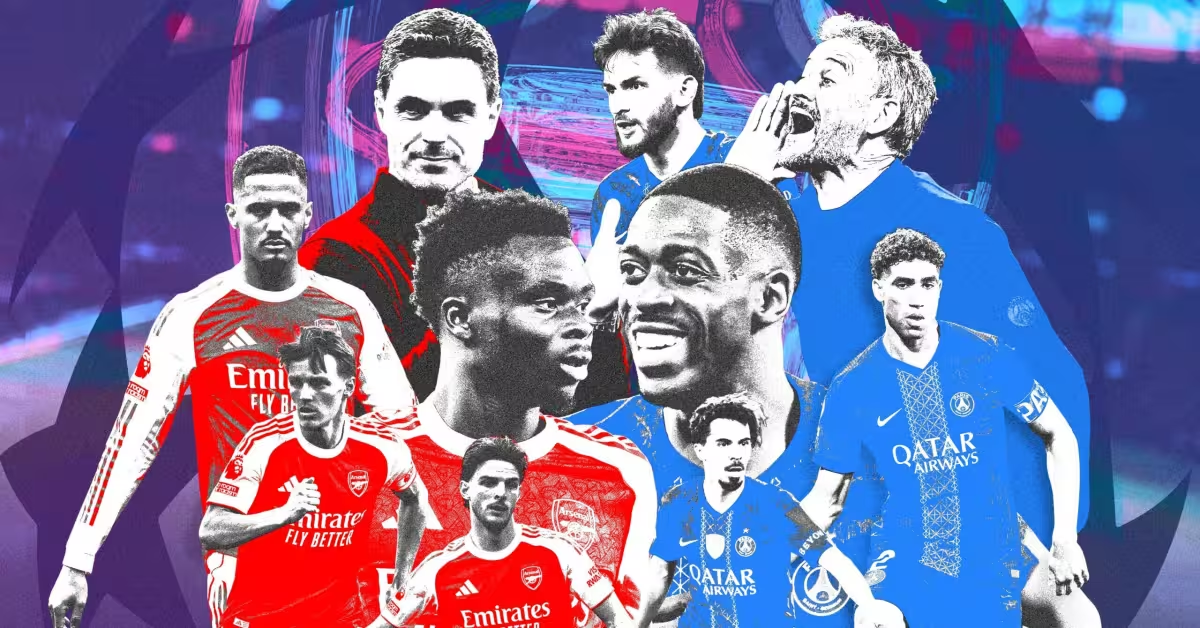
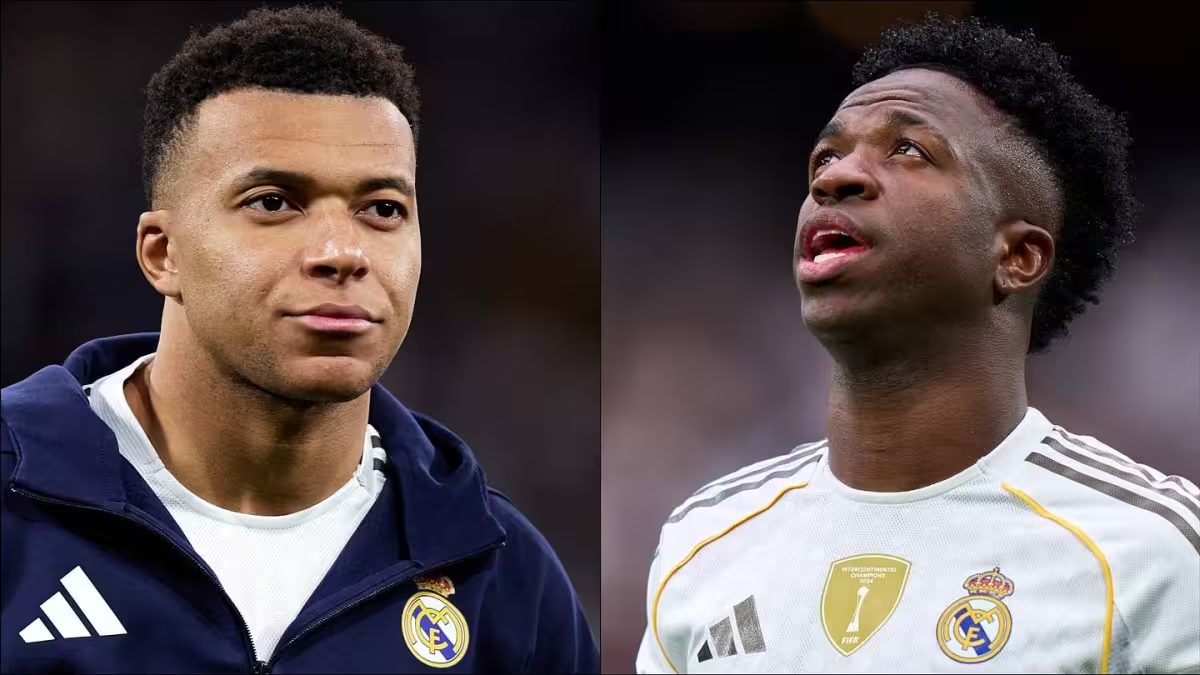
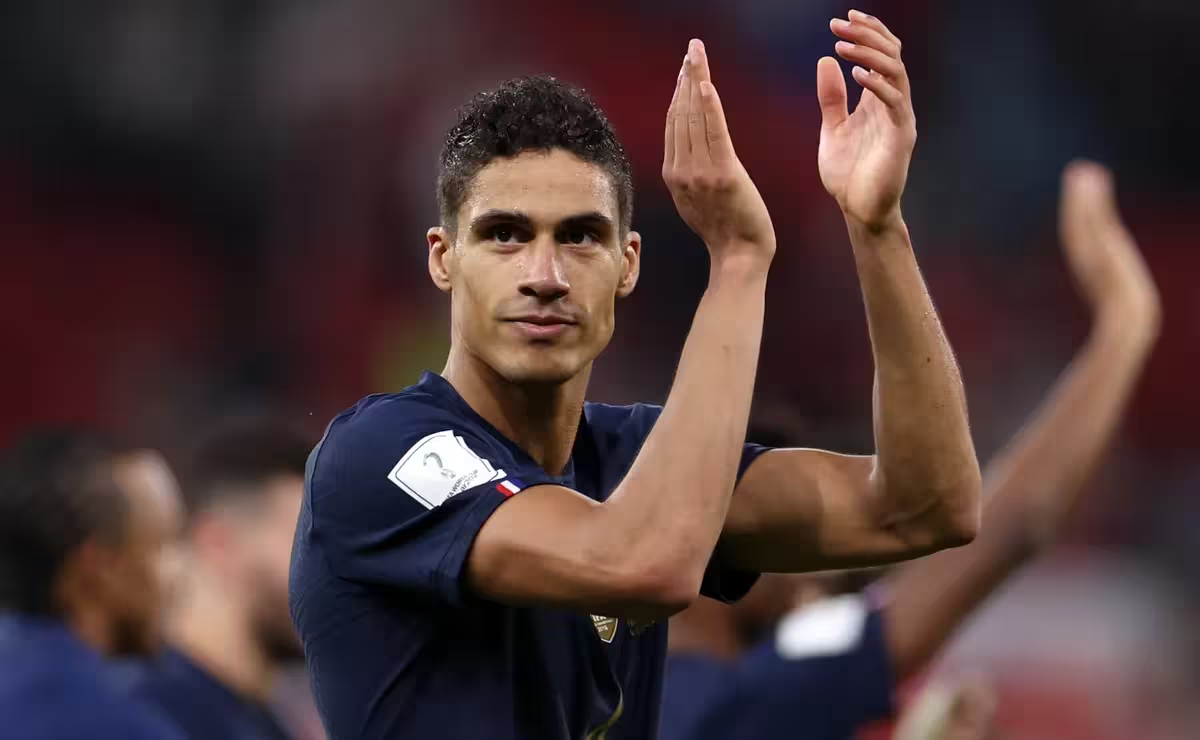
That public conversation contains an uncomfortable countercurrent. Black players have repeatedly been abused after major matches: Mario Balotelli endured racist attacks at the 2014 World Cup, and after France’s 2022 final loss Aurelian Tchouaméni and Kingsley Coman — both Black players who missed penalties in the shootout — faced online racist abuse. The fact that selection lists can prompt celebration and vilification in the same breath is part of the tournament’s recurring drama.
How this happens is straightforward. National teams are selection machines: coaches pick the best available players from their pools, and those choices become shorthand for national identity. Migration patterns and club development over decades have produced multiracial squads; every major tournament turns those squads into stories about belonging as much as about tactics. The players named for 2026 are the latest iteration of that dynamic.
The practical consequence is twofold. On the field, managers will integrate returnees and debutants whose club form and youth development point to different tactical fits. Off it, federations and tournament organizers face the same social test they did in 1998, 2014 and 2022: how to protect players and how national conversations will respond when squads reflect multiethnic realities.
The key open question — and the one that decides what this all means in practice — is simple: which of the named players will be on the final 2026 rosters? Preliminary lists and predictions matter for headlines, but the definitive moment will be the federations’ squad announcements and then the tournament itself. When those lists arrive, they will not only set lineups; they will show whether the pattern of prominence for African‑descended European players continues, and whether the game has improved in shielding those players from the abuse that has shadowed previous finals.



