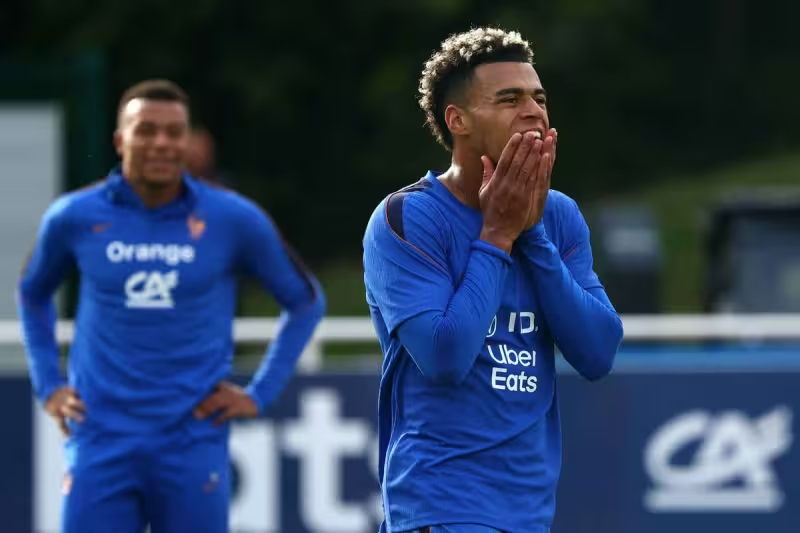
Didier Deschamps has installed Désiré Doué as France’s designated starter on the left wing for the 2026 World Cup, a decision sealed by a season that produced 13 goals for PSG and a string of decisive moments for club and country.
Doué, who celebrated his 21st birthday with the national team, finished the 2025–2026 campaign with 13 goals in 39 matches for PSG and delivered headline moments on the biggest stages: an 11th‑minute opener in the Champions League quarterfinal at the Parc des Princes that set up a 2‑0 win over Liverpool, a two‑goal brace against Colombia in Washington that were his first international goals in six appearances, and an assist for PSG’s fourth in the 5‑4 first‑leg semifinal against Bayern on April 28. He also ranks second at PSG in successful dribbles per match, behind Khvicha Kvaratskhelia.

Deschamps made the pick explicit by including Doué in his 26‑man squad for the 2026 World Cup. “He’s a very young player, he just celebrated his 21st birthday with us. He’s ready, decisive with his club, and with us too,” Deschamps said, listing Doué’s versatility: “He can play in three positions, he has the ability to beat players, dribble, make a difference, and he covers a lot of ground. That’s not always the case for attacking players. It’s great to have him with us, he’s another weapon.”
The selection is also a vote of confidence after a rocky start to the season: Doué began 2025–2026 sidelined by thigh and calf injuries that kept him out for several weeks, a period that drew praise for his response from Luis Enrique. “There are different moments in a season, ups and downs, and Désiré Doué showed his mentality during this tougher period,” Luis Enrique said after the forward returned to form.
Those mixed moments matter because France arrives in the summer carrying nine forwards in a 26‑man squad. The depth gives Deschamps options but also leaves the left flank contested. Adrien Rabiot framed that competition plainly: "Bradley is better at making runs in behind with his speed. Désiré can beat defenders in tight spaces, and he’s clinical in front of goal," he said, underlining a real tactical distinction between Doué and Bradley Barcola even as Barcola remains in the squad.
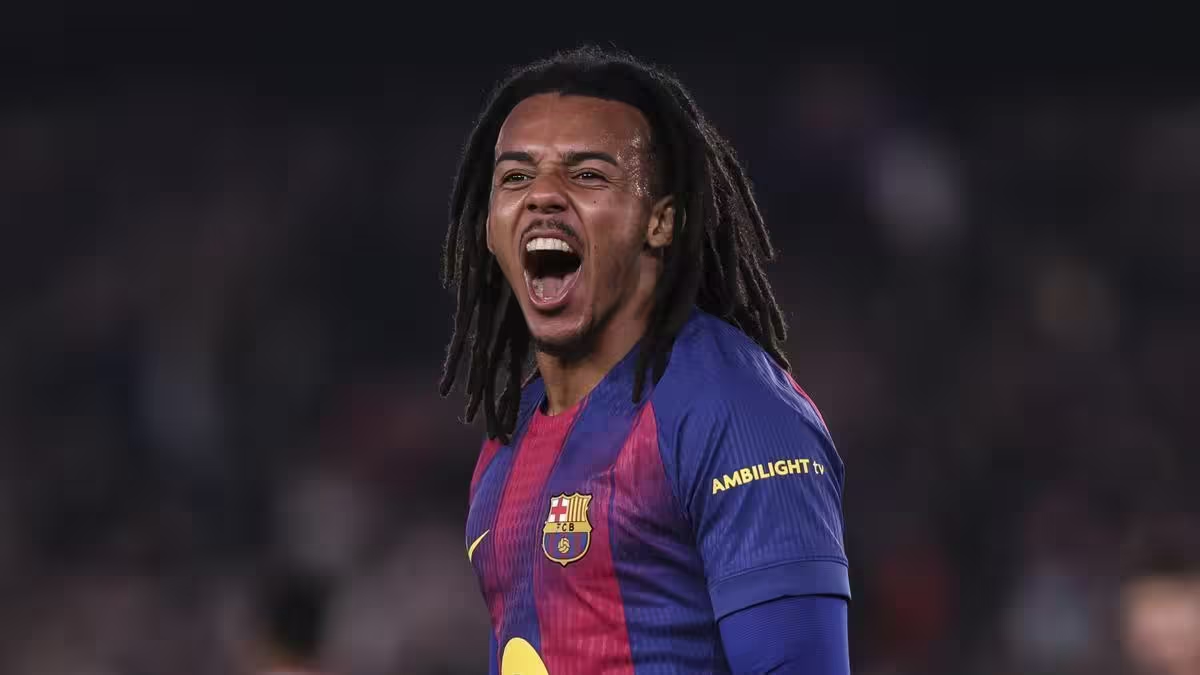
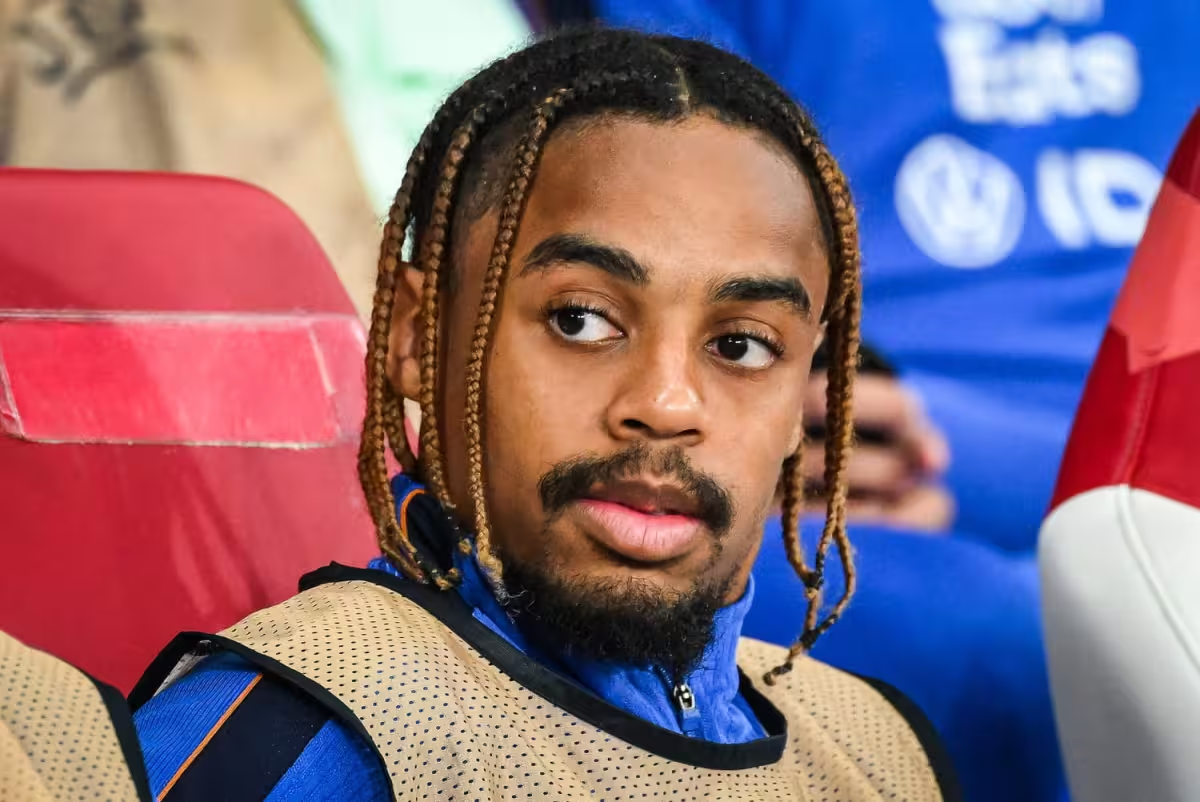
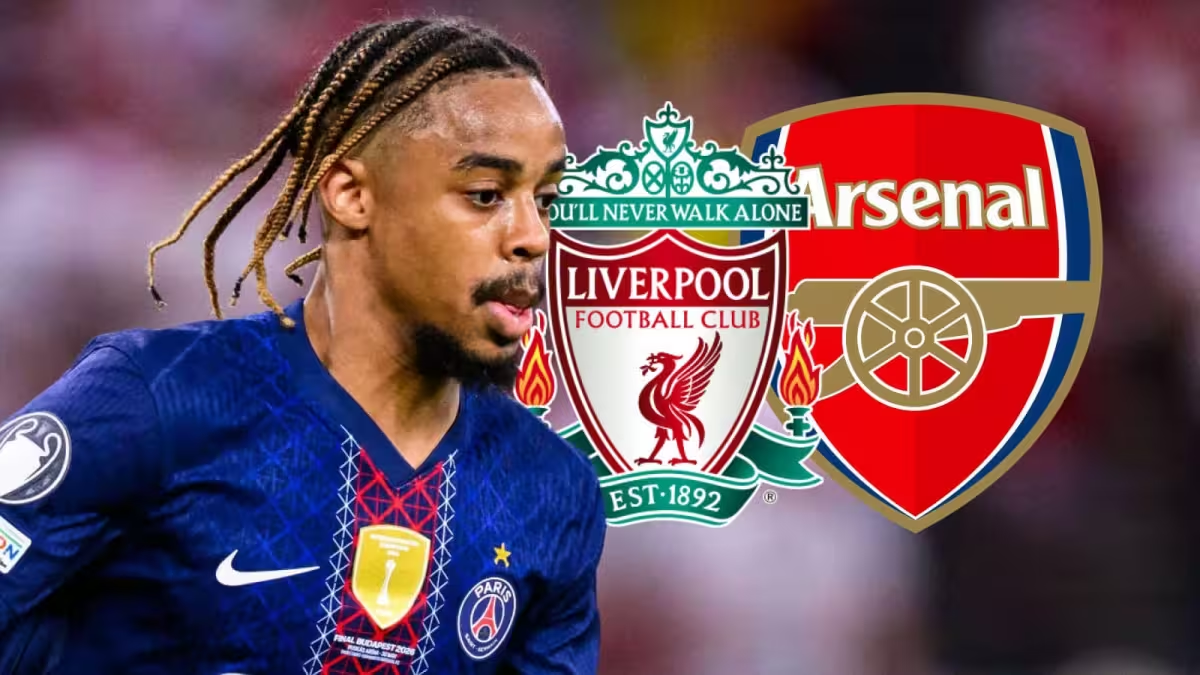
That distinction is the friction point. Barcola’s struggles to recapture early‑season form have opened the door on the left, and other forwards’ limitations — notably one player’s difficulties when used there — have widened it. Yet keeping the role secure will not be automatic; France’s forward group still includes established stars who shape team tactics and minutes, and the coach has repeatedly emphasized positional flexibility over rigid starters.
What made Doué’s case persuasive was not just the goals but the timing and variety of his contributions: a Champions League knockout‑stage strike in front of PSG’s crowd, a pair of international goals on tour in the United States, and an assist in a dramatic semifinal tie. Those moments, combined with his dribbling numbers and Deschamps’s praise, converted potential into a practical plan for selection at the World Cup.
The unanswered, decisive question now is practical and immediate: when France lines up for its first match in the 2026 World Cup, will Deschamps hand Doué the left‑wing starts he has earned on form, or will the coach deploy the brigade of nine forwards according to match‑by‑match needs? Deschamps has given Doué the nomination; the tournament itself will determine whether he keeps the spot when tactics and minutes matter most.
For readers tracking the squad, the coach’s next public lineups and France’s opening fixtures are the clearest milestones to judge whether Doué’s breakthrough becomes a tournament mandate or one of several viable options on the left. In the meantime, Doué’s season — from injury to goals, from Washington to the Parc des Princes — is the case file Deschamps took to Qatar's big stage this summer.
See Deschamps start Doué, Dembélé and Saliba in France – Irlande Du Nord: and note that Doué was slated to be rested and miss the Côte d’Ivoire clash: