



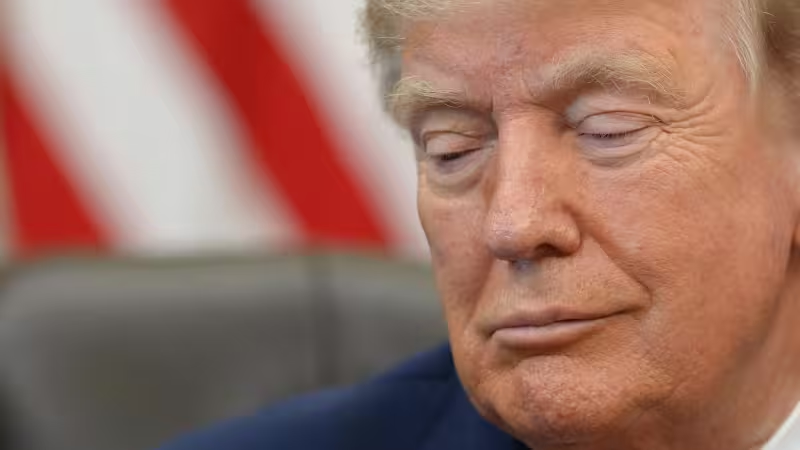
The U.S. government can continue collecting the 10% worldwide tariff President Donald Trump imposed in February while legal challenges proceed, the Court of Appeals for the Federal Circuit in Washington ruled Thursday.
The Federal Circuit said the government had shown a strong likelihood of prevailing on the merits, clearing the way for the levy to remain in force as courts sort out the underlying legal dispute. The tariff was invoked under Section 122 of the Trade Act of 1974 and is set to expire on July 24.

Section 122 lets a president impose worldwide import duties of up to 15% for 150 days in response to “fundamental international payments problems,” and had not previously been used to justify import taxes. The Trump administration argues that trade deficits fall within the statute’s language; the appeals panel concluded the government’s reading was likely to succeed, at least for now.
The decision means imports covered by the 10% levy will continue to face the charge until the litigation reaches a final resolution or the tariff period lapses. That outcome was described in court filings as a procedural win for the administration, because it preserves the status quo while the parties pursue further review.
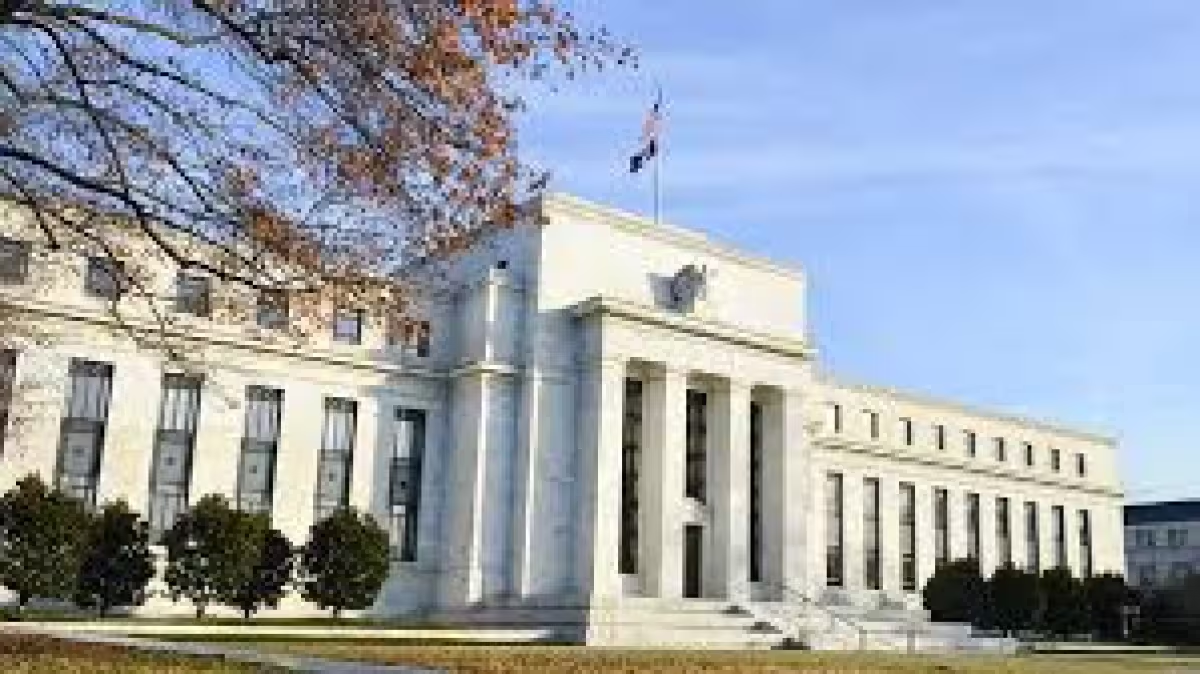

Those developments follow a dramatic split decision at the lower level. Last month a three-judge panel of the Court of International Trade in New York found in a 2-1 ruling that the 10% global tariffs were illegal, with the majority writing that the measure was invalid and unauthorized by law. The case was brought by small businesses that said the levy exceeded the power Congress delegated to the president under the statute.
The appeals court’s order — allowing collection to continue despite the trade court’s 2-1 finding of illegality — is the central legal friction here: it lets the executive branch keep enforcing a tariff a lower court called unauthorized while judges evaluate which interpretation of Section 122 controls. The larger legal question is whether trade deficits qualify as the kind of “fundamental international payments problems” Section 122 was aimed at addressing.
The tariffs were imposed after the Supreme Court in February struck down broader double-digit tariffs the administration had used the year before, and the new action under Section 122 was presented as a narrower statutory route to reimpose duties. The appeals court’s move preserves that route for the time being even as challengers press their claim that the statute does not authorize this kind of import tax.
What happens next is likely to determine whether the 10% duty survives beyond this phase. The case could be headed to the Supreme Court, and the Federal Circuit’s permission to collect will remain in effect through whatever appeals follow and until the July 24 expiration unless the administration acts to extend the levy. For background on how the White House’s broader tariff plans intersect with the litigation, see the White House Tariff Repayment Strategy story:
The immediate practical result is clear: importers covered by the levy must continue to pay the 10% charge now. The unresolved, consequential question — and the one that will determine whether those payments were lawful in the first place — is whether the Supreme Court will ultimately uphold or strike down the use of Section 122 to impose a 10% worldwide tariff.



