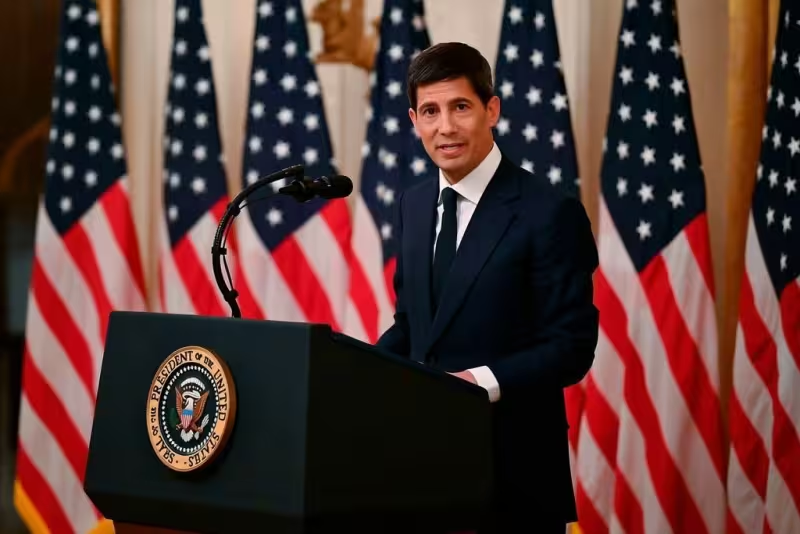
The Federal Reserve’s June meeting opened June 16 with Kevin Warsh presiding as chair for the first time, and markets are awaiting a widely expected decision to leave the federal funds rate unchanged when the FOMC issues its policy statement on Wednesday, June 17. Wall Street will then switch its attention to Warsh’s post-meeting press conference, where investors hope to parse tone and guidance beyond a one-line policy vote.
Traders have already registered a mixed response to the start of the meeting. The Dow Jones Industrial Average closed above 52,000 on Tuesday — a fresh record — even as the S&P 500 and the Nasdaq Composite slipped and tech stocks slumped on the first day of the meeting. Short-term yields edged lower; the 2-year Treasury yield ticked down to 4.056% from 4.064% on Monday. Energy markets eased as front-month West Texas Intermediate crude futures fell 4% to finish below $80 per barrel for the first time since March 4.

Louis Navellier, who watches investor reactions closely, put the calendar plainly: "Tomorrow, we get to hear Kevin Warsh's first comments as the new head of the Federal Reserve, when the FOMC releases its rate decision." He added that the market’s mood will hinge on tone: "If he's perceived as more dovish than expected, it should be bullish for stocks. If he's hawkish, it could bring volatility." Navellier also flagged the balance sheet as a likely focal point: "Perhaps more interesting, will be what he wants to do with the Fed's balance sheet."
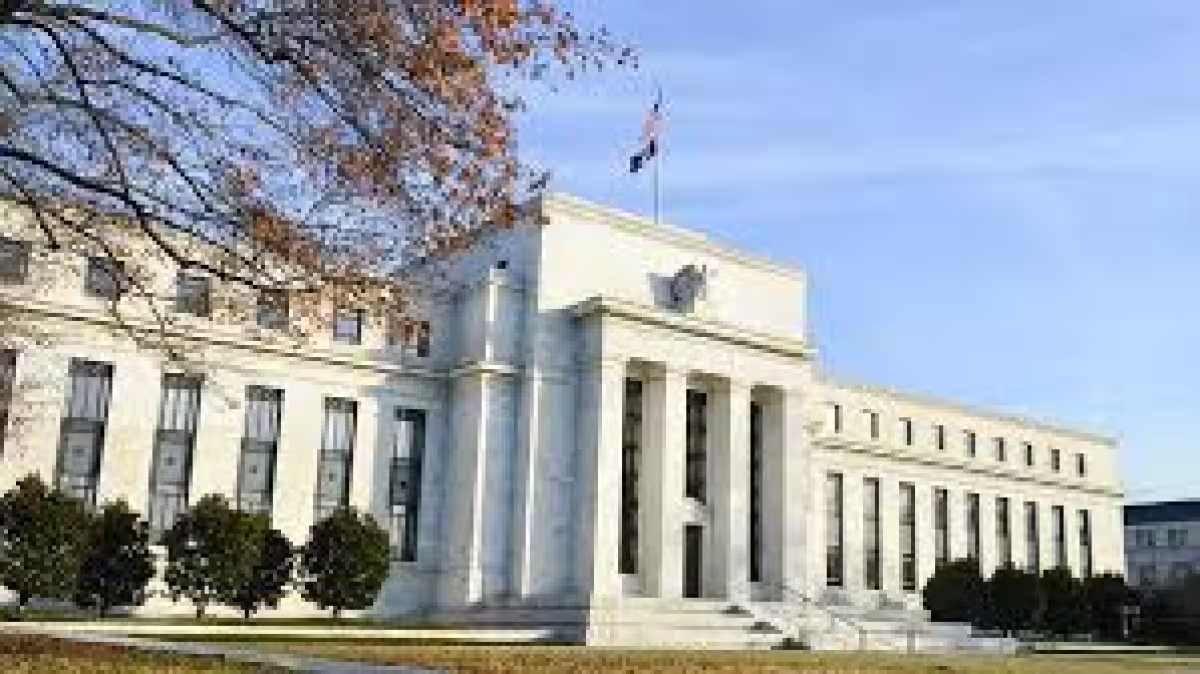
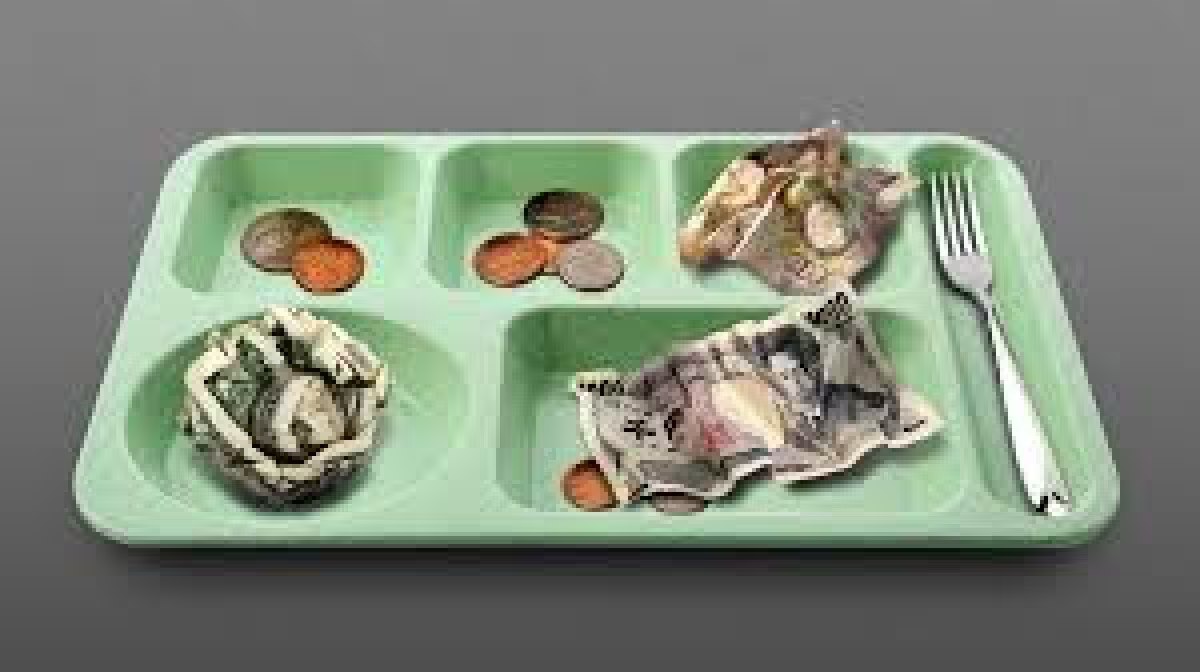
Those questions matter because the Fed is widely expected to hold rates even as inflation is accelerating and energy prices remain elevated — a tension that makes the wording around the decision more consequential than the vote itself. Market participants want to know whether the Fed will simply repeat existing language or try to reshape expectations about future moves and about the pace and shape of its balance-sheet runoff.
Warsh arrives at the podium with an established view on Fed communication. As one observer put it, "For more than a decade," Warsh has argued that the Fed should pare back how much it explains. Commentators note the practical stakes of that stance: "How much a central bank reveals about its thinking shapes mortgage rates, markets and the cost of borrowing for everyone." Wall Street will parse Wednesday's meeting, his first as Fed chairman, for any sign of where he'll take it — whether toward tighter guidance or a deliberately narrower public footprint.
What to watch on Wednesday is straightforward. The FOMC statement will confirm the vote and the committee's near-term outlook; the press conference will be where nuance lives. Investors will focus on three things: any language about the trajectory of inflation, explicit signals about whether future hikes are on or off the table, and, crucially, commentary on the Fed's balance sheet strategy. If Warsh leans into the less-is-more communications style he has advocated, markets may interpret the restraint as a policy signal in itself, driving moves in mortgage rates and Treasury yields. The single unresolved question after the vote will be whether Warsh uses his first press conference to map a clear path for balance-sheet policy — and by extension, whether he will let markets rely on precise forward guidance or force them to read tone instead of specifics.