



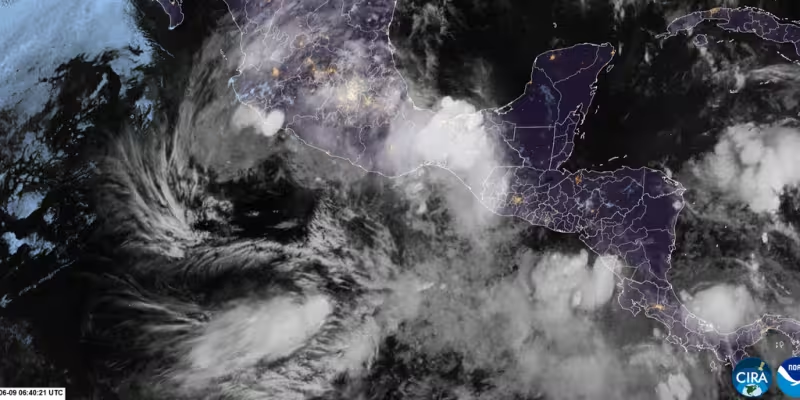
Tropical Storm Cristina formed Monday in the Pacific Ocean off the coast of Nicaragua, the National Hurricane Center said, immediately putting sections of Central America on alert for heavy rain and flash flooding.
The NHC reported Cristina had maximum sustained winds of 45 mph and was centered about 105 miles west-northwest of Managua, Nicaragua, and roughly 125 miles southeast of San Salvador, El Salvador. A tropical storm warning was posted from Puerto Sandino to the Guatemala/El Salvador border, and both Nicaragua and El Salvador issued Tropical Storm Warnings.

The storm was forecast to drop 4 to 8 inches of rain across coastal Nicaragua, Honduras, El Salvador and Guatemala through Thursday, with localized maximum totals near 12 inches in some coastal areas. The NHC warned Cristina could produce heavy rain and life‑threatening flash flooding across Costa Rica, Nicaragua, Honduras, El Salvador and Guatemala through midweek.
Forecasters monitoring Cristina reported slightly different readings: a FOX Weather update placed maximum sustained winds at 40 mph and located the center about 100 miles west-northwest of Managua, and said the system was expected to meander along the Central American coast through the week before gradually turning northwestward. Both forecast tracks agree on an extended rainfall threat to the same stretch of coast.
The magnitude of the rainfall forecast is the clearest, immediate consequence for the region. Warnings are in force along a wide coastal swath from Puerto Sandino north to the Guatemala/El Salvador border, and the 4–8 inch widespread totals, with pockets near 12 inches, elevate the risk of flash floods, swollen rivers and localized landslides in low-lying and mountainous terrain.
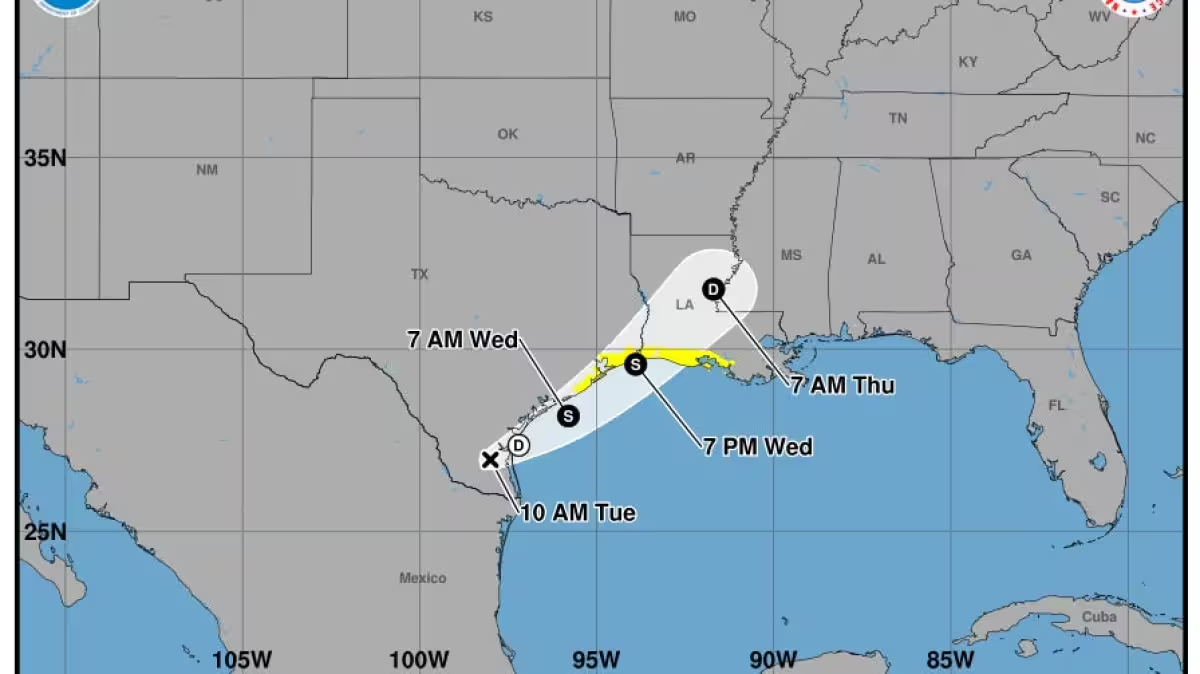
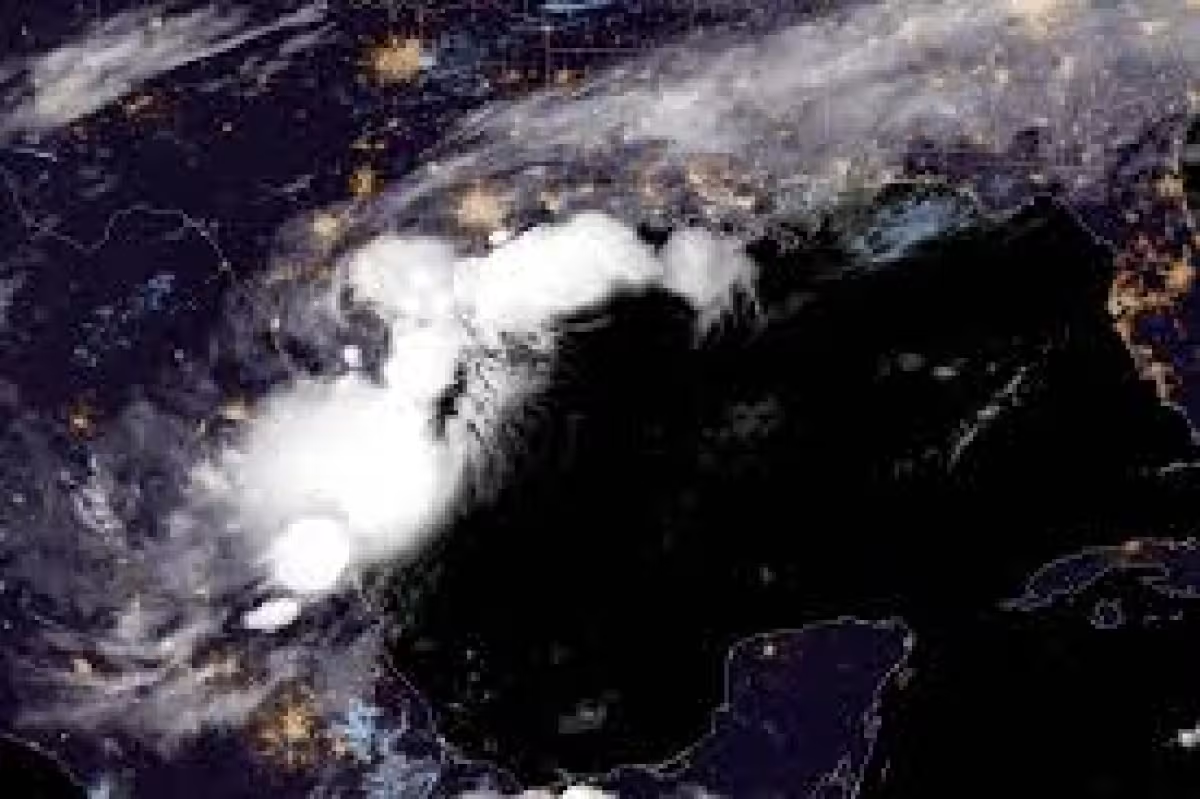
Context for the weekwide picture: Cristina is the second named storm in the Eastern Pacific this season, arriving as another system, Tropical Storm Boris, was spinning off the coast of Mexico. Boris was expected to make landfall on Tuesday and later dissipated over southern Mexico, where its remnants were forecast to produce additional rainfall for Guerrero and Oaxaca. Eastern Pacific development typically ramps up around this time of year.
The key complication is that Cristina was expected to weaken by midweek even as it continued to pose a heavy‑rain and flash‑flooding threat across multiple countries. FOX Weather and the NHC both flagged a gradual weakening trend, yet the agencies cautioned that a drop in wind speed would not remove the immediate hazard of torrential rainfall. In short, a weaker storm by wind metrics can still deliver the rains that drive the most destructive flooding.
Practical consequences are immediate: coastal communities in Nicaragua, Honduras, El Salvador and Guatemala should prepare for several days of persistent, sometimes intense rainfall through Thursday. The most dangerous outcomes will come where soils are already saturated or where steep slopes and narrow river valleys concentrate runoff. Authorities in the warned areas have already issued tropical storm warnings; residents should follow local guidance on evacuations and road closures.
What the public and officials still do not have is a post‑storm accounting of how much damage Cristina will cause in Guatemala and El Salvador. Forecasts lay out likely rainfall totals and flash‑flood risk through midweek, but reliable estimates of flooding, infrastructure or crop losses must wait until the system passes and assessments can begin.
What happens next: Cristina was expected to meander along the Central American coast through the coming days and then gradually weaken and turn northwestward, reducing wind intensity but not the risk of heavy rain through midweek. Emergency services and relief planners in the affected countries should be ready to move from warnings to response as soon as the storm’s core moves on and on‑the‑ground damage surveys can be conducted.



