



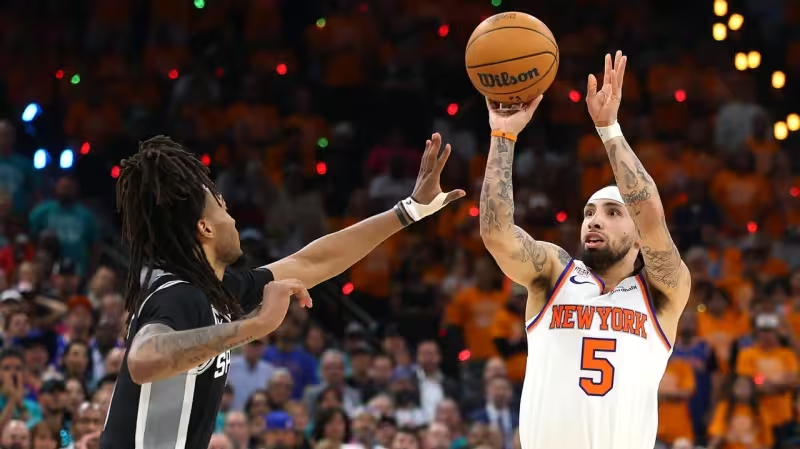
The Knicks head to Friday night’s Game 2 in San Antonio with a 1-0 lead in the 2026 NBA Finals and the postseason’s most productive reserve unit, a bench that has driven New York through 15 playoff games.
New York’s bench ranked first among postseason teams entering Game 2, outscoring opposing reserves by 5.1 points per game and outpacing opponents by a total of 77 points through 15 playoff games. In Game 1, the reserves held a clear advantage, beating San Antonio’s bench 28-20 and helping the Knicks take the opener.

Landry Shamet led the way from the second unit in Game 1 with 13 points on 5-for-9 shooting, and Mitchell Robinson chipped in six rebounds while playing with a broken pinkie. Deuce McBride finished with six points, four assists and a plus-11 rating, the sort of complementary line that has become routine for this group. “Our bench unit, we have a really unique group,” Shamet said, adding that the players trust and root for each other and are prepared to step into tough spots.
Jose Alvarado’s short-handed flip into Game 1 illustrated that readiness. He entered in the first quarter for Jalen Brunson after Brunson went to the locker room when his right knee was hit, then scored seven points in the second quarter and drew a goaltending call on Victor Wembanyama. The Knicks obtained Alvarado from the Pelicans on Feb. 5; the Brooklyn native, a former diehard Knicks fan, described the moment as what he has worked for, saying his second thought was that this is what he lives for and he wanted to do what the team needed.


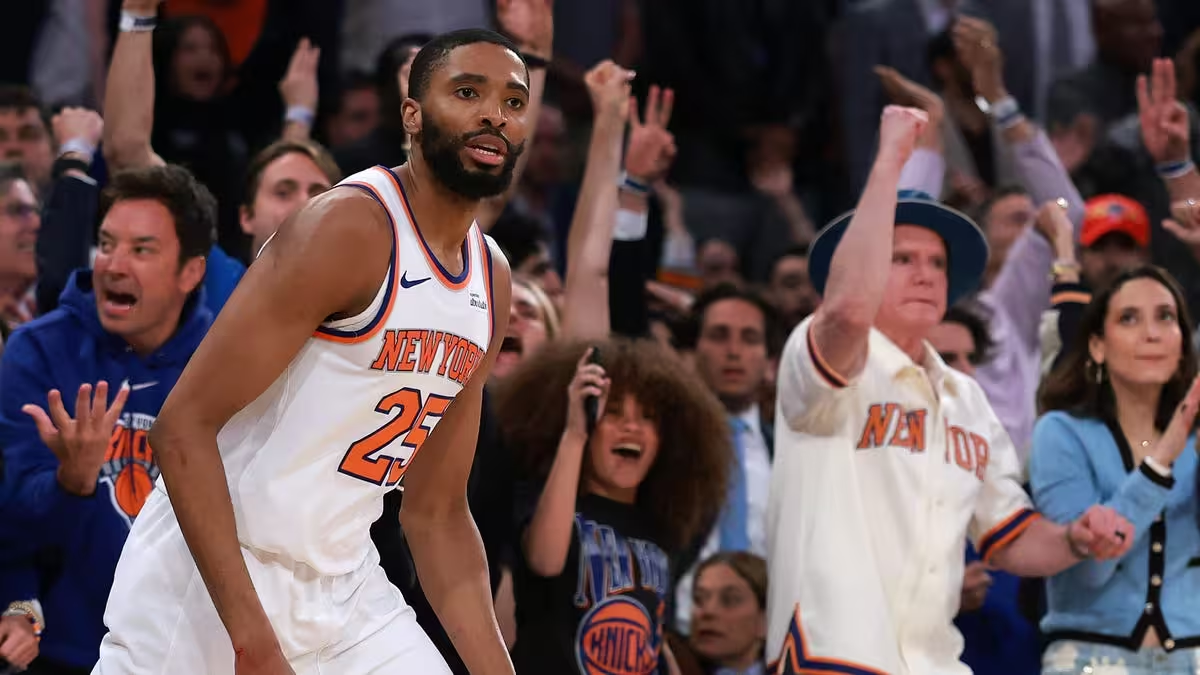
The bench’s blend of shooting, physical defense and energy has been praised internally. A veteran teammate summarized Alvarado’s impact by noting how he pushes the pace, forces the team to play faster and brings contagious energy whether on the floor or on the bench — the kind of presence that can cover for starters when rotations get thin.
The durability of that approach is the practical edge for New York’s schedule this week: with Game 2 set for Friday night in San Antonio, the Knicks can rely on rotations that have worked in the postseason, but they must also be ready to adjust quickly if starter availability changes. That calculation sharpened during Game 1, when Brunson left for a locker-room check after his right knee was struck in the first quarter; Alvarado’s insertion and the bench’s production softened the immediate blow, but the club still faces uncertainty about Brunson’s status heading into the second game.
What to watch in Game 2: whether Brunson returns at full strength and how many minutes he can reasonably handle, and whether New York’s bench can reproduce its 28-20 advantage from Game 1. If Brunson is limited, expect extended runs from Shamet, McBride and Alvarado and heavy Janitorial minutes from Robinson on the glass—roles that have produced a combined postseason margin of +77 for the reserves through 15 games.
The decisive open question is simple: can Brunson be available and effective enough to keep the starters’ minutes stable, or will the Knicks again have to rely on their top-ranked bench to shoulder a larger share of the load? The answer will determine how New York deploys its rotation and, likely, how the series unfolds when the teams reconvene Friday night in San Antonio.



