




A major newspaper this week published a team-by-team guide to the 48 squads preparing for the 2026 World Cup, and its Mexico entry reminded readers that the host nation is an automatic qualifier as one of three co-hosts for the tournament that will be staged in the United States, Canada and Mexico this summer.
The guide underlines what Mexico’s supporters already know: the World Cup has expanded to 48 teams from the 32 that had competed since the 1998 edition in France, and the tournament will be the biggest yet. Mexico arrives with recent hardware — it won the Concacaf Nations League and the Gold Cup in 2025 — and a clear hierarchy of names to watch, led by Fulham striker Raul Jimenez, 34, who will be part of his fourth World Cup finals, and 17-year-old midfield prodigy Gilberto Mora. Javier Aguirre, back in his third stint as Mexico head coach, has publicly said he prefers a "frenetic style" rather than to "dominate possession."

That combination — continental triumphs, a veteran goalscorer and a teenage arrival — gives Mexico a tidy narrative heading into summer. It also comes with familiar history that tempers expectation: Mexico last failed to qualify for the finals in 1982 and missed 1990 because it was banned by FIFA; the national side went out of the group stage at the 2022 World Cup for the first time since 1978 and has never advanced beyond the quarter-final stage, its deepest run ending in a penalty defeat to West Germany in 1986.
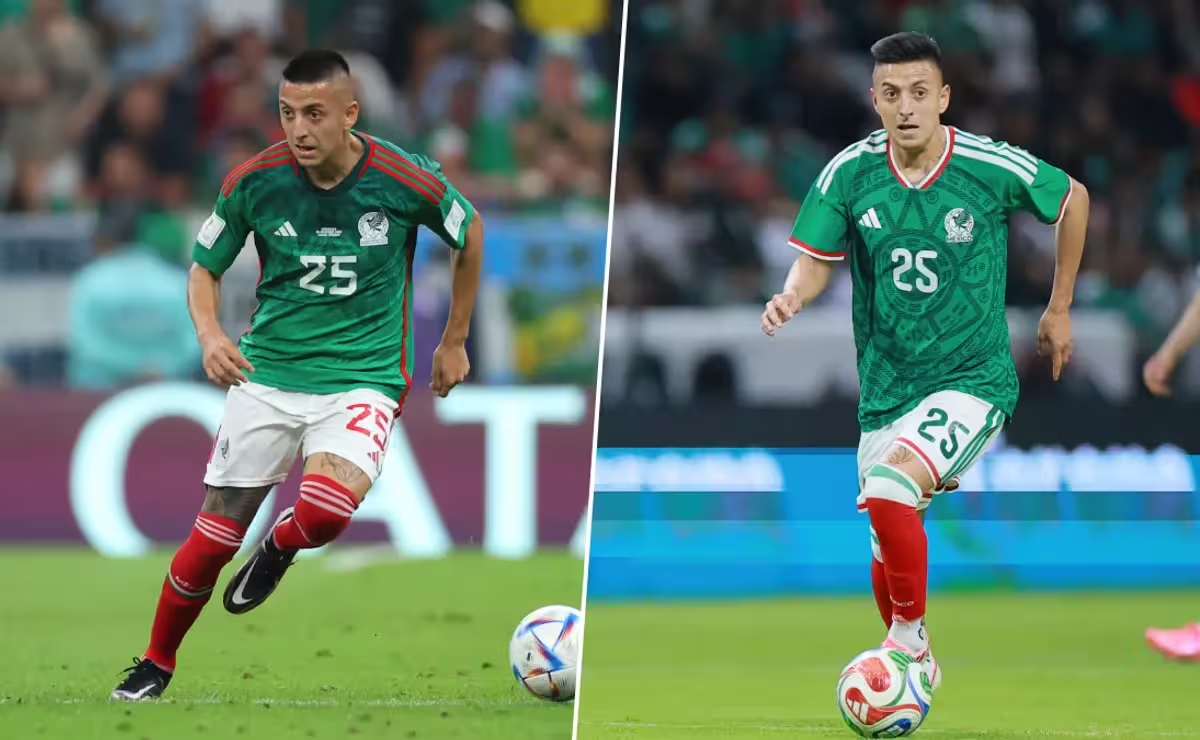
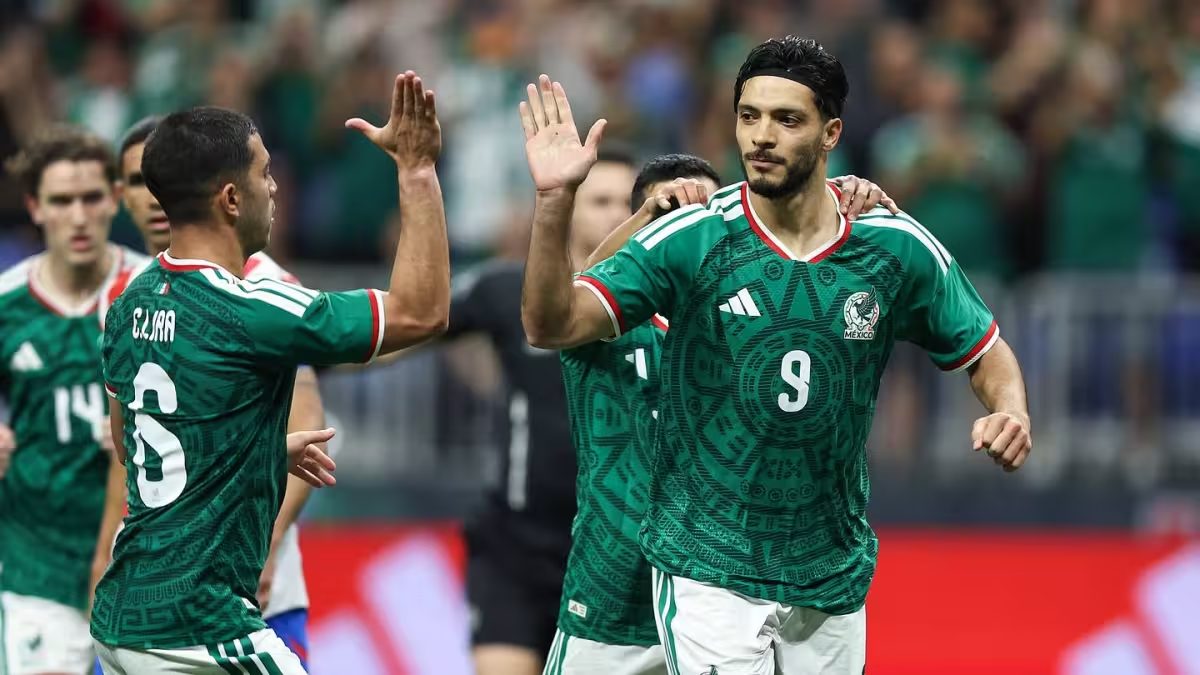

The hard detail that makes the Mexico preview meaningful is not the trophies but the mismatch between stated intent and on-field habit. Aguirre’s preference for a high-octane approach sits uneasily next to a domestic record of intermittent, ponderous spells and often risk-averse football — a stylistic gap that has a direct bearing on how far Mexico can travel in a 48-team draw. It is worth remembering Aguirre’s World Cup record: he coached Mexico at the 2002 finals, when the team lost 2-0 to the United States in the round of 16, and again in 2010, when Mexico fell 3-1 to Argentina in the round of 16.
For readers who searched Super Bowl 2026 and landed here: this primer is aimed at the other global football event that will dominate the northern hemisphere this summer. Practically speaking, Mexico’s automatic qualification removes the pressure of a qualifying campaign and lets Aguirre experiment with personnel and tempo in friendlies and tune-up matches. The roster mix to watch is obvious — Jimenez’s finishing, Mora’s creative spark, and how quickly the coach can coax cohesion out of a side that has oscillated between momentum and caution.
What matters now is not that Mexico is home soil or that the tournament is larger; it is whether the team can turn regional dominance into a deeper World Cup run. The single most consequential unanswered question is precise: can Aguirre translate his call for a "frenetic style" into sustained attacking football that breaks Mexico past its historical ceiling — the quarter-finals — when the globe’s biggest World Cup starts this summer?



