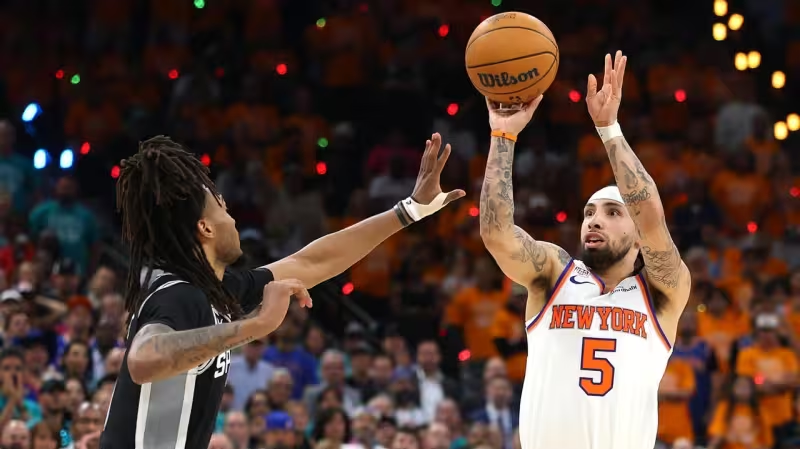
The New York Knicks rode their depth to a 1-0 lead in the 2026 NBA Finals on Wednesday, as their bench outscored San Antonio’s reserves 28-20 in Game 1 in San Antonio.
The edge from the second unit was not an accident: New York’s bench had been worth an average 5.1 points more per game than opponents over the postseason heading into Friday’s Game 2, and through 15 playoff games the reserves had outscored opponents by 77 points. Landry Shamet led the bench scorers in the opener with 13 points on 5‑for‑9 shooting.

That production showed up in concrete contributions. Mitchell Robinson grabbed six rebounds while playing with a broken pinkie. Deuce McBride finished with six points, four assists and a plus‑11 rating. And when Jalen Brunson left for the locker room in the first quarter after a collision, Jose Alvarado stepped into the fray, drew a goaltending call on Victor Wembanyama and poured in seven points in the second quarter.
Shamet summarized the unit’s chemistry plainly: "Our bench unit, we have a really unique group," he said, adding that they "trust each other and root for each other — whoever it is, whoever is inserted into a tough spot or when there is foul trouble." That trust mattered the moment Brunson went out; Alvarado, acquired from the Pelicans on Feb. 5, immediately brought the energy his teammates describe.
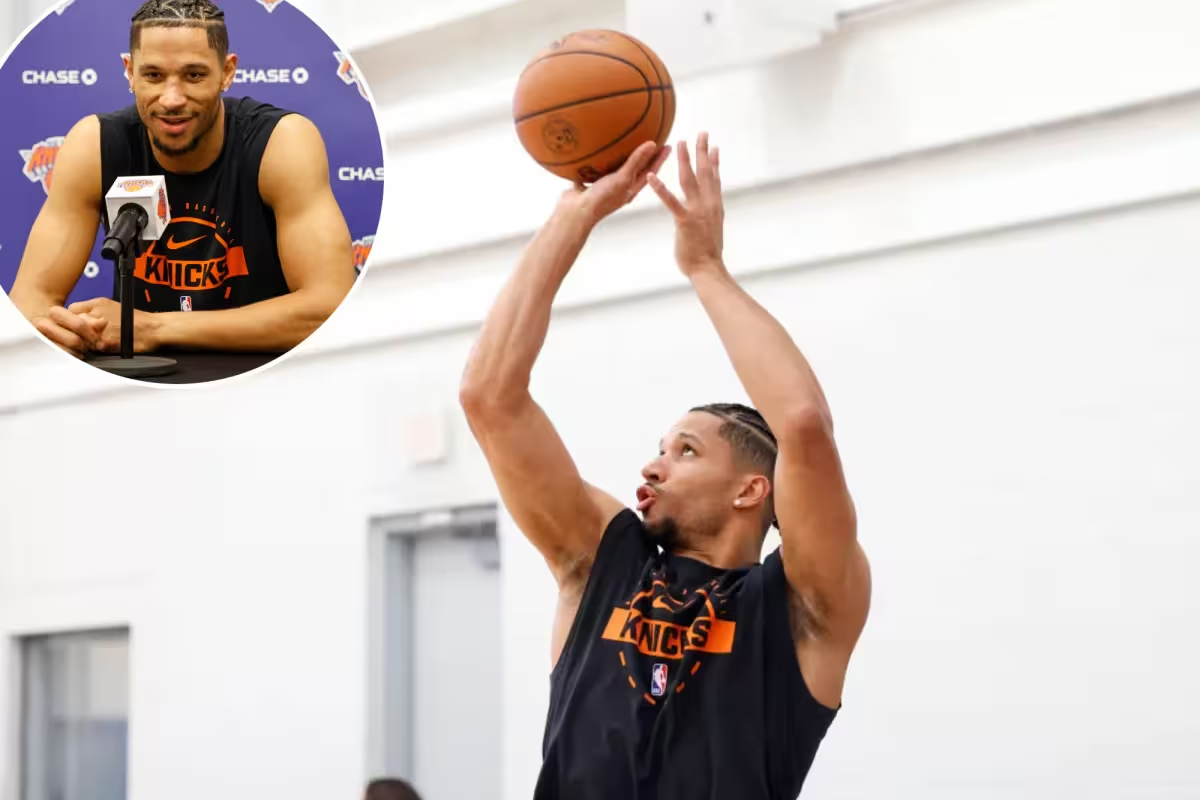
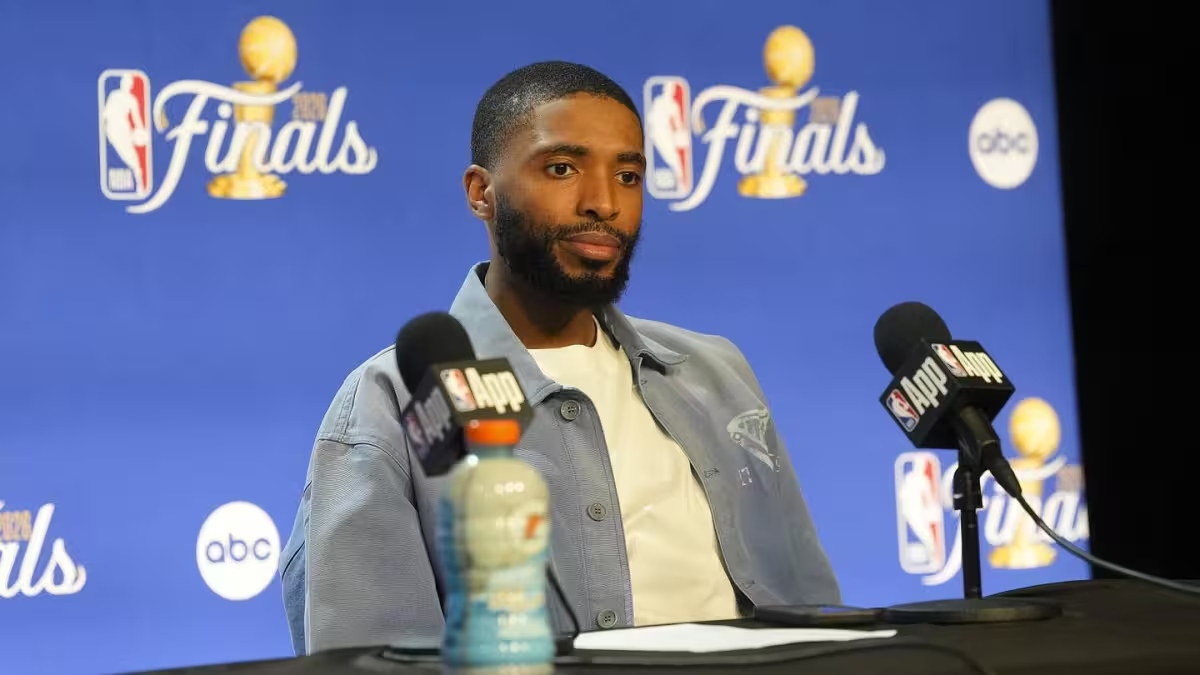
Josh Hart, who referenced the February trade that brought Alvarado to New York, said the rookie reserve's attitude was obvious from the start: "Jose was kind of like a deer in the headlights at first," Hart said, but added that Alvarado had contagious energy and a chip on his shoulder that translated into effective minutes. Alvarado, a Brooklyn native and lifelong Knicks fan, said after the game his initial reaction to Brunson’s exit was blunt — "He better come back" — then tried to explain why he was ready to step up: "My second thought is this is what I do. I have worked since I was a kid for this moment, this is something I live for and I just want to take advantage of it and do what the team needed. And I hope I did that."
Context matters. The Knicks entered the Finals with the postseason’s best bench scoring margin, and Game 1 underlined how that depth can function as a strategic hedge: when starters need rest, when matchups change, or when injuries force adjustments midgame. New York’s reserves did more than hold the fort — they tilted the minutes in the Knicks' favor at critical stretches.
But the game also left an obvious fault line. Brunson’s exit in the first quarter — after Landry Shamet accidentally knocked Harrison Barnes into Brunson’s right knee — created immediate uncertainty. Alvarado’s performance softened the blow, but New York’s margin for error shrinks if Brunson is limited beyond Game 1. The Knicks can lean on a productive bench; they cannot replace Brunson’s playmaking and scoring with reserves alone without changing how they navigate the series.
Game 2 is set for Friday night, and the defining question heading into it is simple: how healthy will Brunson be, and how will the Knicks balance their clear bench advantage with the need to protect their star guard? If New York’s reserves keep producing at the levels seen through 15 postseason games, the Knicks can afford shortfalls. If Brunson’s knee lingers, the series shifts from one of depth to one of how well New York can reconfigure around its injured floor leader.