



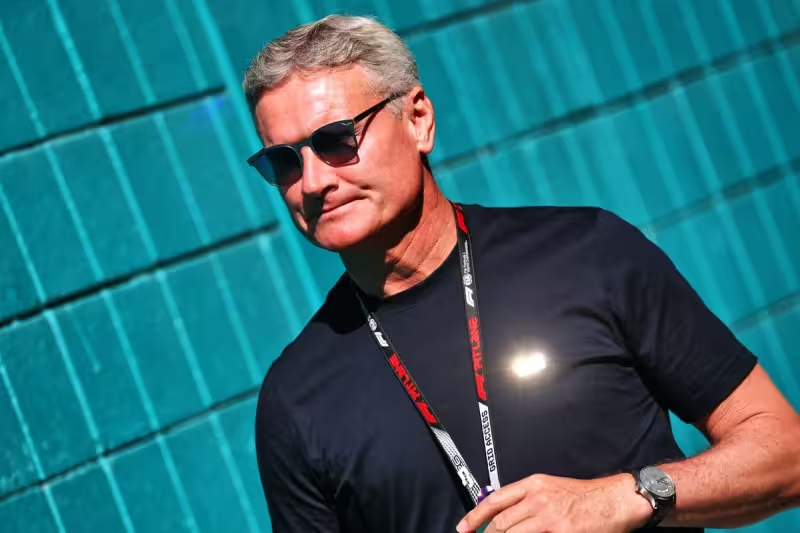
“We’d done all the pre‑briefs and all the things I was used to,” David Coulthard told a Monaco audience, and then he asked, “when are we doing the team debrief?” The reply, he recalled, was blunt: “no, we don't do that.” That exchange after his Formula 1 debut at the start of the 2009 season, Coulthard said, is the moment that pushed him to build a different kind of broadcast company.
Coulthard spoke about the episode at The Race x Axios event in Monaco, and he described what followed in plain, practical terms. Over the year after that debut he identified two people at the broadcaster and asked them directly, “if I fund the start‑up, will you come and come and work?” He framed the pitch with a single objective: “our goal is we'll produce Formula 1 television one day.”

The bet paid out on a visible timeline. Seven years after that first conversation, Whisper signed to do the Channel 4 broadcast for Formula 1. Coulthard used that arc to underline scale: “And today we do Formula 1, we do Formula E, we're doing Roland Garros, we do the entire host broadcast for Wimbledon, SailGP, and cricket.” He added that Whisper now runs with 300 permanent staff.
The sharp detail in Coulthard’s account is not the deal sheets but the cultural transplant he describes. He said he had expected world‑class television to run like an F1 team — methodical pre‑briefs followed by rigorous post‑mortems. Finding the post‑broadcast debrief absent, he said, left a practical question: “what can we do better?” That question became a production credo rather than a complaint.



Coulthard threaded several short quotes through his story to show how the company learned in public: a mix of approval and a tolerance for error — “you're great, you're great,” he said, and then, “And I don't have a problem not getting it right.” The language is telling: the goal was iteration, not an exercise in blame. Whisper, by Coulthard’s telling, was built to identify mistakes quickly and fix them in subsequent broadcasts.
The origin tale is also rooted in place. Coulthard said he had been living in Monaco for several years and wanted something there he could influence. During a 10‑year tenure he co‑owned the Monaco hotel that became the Columbus and later bought a hotel with partners in Fontvieille. Those investments, he said, were part of putting down roots while building a business that married sport and live production.
The friction at the heart of the story is simple and precise: a broadcaster Coulthard joined for high‑profile race coverage did not hold the analytical team debrief he expected. He turned that omission into an operational brief for a start‑up that would institutionalize review and continuous improvement across major events.
One consequential detail remains unresolved. Coulthard said he had identified two colleagues at the broadcaster and asked them to join the start‑up if he funded it, but he did not name them in the Monaco talk. For a company that now claims the production of F1 TV and host broadcasts at the top tier of global sport, the identities and roles of those early hires are the missing link between a single awkward broadcast and the team that built the operation.



