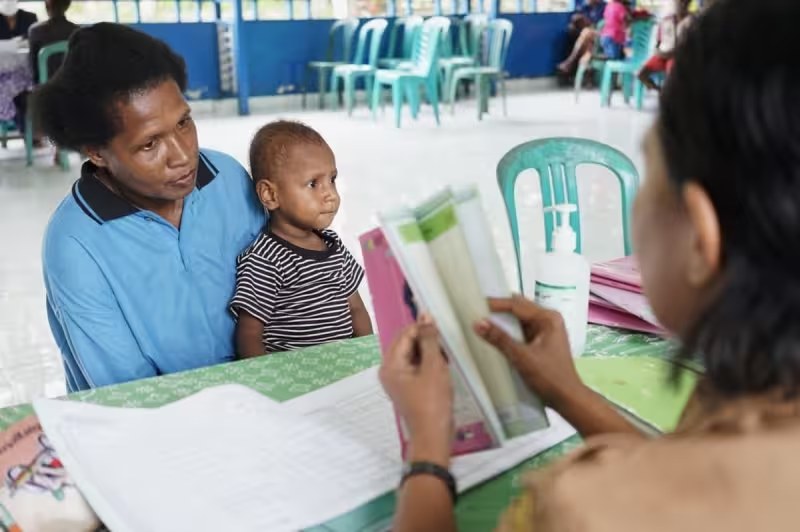
WHO and the Government of Japan launched a one‑year initiative in Jakarta on 5 June 2026 called No Child Left Behind: Ending deadly measles‑rubella outbreaks and closing immunization gaps in Indonesia.
The program targets urgent gaps in North Sumatra and the Greater Papua region, where routine immunizations have left tens of thousands of children unprotected. In 2024 nearly 83,000 children in North Sumatra and Papua missed their first measles‑rubella (MR) dose and 150,000 did not receive the second. By April 2026 more than 2,131 laboratory‑confirmed measles cases had been recorded and 25 provinces and 252 districts were classified as high risk.

WHO said the initiative will strengthen routine immunization, improve disease detection and response, and build local capacity in priority areas such as North Sumatra and Papua. It will also expand cross‑sectoral coordination by engaging education and religious affairs offices, civil society organisations and community leaders, and it will enhance the skills of frontline health workers.
WHO officials framed the timing as urgent. Dr N. Paranietharan said the campaign arrives amid a measles resurgence and, with Japan’s support, aims to shore up immunization systems, sharpen surveillance and reach remote communities where the disease is spreading fastest.
Japan’s government reiterated its long‑standing partnership with WHO in Indonesia and pledged continued support. Myochin Mitsuru said Japan is pleased to back the effort, stressing that ensuring every child’s access to life‑saving vaccines protects communities, strengthens health security and helps prevent international spread of infectious disease.
Context for the launch is stark: repeated outbreaks have emerged in remote areas where monitoring and response are weakest. Papua’s MR dose‑one coverage was just 46.2% in 2024, leaving large cohorts vulnerable. The combined effect of low routine coverage and fragile surveillance systems has left provinces and districts across the archipelago at heightened risk of further spread.
That gap sets up a hard test for the one‑year plan. The initiative is explicit about activities — bolstering routine services, faster detection and local capacity building — but it does not set out publicly announced milestones or specific coverage targets for the 12‑month period. With more than 2,131 confirmed cases already recorded by April 2026 and coverage in Papua under half, the scale and speed of the response will determine whether outbreaks can be checked.
The government‑backed project concentrates resources where the need is greatest and shifts beyond health ministries to include education and religious affairs offices and community organisations, a move intended to raise uptake in underserved areas. Strengthening frontline workers is central: better trained staff can both deliver vaccines and improve community surveillance that flags outbreaks earlier.
What happens next is straightforward but unsettled. The one‑year initiative will be implemented in priority provinces over the coming months, aiming to close immunizations gaps and respond to active outbreaks. Still unresolved is how quickly those interventions will translate into higher coverage and fewer cases in the highest‑risk areas — especially Papua, where 2024 coverage and recent case counts show a deep deficit. The single most consequential question now is whether a concentrated 12‑month push can reverse transmission in time to prevent further spread beyond the districts already deemed high risk.