



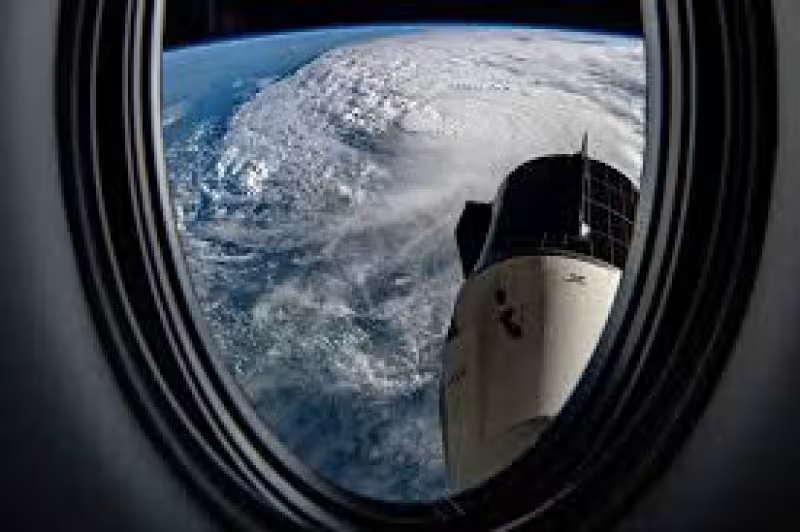
Five astronauts briefly entered a docked Dragon spacecraft on the International Space Station on Friday as a precaution while Russian colleagues assessed leak repairs, then returned to their stations after NASA gave the all clear.
Nasa spokesperson Bethany Stevens said the crew moved into the safe haven posture because mission managers wanted to be “extra safe” and “extra precautionary.” NASA later instructed the crew members inside the Dragon spacecraft to end the procedure and resume planned operations aboard the station.

Roscosmos said the episode came while cosmonauts were working on the station’s transfer chamber known as PrK. The Russian space agency said a leak was recorded as the chamber was pressurized, and that an inspection turned up two potential air leak sites. The first was promptly sealed with the first layer of the two-component sealant Germetall-1, while work is still underway to prepare the second site, on the conical part of the PrK, for sealing.


The brief sheltering episode underscored how quickly a leak check can trigger a safety response on the International Space Station, even when the disruption ends within hours. NASA said the transfer tunnel has suffered cracks and leaks for some time, and both NASA and Roscosmos have been working to determine the root cause.
That work has been handled through operational mitigation measures and periodic partial-repair efforts, a sign that the problem has not been reduced to a single clean fix. Roscosmos said its teams were taking measurements and assessing data, but it did not say how serious the remaining site is or when the sealing work will be finished.
The station has been continuously inhabited for the last quarter-century, and the leak monitoring reflects the pressure of keeping an aging outpost working while its two primary operators respond in real time. The ISS is still scheduled to be pushed into Earth’s orbit in 2030 before crashing into an isolated spot in the Pacific Ocean, but Friday’s brief shelter order showed the repair issue is still active now.



