



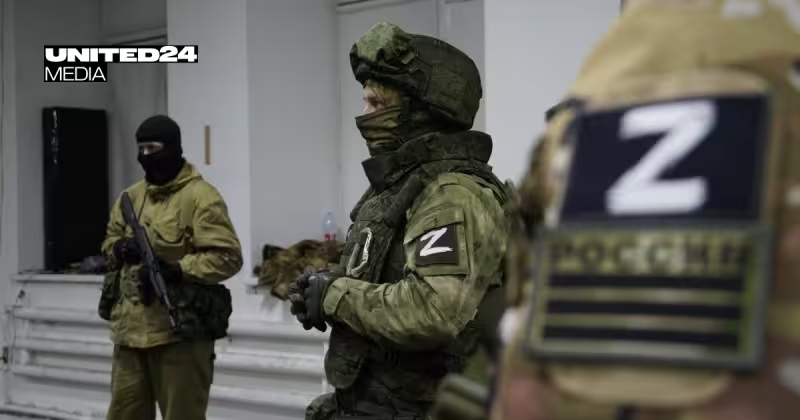
Romania’s foreign minister, Oana Țoiu, told allies on May 22 that Bucharest expects the number and intensity of Russian hybrid attacks against NATO — especially in allied airspace — to rise, and that Romania has spent the past month working with more than 10 NATO allies on coordinated proposals ahead of a Hybrid Symposium it will host in October.
"Throughout the year, and also in today’s discussion, Romania is paying attention to how we will respond together within NATO to hybrid threats. We are talking about hybrid threats that are mostly created by Russia—on land, at sea, in the air, or in other, more complex environments," Țoiu said, and added bluntly: "We assess that the number and intensity of hybrid threats, especially from Russia, will increase in allied airspace in the future." She also warned there remains "a constant need for a US presence on European territory."

Those warnings come as Moscow appears to be shifting its playbook. An article by The reports that Vladimir Putin appears ready to try to change the narrative around the conflict, even as other reporting frames Russia as facing a battlefield stalemate in Ukraine and growing war fatigue among Russians.
The timing sharpens the stakes. Romania, which shares what Țoiu called the longest border with the war in Ukraine — stretching more than 650 kilometers — has spent recent weeks drafting proposals with allies to strengthen the alliance’s coordinated response to hybrid threats. Romania will host the Hybrid Symposium in Bucharest in October to press those ideas further and test allied appetite for new measures.
The concrete threat assessments include electronic warfare and drone operations. Andrii Sybiha said investigators found evidence that Russian electronic warfare "deliberately divert[ed] Ukrainian drones from their targets in Russia," a finding that ties Moscow’s technical capabilities directly to the kinds of cross-border incidents NATO planners fear could spill into allied airspace.
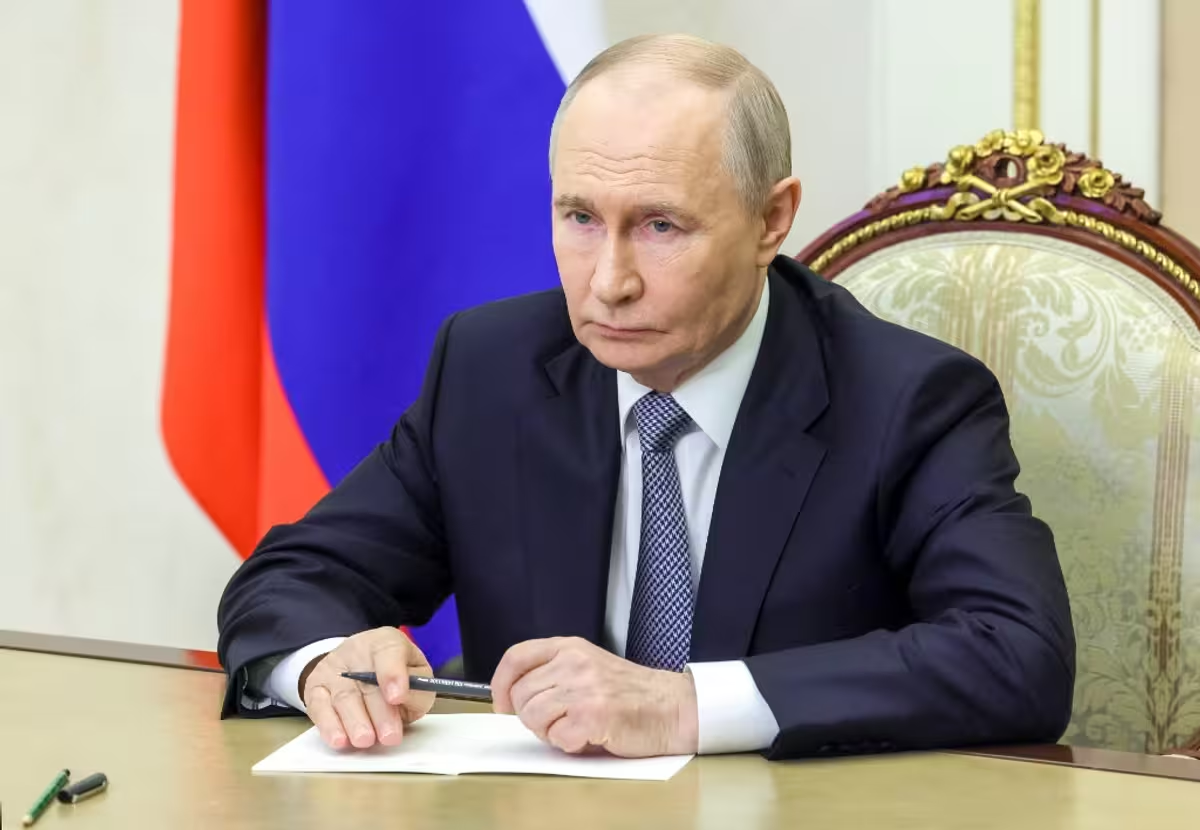
At the same time, Moscow has moved on the legal front to give its leader broader latitude. The Russian State Duma unanimously passed legislation expanding Vladimir Putin’s authority to deploy the armed forces abroad; the new measure allows Putin to use the military to protect Russian nationals facing arrest, detention, or criminal prosecution in foreign countries. Those twin tracks — expanded legal reach and aggressive electronic operations — complicate NATO’s calculus about escalation and response.
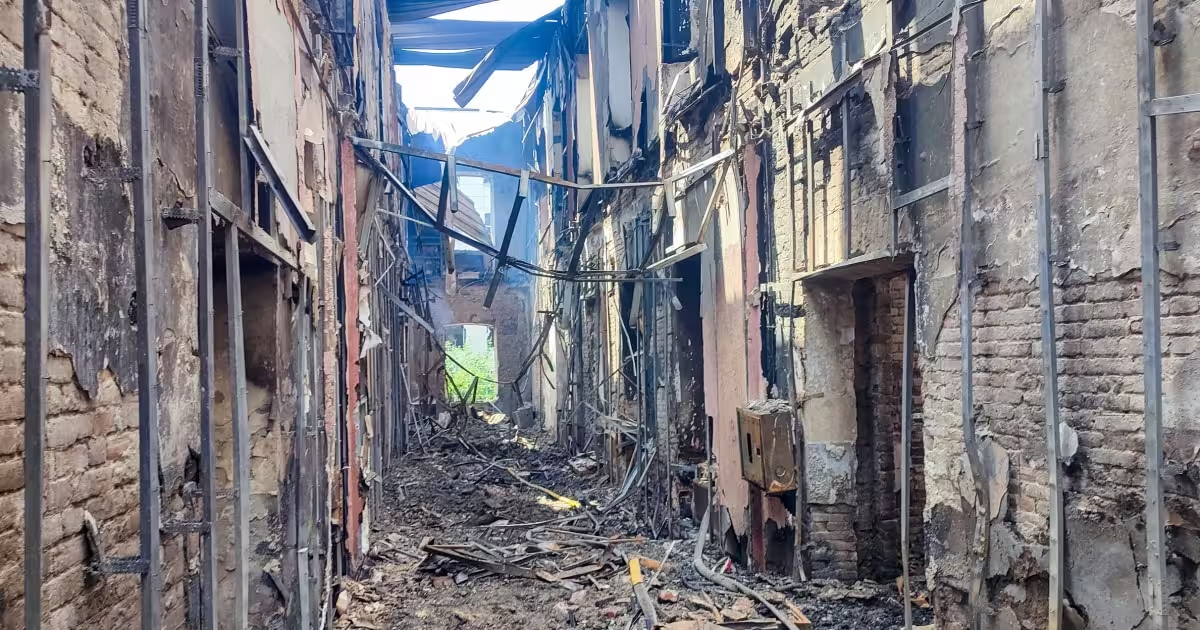
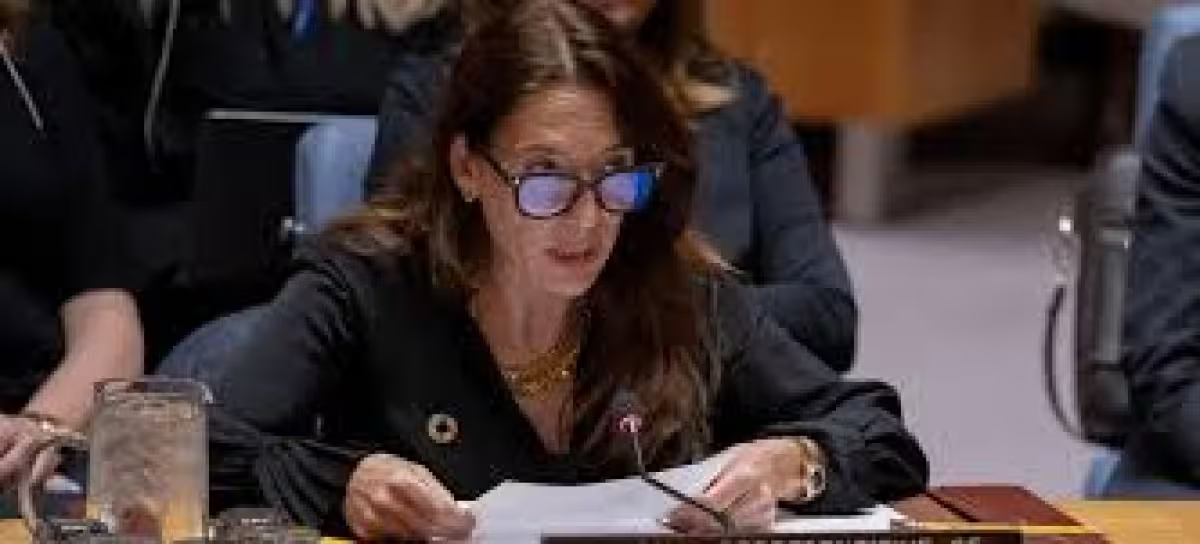
The signaling from both sides was visible in late May. On May 9, Putin attended a ceremony to lay flowers at the Tomb of the Unknown Soldier by the Kremlin wall during celebrations of the 81st anniversary of the Soviet Union’s victory over Nazi Germany. Days later, on May 24, smoke rose after a Russian attack in Kyiv and a commercial building burned; the same day Russia’s Commissioner for Human Rights, Yana Lantratova, stood by citizens who said they held portraits of victims of a Ukrainian drone strike in Starobilsk in the Russia-controlled Luhansk region.
Those events underline the contradiction at the heart of Allied planning: Moscow is publicly recalibrating its message while privately consolidating tools — legal, kinetic and electronic — that can expand the footprint of a conflict that NATO prefers remain off allied soil. Romania’s push for a stronger, coordinated response reflects an observation rarely framed so plainly: the war inside Ukraine is changing the security environment across Europe, not just on the battlefield.
The real question now is whether allies will match Romania’s urgency with concrete steps that change NATO’s posture in peacetime. If more than 10 allies back Bucharest’s proposals and the symposium in October yields commitments on airspace monitoring and joint electronic-warfare defenses, the alliance will move from defensive planning to visible, collective deterrence. If they do not, Romania’s warning about increasing hybrid threats in allied airspace will be a forecast without a plan — and Moscow’s recent legal and electronic moves will have achieved a strategic advantage without firing a single additional round into Ukraine.



