



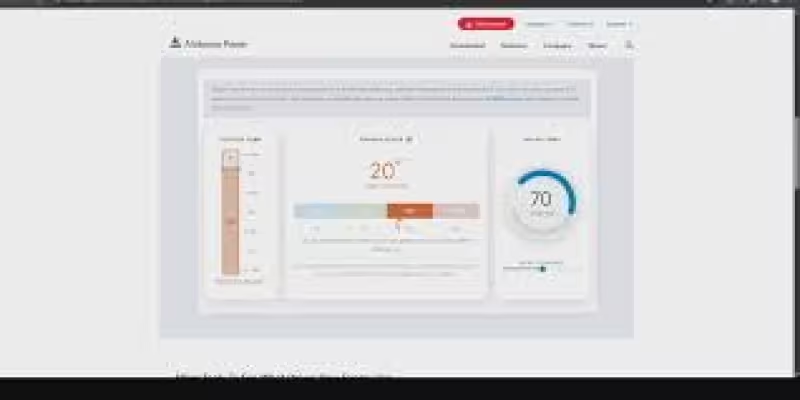
Alabama Power has launched TempCheck, an online tool that lets customers compare the temperature outside with the setting inside their homes and see how that gap affects energy demand. The system labels the result as low, moderate, high or extreme.
The company said the tool is meant to help people understand how heating and cooling habits can drive electricity use, especially as temperatures climb across Alabama and families brace for higher bills in the hottest months of the year. Alabama Power said heating and cooling systems can account for as much as 35% to 50% of a home’s total energy usage, and that Alabama residents use roughly 30% more energy than the national average.

Anthony Cook said the idea behind the tool is simple: the closer the thermostat is set to the outdoor temperature, the less energy a home uses. He pointed to a 70-degree setting as an example, saying that creates a 12-degree difference and that the tool shows how that gap affects usage in the home.
TempCheck is available online through Alabama Power’s summer energy savings page, and the company said it is not designed to estimate a customer’s monthly power bill. Instead, it factors in the temperature difference itself and leaves out other variables that can change what a household uses from month to month.
That matters because Alabama Power says energy use does not depend on temperature alone. Insulation, the condition of doors and windows, the age and efficiency of HVAC systems and even personal comfort preferences can all change how much electricity a home consumes.
The launch also reflects a broader reality for customers across the state: the biggest swings in energy demand often come when outdoor temperatures are far from what people want indoors. Alabama Power said the same tool may also be useful in colder months, when heating systems work harder to keep homes warm against a wider gap. The company also said its rates remain frozen.
For customers trying to plan ahead, TempCheck does not promise a bill estimate. It gives something narrower, and in some ways more useful right now: a quick look at how much one thermostat setting can change the amount of energy a home is likely to use.



