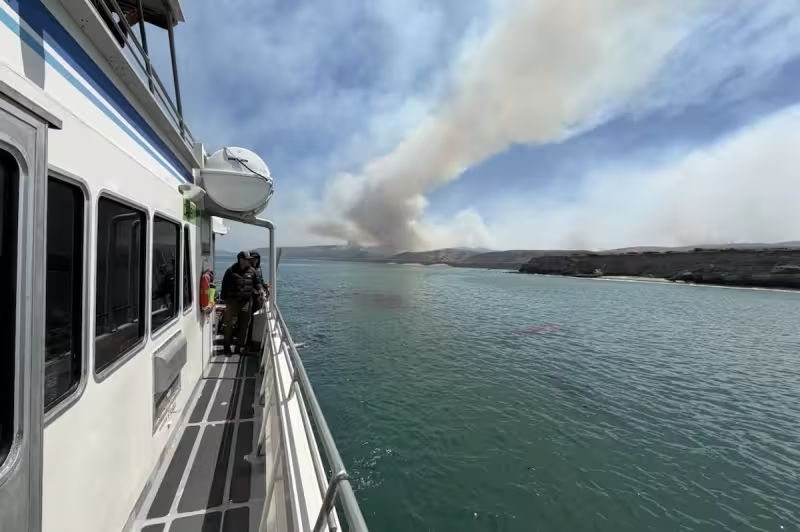
A fire on Santa Rosa Island has burned 17,554 acres, or 32.7 percent of the island, and has already destroyed at least three historic structures. The blaze is now the largest on any of the eight California Channel Islands in recorded history.
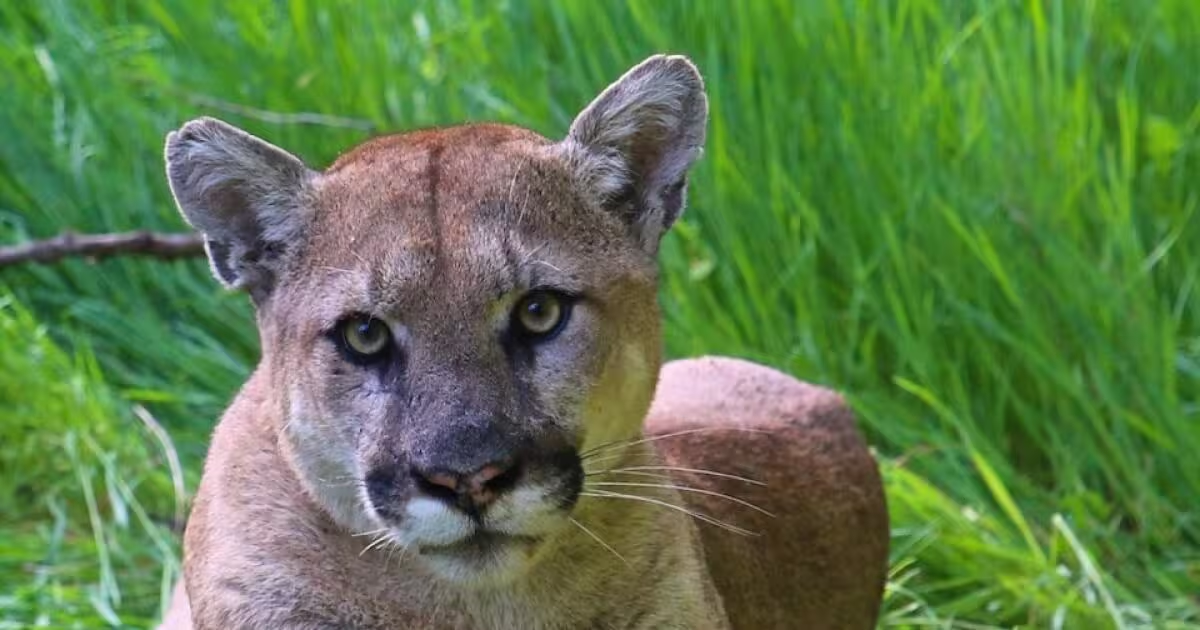
Among the losses are Johnson's Lee Equipment Shed on the western edge of the fire and the Wreck Line Camp Cabin on the eastern edge, along with a storage structure next to the equipment shed that was reduced to ashes. The fire also pushed into habitat for Santa Rosa Island Manzanita, Santa Rosa Island Torrey Pine, Santa Rosa Island Live-forever, Hoffmann's Gilia, Munchkin Dudleya and Island Tree Mallow, several of them already listed as endangered. It threatens island foxes, island spotted skunks and island deer mice as well.

The scale of the burn has already surpassed the Channel Islands mark set in July 2024, when a 13,000-acre fire on San Clemente Island became the previous record. That blaze was started by military exercises on the Navy island. This fire is different in origin, but it now carries the same weight for the islands: one more reminder that even remote places can be overtaken quickly when conditions line up.

Santa Rosa Island is one of the eight California Channel Islands, and the damage lands hard because the fire is not only chewing through wild land, it is tearing into places that held the island's history in plain view. Johnson's Lee was the only harbor on the south side of the island and later became the site of a Cold War military installation developed from 1951 to 1963, when the U.S. government leased about 10 acres for the Air Force Air Control and Warning Station. The station was manned until 1963 with up to 300 personnel, then abandoned in 1965. Demolition was delayed by asbestos mitigation issues, and Channel Islands National Park largely tore the complex down in the early 1990s, preserving a few structures, including the equipment shed, for their historic and educational value.
The Wreck Line Camp Cabin carried its own story. The site sits in the island's southeast quarter, east of Johnson's Lee, and takes its nickname from the 1894 stranding of the Crown of England. It served as a survey station in 1934 under Charles K. Green, who described it as being on a portion of the wood deck of a wrecked ship standing vertically in the ground 35 feet high on Skunk Point. The camp was originally established by early ranchers Vail & Vickers to salvage lumber and materials washed ashore from frequent shipwrecks along the coast.
Park crews are now taking preventative measures to keep the fire from reaching the historic Main Ranch structures, a sign that the battle has moved from containment alone to triage. For now, the fire has already taken more than a third of Santa Rosa Island and some of what made the island legible to earlier generations. Whether the remaining historic core holds will be the next measure of how far the damage spreads.