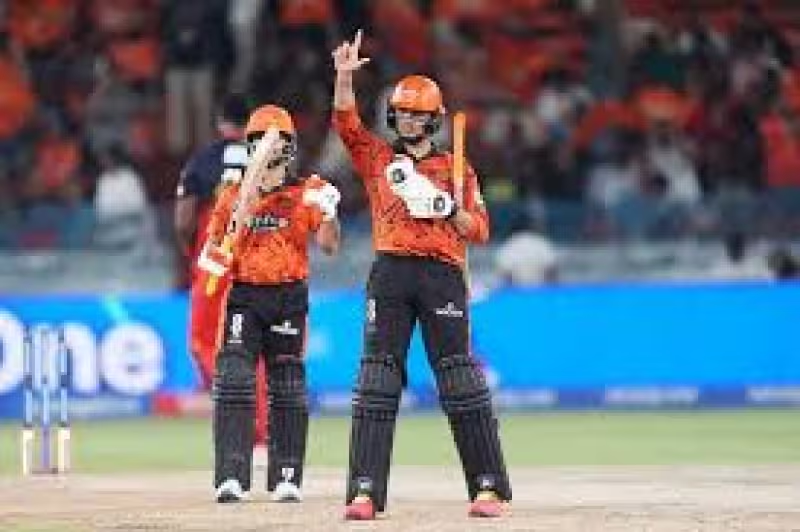
Abhishek Sharma broke a long-running RCB jinx on his 12th attempt, a Times of India headline announced, ending a sequence of 11 failed tries.
The headline — blunt and unadorned — carried the two facts that matter: the count, and that this was the first time his efforts against RCB reached the mark the previous attempts could not. The numbers are simple: 12th time, 11 failed attempts.

That is the weight of the moment. For a player, ending a string of near-misses carries outsized meaning: it changes how a sequence is remembered, shifts headlines and social-media threads, and sometimes alters how coaches and opponents talk about pressure and temperament. For abhishek sharma, the tally in the headline will be the first thing many will cite when the match is referenced in future summaries.
Context is thin. The Times of India ran only the headline and its standard TOI Sports Desk boilerplate; the published item does not include match statistics, a scorecard, a date or granular detail about the innings behind the claim. The paper’s short item included its regular note that TOI Sports Desk provides sports updates and analysis, but it stopped short of the play-by-play or figures that would let readers verify how the 12th attempt played out.
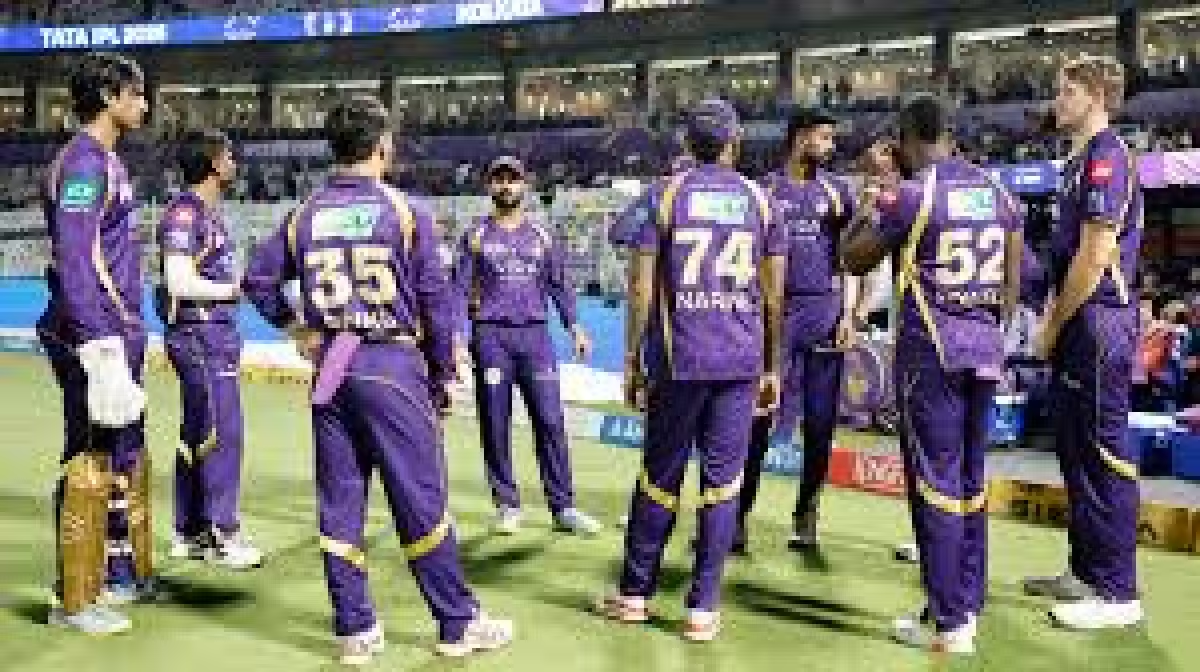
That absence creates tension. A striking headline asserts a clear narrative — a jinx ended, a first-ever milestone slammed — while the text offered to readers contains almost nothing to support it beyond the numbers in the title. Fans, statisticians and record-keepers will want the underlying facts: who bowled to him, whether it was a league or franchise fixture, how the innings influenced the result. Those specifics are not in the published item and must be sought elsewhere before the moment can be fully assessed.
The gap between headline and available detail also shapes how quickly the moment will be absorbed into the broader cricket conversation. Social feeds will react to the tidy story the headline supplies; analysts will wait for scorecards and match reports. Club staffs and selectors, if they grant weight to narrative momentum, will watch for confirmation through performance data rather than a standalone line of copy.
For abhishek sharma personally, the headline matters because it severs a tidy pattern. Whether that will alter perceptions of his form or his standing with selectors depends on the fuller record of matches and on how he follows the moment up on the field. Still, a 12th-time success after 11 failures is a clear cutline: it is how the streak will be summarized until a fuller account is published.
What happens next is straightforward and verifiable: readers and the cricket community will look for the complete match report and accompanying statistics to confirm and colour the claim. Until those elements appear, the headline stands as an announcement without the usual supporting detail. For now, Abhishek Sharma's 12th-time success is the story; the deeper story — what it changes, if anything — will be decided when the numbers that built the headline are made public.
TOI Sports Desk: providing sports updates and analysis, the brief item in The Times of India placed the moment on the record. The tally is clear; the context is partial. That leaves one blunt conclusion: the headline records an end to an 11-attempt run of failures against RCB — and, for Abhishek Sharma, that is a clean break in the ledger that will shape how this chapter is told from here on.