



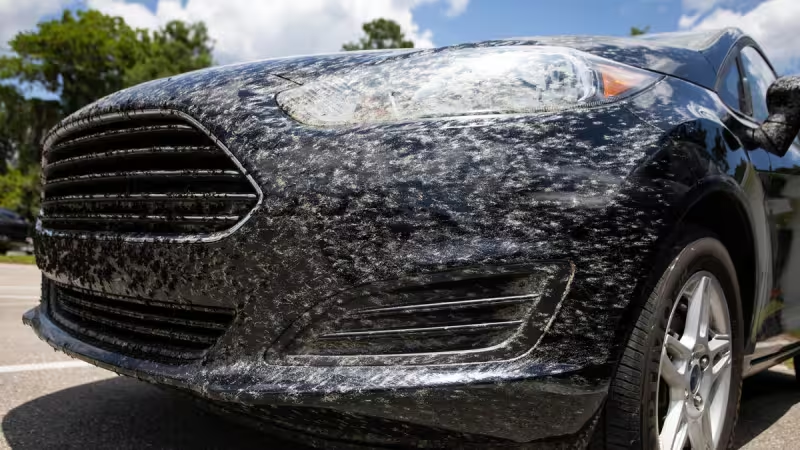
Florida’s first lovebug season of 2026 is winding down, and the insects that cling together in mating flight are expected to calm down over the next couple of weeks. But the reprieve will not last long. Lovebugs are expected back in August and September for their second swarm of the year.
Norman C. Leppla, who has studied the lovebug since 1972, said the pattern is holding: the bugs are rampant twice a year, in late April and May and again in late August and September. “Well, it hasn’t changed much in north-central Florida — Gainesville and north,” he said. He added that he is seeing reports of abundance in pockets across southern Florida this spring, especially from the Keys and south of Fort Myers, while saying, “I’m not seeing them on the front of cars here in Gainesville.”

That split matters because lovebugs are always present in Florida, but they are seasonal in the way people notice them. Female lovebugs typically emerge in swarms during April and May, then again in August and September, and the start of the swarms usually comes earlier in South Florida than in North Florida. Adult lovebugs live only about three to four days, but while they are active, up to eight males can compete for each female, and the insects remain connected when they mate.
The current spring showing is notable because lovebug sightings had dwindled to nearly nothing in recent years. A 2022 study from UF/IFAS Extension suggested predators may have had something to do with that decline. Leppla said in a 2018 paper that the earlier population explosion may have been accelerated by prevailing winds, vehicle traffic, sod transport, increased habitat along highways and the expansion of pastures. The bugs moved up the state in the 1960s and hit North Florida in the 1970s, spreading far beyond the area where they were first noticed.
Leppla said the insects’ original home was the Yucatán Peninsula and areas in Mexico and south to Central America, underscoring that they are invasive to Florida, not native and not created in a lab there. “They’re doing well in South Florida because they’re a tropical species,” he said. “Their original home was the Yucatán Peninsula and in Mexico and south to Central America.”
For drivers, the practical answer is simple: the spring wave is easing now, but it is not the last one. The next real surge is already on the calendar for late summer, and in Florida, that means the lovebugs are not going away — they are just changing seasons.



