























Quinn Hughes' overtime wrist shot lifts U.S. past Sweden to Olympic semifinals in Milan

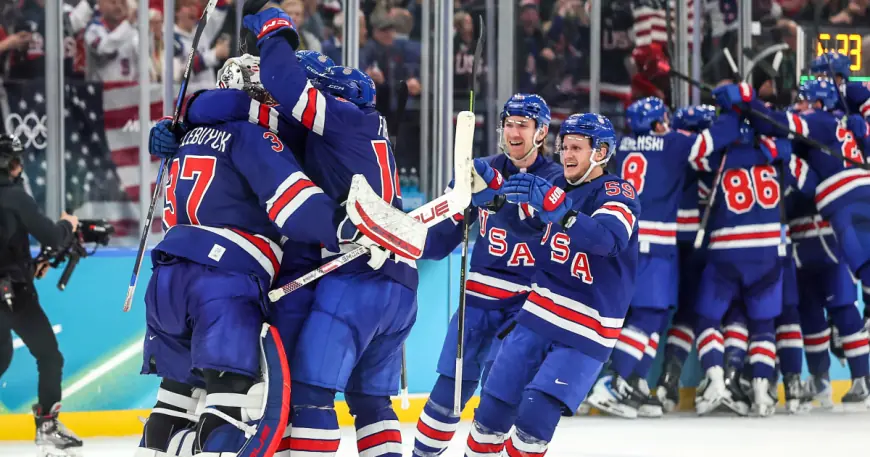
Quinn Hughes delivered an overtime winner that sent the United States past Sweden 2-1 and into the Olympic men’s hockey semifinals, a result that preserves American hopes for a first Olympic medal in this event since 2010. The goal arrived late in extra time and provided a clear momentum boost for a U. S. roster that is now unbeaten in the tournament.
What happened and what’s new
In Milan, a wrist shot from Quinn Hughes beat Sweden’s goaltender when the puck slid past the left glove to end the contest in overtime. The play concluded with 6: 33 remaining in extra time. Hughes had possession near the left faceoff circle, looked for an open teammate, then advanced toward the net and released the decisive shot from his forehand.
The win completed a 2-1 victory and advanced the United States to a semifinal matchup with Slovakia. The U. S. team entered the game 4-0 in the tournament. A victory in the semifinal scheduled for Friday would guarantee the Americans a medal, the first such guarantee since the 2010 Winter Games; a loss would leave them competing for the bronze.
Earlier in the game the Americans took a 1-0 lead in the second period when a shot from near the blue line was deflected by a teammate in midair past the Swedish goaltender. Sweden pulled its goalie late in regulation and converted on a cross-ice play that tied the game and forced overtime. Both starting goalkeepers made several notable saves in a scoreless first period.
Behind the headline: Quinn Hughes and the stakes for Team USA
The goal’s immediate value is clear: it sent one of the tournament’s unbeaten teams into the medal rounds. Beyond the scoreboard, the winner served as a psychological lift for a U. S. roster that has faced strong opponents, including teams composed entirely of professional top-league players. Players described postgame relief and satisfaction with the group’s progress and cohesion.
Key actors in the game included the scorer, the goalkeepers who kept the match tight in regulation, the skater who created the earlier U. S. lead with a deflection, and Sweden’s late tying line that forced overtime. Slovakia stands as the next opponent with the semifinal outcome directly determining whether the Americans will be assured of a podium finish.
What we still don’t know
- How the United States will perform against Slovakia in the upcoming semifinal.
- Which teams will emerge from the other side of the bracket to determine a possible final opponent.
- Whether any player injuries or lineup changes will affect U. S. availability for the semifinal.
- How momentum from the overtime win will translate into tactical adjustments or roster deployment in the next game.
What happens next
- U. S. wins semifinal: A victory on Friday would secure at least a bronze medal and extend the run toward a possible gold. Trigger: United States defeats Slovakia in the scheduled semifinal game.
- U. S. loses semifinal: A defeat would eliminate gold-medal hopes and move the Americans into the bronze-medal game. Trigger: Slovakia defeats the United States in the semifinal.
- Potential final matchup with Canada: If both North American teams advance from their semifinals, the two could meet for gold. Trigger: Canada wins its semifinal and the United States wins its semifinal.
- Overtime repeat scenario: Given recent overtime successes for the U. S., another extra-time game would test the team’s late-game execution and goaltending stamina. Trigger: regulation tie in the semifinal leading to extra time.
Why it matters
This result reshapes the tournament picture for the United States by preserving an unbeaten record and putting the team one win away from a guaranteed Olympic medal for the first time in more than a decade. The immediate practical impact is clear: the semifinal outcome will decide whether the team secures a podium placement. In the near term, the overtime victory supplies both a morale boost and a tangible strategic advantage—time for recovery and planning—before the next elimination game.
For players and staff, the win validates progress in tournament play against high-level competition and raises expectations for the remaining schedule. For fans and stakeholders, the semifinal carries heightened significance because a win would end a long medal drought in this event and keep gold-medal aspirations alive.