



















Peaky Blinders Movie: Trailer, Calke Abbey and a wartime reset that matters

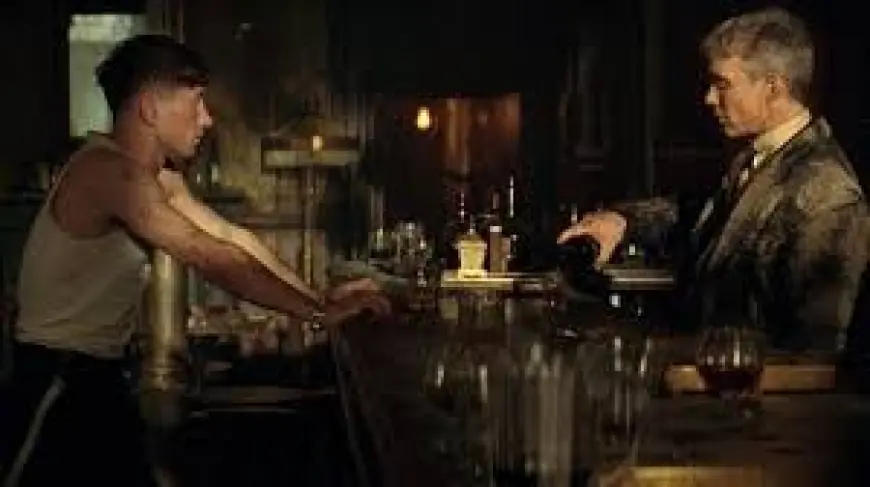
The newly released trailer and location choices shift the frame for the peaky blinders movie: Tommy Shelby returns to a very different Birmingham in 1940, the cast now includes a younger Shelby at the helm of the gang, and a stately home becomes a visible character. This matters because the film’s wartime setting, the presence of an heir played by Barry Keoghan, and the March release window together recast the franchise as a cinematic reckoning rather than a straight continuation of the TV episodes.
Peaky Blinders Movie: why the wartime setting and cast changes raise the stakes
Here’s the part that matters: the film positions Tommy Shelby against both family and national pressures in World War Two-era Birmingham. The trailer signals a tone shift—older, haunted, and forced to confront an illegitimate son who is already running the gang—so the personal drama is entwined with a larger social moment. The creative team behind the project returns to familiar hands, while new performers amplify the narrative friction; that combination changes what fans should expect from the transition to a theatrical release.
What’s easy to miss is how the production choices—casting a high-profile actor as Tommy’s son and filming in a decaying country house—operate as shorthand for the film’s central themes: legacy, collapse, and reinvention.
What the trailer, cast and Calke Abbey reveal
The footage and production details reveal several concrete elements without walking through every plot beat.
- Setting and tone: The story is set in Birmingham in 1940, during World War Two, and shows an older Tommy Shelby returning from exile to a changed neighborhood and a militarized moment for the nation.
- Key players: Cillian Murphy returns as Tommy Shelby. New cast members include Rebecca Ferguson and Tim Roth; Barry Keoghan appears as Tommy’s son, Duke Shelby, an illegitimate firstborn who now leads the gang. Stephen Graham and Sophie Rundle are also present in the ensemble. The project is written by the original creator and directed by Tom Harper.
- Calke Abbey’s role: A Grade I listed country house was used to represent a decaying period interior without heavy alteration—rooms used include ground-floor passageways, a kitchen, a schoolroom and a night nursery; the stable yard and riding school were adapted to display vintage cars. More than 1, 300 historic objects were packed, moved and reinstated in a process that took over 950 hours.
- Visual beats: The estate hosts a scene of the lead emerging from thick mist with a slow, staggering stride—an image the trailer emphasizes.
- Release schedule: The film is planned for cinemas from 6 March and will launch on a streaming platform on 20 March; the schedule is presented as the confirmed plan for the rollout.
The real question now is how this wartime recontextualization and the introduction of a son already in command will be received by audiences who remember the show’s earlier era—and whether the film will lean more heavily on cinematic spectacle or family reckoning.
Below is a compact timeline of what the public material has established so far:
- Trailer released, establishing a 1940 wartime setting and the return of the main character.
- Calke Abbey used for key interior and exterior scenes, with extensive object handling by the house team.
- Film scheduled in cinemas from 6 March, then available on a streaming platform from 20 March.
This timeline summarizes known production and release markers; specific plot details remain tightly held.
Additional context on performer recognition: one lead actor is noted for a recent major acting award, and the actor playing Duke received an Oscar nomination for an earlier film. Those distinctions shape expectations about the film’s profile and performance ambitions.
Key implications in brief: the peaky blinders movie pivots the franchise toward a focused cinematic conflict—Tommy versus his legacy and his son—while using period locations to underline decline and continuity. Fans of the original series will see familiar faces in a darker, more compressed story; local sites where filming took place should expect renewed attention when the film opens.
The bigger signal here is that this project treats the film format as a final, theatrical chapter that aims to settle long-running personal and historical threads rather than merely extending serialized plotlines.
If you’re wondering why this keeps coming up: the combination of a wartime setting, a prominently featured heir, a high-profile cast and a dual cinema/streaming release in March makes this iteration a deliberate reshaping of the franchise’s ending rather than a simple continuation.
Editorial aside: It’s easy to overlook, but the choice to display decay and historic objects unchanged inside a stately home is a storytelling shortcut that signals the film’s interest in legacy as physical, not just psychological.