




















Usa Hockey’s semifinal pivot: how one overtime goal rewrites the team’s priorities and match-up plans

The win changes the immediate task list for usa hockey: advance through the semifinal while shoring up late-game vulnerability and special-teams execution. A sudden-death overtime winner cleared the bracket hurdle but left clear signals about where the roster and coaching staff must adjust before facing Slovakia in the next round. Preparation windows are short and the margin for error just narrowed.
Usa Hockey — immediate consequences and what must move fastest
Here’s the part that matters: the victory creates momentum but reduces time to fix specific weaknesses exposed during regulation. The U. S. scored first on a second-period goal and ultimately won in overtime, yet allowed a late 6-on-5 equalizer that forced extra time. That late concession compresses the preparation timeline and prioritizes two near-term corrections — tighter 6-on-5 defense and clearer game-closing tactics in the final minutes of regulation.
- Key takeaway — goaltending held up: the U. S. netminder finished with 29 saves on 30 shots, while Sweden’s keeper faced 40 shots and saved 38. Those are encouraging raw numbers but demand context when planning defensive shifts.
- Special-teams pressure: Sweden tied the game on a 6-on-5 one-timer in the final moments, showing that pulled-goalie situations remain a structural risk.
- Overtime format matters: the semifinal will be approached under a 3-on-3, sudden-death model, where puck possession and line-match decisions tilt outcomes sharply.
- Short turnaround: the opponent is Slovakia in the semifinal, so adjustments must be targeted and fast rather than wholesale.
The bigger signal here is how single plays — a pulled-goalie one-timer or a defensive rotated matchup in 3-on-3 — can decide medal runs even when overall shot metrics look favorable.
Game details and contextual sequence (summarized)
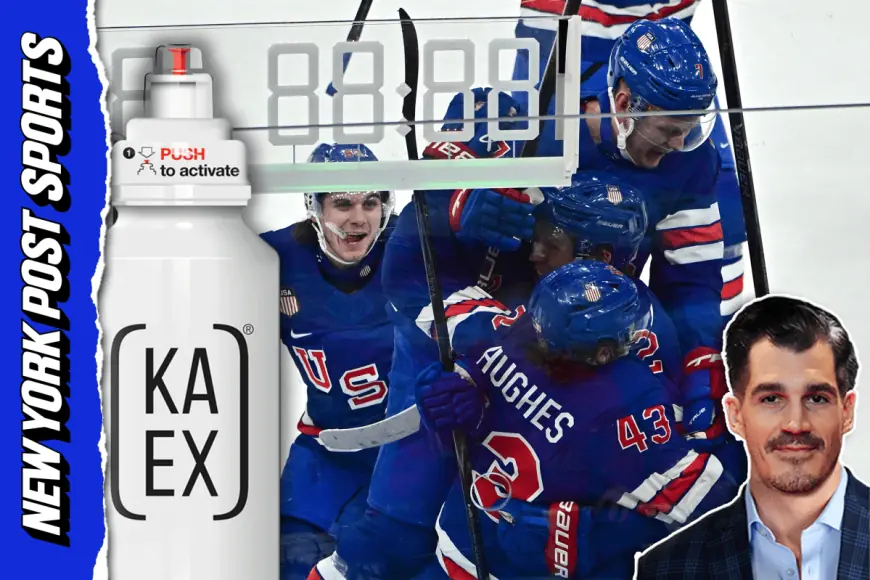
Quinn Hughes delivered the overtime winner that gave the U. S. a 2-1 playoff victory over Sweden, advancing the team to face Slovakia in the semifinal round. The U. S. opened scoring in the second period on a goal by Dylan Larkin. Sweden tied the game late in regulation with a one-timer while using a pulled goaltender in a 6-on-5 attack, forcing the contest into overtime. The extra session is played as 3-on-3 sudden death, and the winning shot ended the game in sudden-death fashion.
Goaltender numbers stand out for planning: the U. S. goalie made 29 saves on 30 shots, while Sweden’s netminder made 38 saves on 40 shots. Three of the four quarterfinal matches in the same round also went to overtime, underscoring how tight margins are across the bracket.
The real question now is how coaching staff will balance preserving the team’s strengths with surgical fixes in areas exposed late against Sweden. With only a short window before the semifinal, drilling specific scenarios — defending 6-on-5, managing the final 90 seconds of regulation, and line choices for 3-on-3 — will be the highest-return investments.
Key practical markers that could confirm the next turn: sharper defensive posture when the opponent has an extra attacker; quicker substitutions to avoid mismatches in 3-on-3; and how the power-play/penalty-kill units respond under time pressure. If those aspects are tightened, the overtime win will look like momentum converted into control rather than a close escape. Recent updates indicate some timing details from the overtime play have varied across postgame accounts; those specifics may evolve as official records are finalized.
What’s easy to miss is the psychological lift from an overtime winner — it buys confidence, but it also raises expectations. Turning that emotional edge into disciplined execution against Slovakia will be the operational challenge over the next practice sessions.