























Amber Glenn Olympics: Near‑perfect third‑place free skate brings partial redemption but no medal

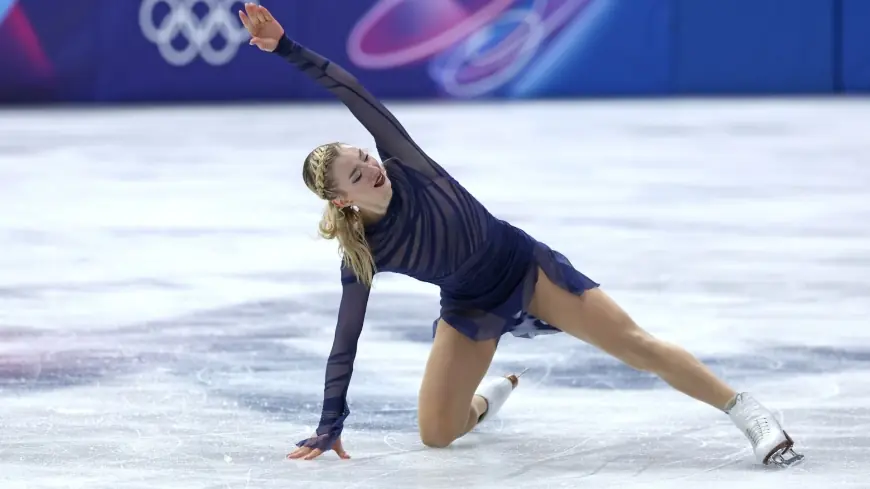
For Amber Glenn and the audience tracking her Olympic arc, the performance carried emotional weight beyond placement. Amber Glenn Olympics is now shorthand for a near‑perfect free skate that delivered personal redemption on the ice but ultimately did not convert into a medal — a dramatic mix of triumph and loss that will shape how her effort is remembered.
Amber Glenn Olympics — who feels the immediate impact
Here’s the part that matters: the immediate impact lands squarely on the athlete and the people invested in her journey. A near‑perfect third‑place free skate altered the narrative from one of outright defeat to a more complicated outcome — recognition for a high-caliber performance paired with the sting of narrowly missing a medal. Supporters and observers will view the program as proof of capability, while the final result serves as a reminder of how one costly error can change everything in an Olympic moment.
What happened on the ice (details framed by consequence)
The known facts are straightforward: Amber Glenn produced a near‑perfect free skate and finished third in that segment, and the performance fell short of yielding a medal overall. The reporting context also describes a single mistake that dramatically altered Glenn’s final outcome and is described as having smashed her Olympic dreams. Rather than a step‑by‑step play‑by‑play, the notable takeaway is how a high‑quality performance can still leave an athlete short of a podium when a critical error occurs.
It’s easy to overlook, but a performance that earns praise for its technical and artistic merits can coexist with the disappointment of an unmet goal; the two are not mutually exclusive. The bigger signal here is the tension between execution and outcome at the highest level of competition.
- Implication: A near‑perfect free skate enhances an athlete’s competitive reputation even if it doesn’t produce a medal.
- Affected groups: the athlete herself, close supporters, and audiences who invested emotionally in the Olympic moment.
- What to watch for next: whether Glenn’s near‑perfect showing becomes a foundation for future campaigns or is remembered primarily for how a single mistake decided the outcome.
- Emotional frame: redemption in performance paired with the reality that results ultimately define Olympic outcomes.
The real question now is how this episode will influence Glenn’s short‑term recovery and longer‑term trajectory. With the free skate widely described as near‑perfect, the performance could be used as a springboard — but the narrative will also carry the weight of the missed medal and the mistake that ended those immediate hopes.
Micro timeline (contextual): Winter Olympics 2026 — near‑perfect free skate; third place in the free skate segment; no overall medal after a single critical mistake. This sequence underscores how quickly fortunes can swing in a championship setting.
What’s easy to miss is how performances like this matter differently to different audiences: to some, it proves a returning strength; to others, it’s a painful reminder of how slim margins are at the Olympics. That duality will shape the conversation in the days ahead.
If you’re wondering why this keeps coming up, remember that Olympic moments compress long preparation into a few minutes of performance — and those minutes often become the defining narrative, for better or worse.