

























Darren Cahill coach spotlight returns as Sinner advances and the Australian Open 2026 heat rule reshapes Melbourne

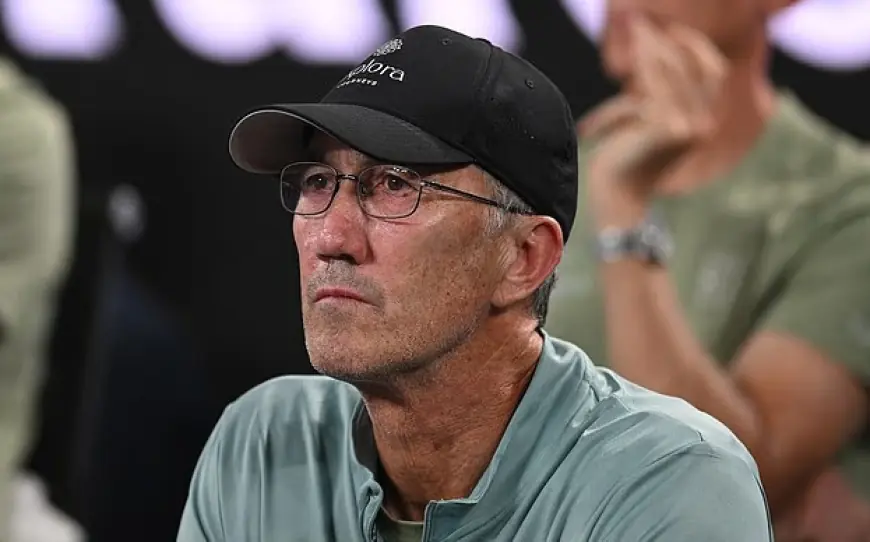
Darren Cahill coach headlines are circulating again in Melbourne as Jannik Sinner’s Australian Open 2026 run collides with extreme weather and a tightening spotlight on how matches are managed on the hottest days. For fans following the Australian Open live, the story is a blend of results and conditions: Sinner won on Wednesday, January 28, 2026, ET, and the tournament’s heat policy has already influenced when, where, and how key moments have played out.
Cahill and Sinner keep the focus narrow as pressure rises
Sinner’s camp has treated this fortnight like a problem-solving exercise, not a victory lap, and Cahill remains a central figure in that approach. Cahill is still working alongside Simone Vagnozzi in Sinner’s corner in Melbourne, extending a partnership that has repeatedly emphasized match management, calmer decision-making in tense stretches, and small tactical upgrades that hold up under Grand Slam pressure.
The coach-player relationship has become part of the tournament narrative because Sinner is chasing a third consecutive Australian Open title, a target that magnifies every wobble, every physical check-in, and every shift in conditions. Key terms about how long this arrangement is expected to continue beyond the current season have not been disclosed publicly.
Spizzirri’s breakthrough test adds fuel to the Sinner coach debate
One of the most discussed matches of Sinner’s tournament came earlier, when American Eliot Spizzirri, ranked world No. 85, pushed him in the third round. Sinner dropped the opening set but rallied to win in four, and the turning point became inseparable from the day’s heat management.
During that match, the roof was closed under the Australian Open heat policy, creating a short stoppage and a clear change in playing conditions. The decision drew chatter across the tennis world, including commentary from John McEnroe, who questioned the timing and how abruptly it shifted the momentum of a match that had been tightening. A full public timeline has not been released detailing every operational decision point surrounding the roof closure.
For Spizzirri, the match still reads as a breakthrough moment: taking a set off the defending champion on a major stadium court, showing the speed and composure to stay level in extended rallies, and proving that his ranking is more than a number. For Sinner, it was the kind of stress test that coaches value because it forces clear thinking under discomfort.
How the Australian Open heat policy works when temperatures spike
The Australian Open heat policy is built around a Heat Stress Scale that runs from 1 to 5 and incorporates multiple factors, not just temperature. In practical terms, it weighs air temperature, radiant heat from the sun, humidity, and wind speed to estimate how hard it is for the body to cool itself during play.
Mechanically, the system creates specific intervention points. When the scale reaches its top threshold for men’s and women’s singles and doubles, matches already underway can continue only until the end of an even number of games in the set, after which play can be suspended on outdoor courts. On arena courts, that same trigger allows play to reach an even number of games before the roof closes for the remainder of the match. Separate triggers apply for juniors and wheelchair events, and the protocol also allows cooling breaks at a lower threshold during certain sets in singles, while doubles does not receive the same set-based cooling-break structure.
The stakeholder impact is immediate and practical. Players have to adjust from open-air heat and sun to a cooler, controlled environment that can change ball speed and recovery between points. Fans experience delays, court changes, and sudden shifts in where the day’s biggest moments happen, often concentrating attention inside the main arenas. Tournament staff and ballkids are directly affected as well, with more stringent heat-safety measures and workload adjustments on the most severe days.
Today’s results, Melbourne weather, and what comes next on the schedule
If you’re searching did Sinner win today, the answer is yes. On Wednesday, January 28, 2026, ET, Sinner beat Ben Shelton in straight sets, 6-3, 6-4, 6-4, to reach the semifinals. Next up is a blockbuster against Novak Djokovic, setting Sinner’s current form against the most decorated Australian Open men’s champion of the Open era.
On the other half of the draw, Carlos Alcaraz beat Alex de Minaur in four sets to book a semifinal against Alexander Zverev, keeping Australian interest high even after the home favorite exited. In the women’s draw, Jessica Pegula defeated Amanda Anisimova 6-2, 7-6 with a dominant tiebreak to reach her first Australian Open semifinal, where she will face Elena Rybakina, while Aryna Sabalenka is set to meet Elina Svitolina.
Melbourne’s weather forecast keeps the heat storyline alive. Wednesday’s high is around 87 degrees Fahrenheit, about 30 Celsius, and another day near that level is expected on Friday, which means roof calls and the heat rule remain relevant as the tournament reaches its defining rounds.
The next verifiable milestone is the release of the semifinal order of play, along with any updated heat-related operations if the Heat Stress Scale climbs again during those sessions.