





















Kyle Rittenhouse Reappears at the Center of a New National Gun Debate After Minneapolis Shooting

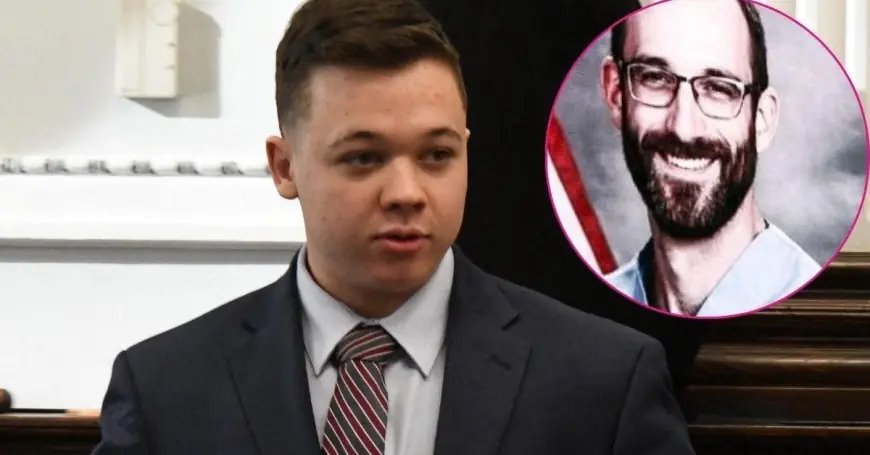
Kyle Rittenhouse is back in the middle of a fast-moving political storm after posting fresh gun-rights messaging tied to a deadly federal shooting in Minneapolis that has split conservatives, strained the usual law-and-order narrative, and reignited arguments over firearms at protests. The latest flare-up is unfolding in the final week of January 2026, as federal officials face scrutiny over the killing of Alex Pretti during an immigration enforcement operation and as Rittenhouse’s comments amplify the pressure on leaders who typically champion expansive gun rights.
What happened in Minneapolis and why Kyle Rittenhouse jumped in
The immediate backdrop is the death of Alex Pretti, a 37-year-old nurse, who was shot by federal agents in Minneapolis on Saturday, January 24, 2026, during a protest tied to immigration enforcement. Public discussion quickly pivoted to whether Pretti was legally armed, whether he ever raised or aimed a weapon, and what standards should govern federal use of force in a crowd situation.
In the days that followed, senior officials argued that firearms and extra magazines should not be brought to protests, framing the presence of a gun as inherently escalatory. Gun-rights advocates responded by emphasizing that lawful carry rules do not evaporate at demonstrations and that legality depends on state law and individual conduct, not assumptions about intent.
Rittenhouse’s entry point was a short, blunt message encouraging people to carry firearms broadly. It landed like a match in dry grass because the controversy is not just about gun policy. It is about who conservatives defend when the shooter is the government rather than a private citizen, and whether the movement’s core promise applies when the facts are messy and politically inconvenient.
Behind the headline: incentives and fault lines inside the right
Rittenhouse is a uniquely polarizing figure because his public identity is tied to the 2020 Kenosha shootings and his 2021 acquittal after arguing self-defense. Since then, he has leaned into gun-rights activism and public appearances, which keeps him in the spotlight and makes his statements a signal flare for supporters and critics alike.
This week’s incentives are clear:
-
The administration’s incentive is to defend federal agents and avoid a precedent that constrains enforcement operations.
-
Gun-rights groups have an incentive to protect the broadest reading of lawful carry, even when that clashes with deference to law enforcement.
-
Political leaders have an incentive to keep both camps in the same coalition heading into elections, despite the contradiction.
That contradiction is the story: a movement that often pairs gun rights with pro-police rhetoric is now wrestling with a case where those instincts collide. When officials imply that being armed at a protest invites lethal consequences, it can sound like a permission slip for the government to treat lawful carriers as threats by default. When activists insist lawful carry is non-negotiable everywhere, it can sound like they are minimizing how quickly a tense street encounter can spiral.
A separate flashpoint shows how portable the controversy has become
Rittenhouse also surfaced in a very different arena this week: combat sports. A visit to a well-known Las Vegas fight gym triggered an on-camera dispute between prominent fighters after one invited Rittenhouse into the space. The conflict was less about him personally than about what his presence communicates.
That episode matters because it shows the second-order effects of the Rittenhouse brand. For public-facing businesses and personalities, proximity can be a shortcut to attention, loyalty, backlash, or all three. Even when nothing illegal happens, the reputational temperature rises instantly, and the argument shifts from facts to identity: what kind of place is this, what kind of people belong here, and who gets to decide.
What we still don’t know
Several key pieces remain unsettled or contested as of Wednesday, January 28, 2026:
-
The full, verified timeline of the Minneapolis encounter, including commands given, distance, and what agents reasonably perceived in the moment
-
Whether any body-camera footage exists, and if so, when it will be released
-
The precise policy framework federal agents were operating under in a protest setting
-
Whether administrative discipline or criminal review will follow, and on what evidentiary basis
In a story like this, the missing information is not a footnote. It determines whether the public debate is about a tragic misfire, an avoidable escalation, or a broader shift in how federal force is applied during domestic operations.
What happens next: realistic scenarios and triggers
-
Evidence release shifts the debate: Video or official reporting that clarifies whether Pretti ever handled his weapon could harden opinions and change the political calculus.
-
Policy tightening or public guidance: Federal agencies could revise protest protocols, clarify engagement rules, or mandate additional de-escalation steps to reduce future flashpoints.
-
Movement fracture deepens: If gun-rights leaders keep criticizing federal justifications, the usual alliance between gun activism and law enforcement politics may weaken in public view.
-
Rittenhouse becomes a recurring messenger: Expect more posts, appearances, and invitations if supporters see his visibility as useful leverage in the broader argument.
-
Legislative aftershocks: State or federal lawmakers could push bills around protest carry rules, federal operational limits, or transparency requirements after use-of-force incidents.
Rittenhouse’s latest moment is not just about one activist’s rhetoric. It is a stress test for a coalition that wants both expansive gun rights and maximal enforcement power. When those two priorities collide, the loudest voices do not resolve the tension, they expose it.