























Alex Honnold’s Taipei 101 Free Solo in Skyscraper Live Sparks Questions About “Live” TV, Safety, and the Money Behind the Stunt

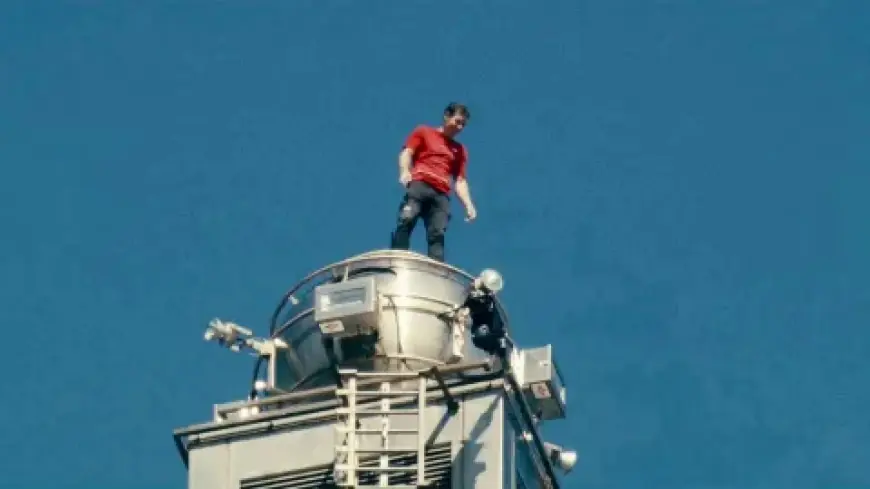
Alex Honnold, the climber synonymous with ropeless big-wall ambition, added a new kind of vertical landmark to his résumé over the weekend: a free solo ascent of Taipei 101 during a live special titled Skyscraper Live. The climb, broadcast in real time on a major streaming platform on January 24, 2026 at 8:00 PM ET after a weather delay, ended with Honnold reaching the top in roughly an hour and a half, answering the simplest question viewers had in the moment: did he make it. Yes.
The harder questions arrived immediately after: was it truly live, how did he get down, and how much was he paid to put his life on the line in front of a global audience.
What happened in Skyscraper Live: Alex Honnold climbs Taipei 101 and finishes the job
Skyscraper Live was initially scheduled for January 23, 2026, but was postponed about 24 hours because conditions were too wet and windy for a safe attempt. When the event finally aired on January 24 at 8:00 PM ET, Honnold began from ground level and climbed upward without ropes or a harness, using small architectural edges and structural features as his holds.
The broadcast leaned into the tension: a single slip would likely have been fatal. Honnold moved steadily, paused to chalk up, and worked through the building’s most awkward transitions before topping out. For viewers searching in real time, the headline answers were straightforward:
He made it. The climb took about 90 minutes. And he did not climb back down the way he went up.
Taipei 101 height and why this Taipei 101 climb is not the same as El Capitan
Taipei 101 stands 508 meters, or 1,667 feet, with 101 floors above ground. That number matters because it frames the physical load: even a “fast” pace becomes a punishing, repetitive effort when the vertical distance is measured in thousands of feet rather than a few hundred.
The climb is also different from Honnold’s most famous ropeless achievement on El Capitan in Yosemite, completed on June 3, 2017 in 3 hours and 56 minutes. Natural rock offers texture, cracks, and irregularities. A skyscraper offers long stretches of uniform surface, exposure to wind gusts, and sections where the “holds” are engineered details that were never intended for human grip.
Taipei 101 is also not the tallest building in the world. It held that title in the mid 2000s, but the current tallest is Burj Khalifa at 828 meters, or 2,717 feet. The next tier includes Merdeka 118 at 679 meters and Shanghai Tower at 632 meters. Taipei 101 remains one of the tallest buildings on the planet, but it sits outside the very top handful today, which is part of why the stunt felt both monumental and imaginable: enormous, yet not a one kilometer fantasy.
Is Skyscraper Live actually live: safety delay, production choices, and the backlash
On paper, the show was live. In practice, it was close to live, with a short built-in delay used as a safety precaution. That matters because it changes the moral math: a platform can claim immediacy while still reserving the option to cut away if something goes wrong.
The other flashpoint was less philosophical and more practical: presentation. Viewers complained that the commentary and studio framing distracted from the technical reality of what was happening on the wall. Honnold’s climbing style is famously quiet and methodical, and any broadcast layer that overreacts can feel like it is manufacturing drama on top of genuine danger.
That backlash reveals a new tension in live extreme programming. The audience does not just want spectacle. It wants competence, restraint, and respect for the discipline.
How did Alex Honnold get down and what would happen if he fell
The broadcast focused on the ascent, not the descent, which is why “how did Alex Honnold get down” spiked as a search phrase. The practical answer: after reaching the top, he used safety equipment for a controlled descent to an interior access point, then took an elevator down to the ground.
As for the grim hypothetical, the existence of a short live delay is itself the clearest signal that the production planned for the worst-case scenario, at least from a broadcast standpoint. It does not make the act safer for the climber, but it changes what millions of people might witness in real time.
Alex Honnold net worth, pay rumors, and what is actually known
Honnold did not publicly disclose his payment. He has described the fee as small compared with mainstream sports salaries, even if it was significant by climbing standards. Some circulating estimates put the number in the mid-six figures, but no figure has been confirmed.
The same caution applies to “Alex Honnold net worth.” Public estimates commonly land in the low single-digit millions, often around 2 million dollars, but those numbers are not audited and can miss major variables like sponsorship structures, production deals, and philanthropic giving.
One clean takeaway: the event was not just a climb. It was a business product, built to convert attention into subscriptions, advertising value, and future live programming credibility.
What we still do not know and what happens next
Several missing pieces will shape the next chapter:
What permits or agreements governed the climb and what liabilities were assumed. What safety and emergency systems were staged off-camera. How the platform will measure success beyond viewership.
Next steps to watch, with realistic triggers:
A second live climb of a major tower if subscriber growth or engagement spikes justify a repeat. New restrictions and enforcement in Taipei if copycats attempt unsafe climbs. A shift toward hybrid formats, less “live,” more delayed, if the ethical debate intensifies. More athlete-driven transparency around pay if the money narrative keeps outrunning confirmed facts.
One final detail that mattered all week: weather. As of January 28, 2026 ET, Taipei is dealing with overcast skies and occasional showers, the exact kind of conditions that forced the original delay and reminded everyone that, at this height, “a little wet” is not a minor inconvenience.
And for anyone searching “UFC tomorrow,” there is no major UFC card scheduled for January 29, 2026 ET. The next marquee event on the calendar is set for January 31, 2026 ET, underscoring the broader point: live spectacle is now a multi-sport arms race, and climbing just entered the arena in a very public way.