

























Jannik Sinner beats Ben Shelton to set Novak Djokovic showdown at Australian Open 2026

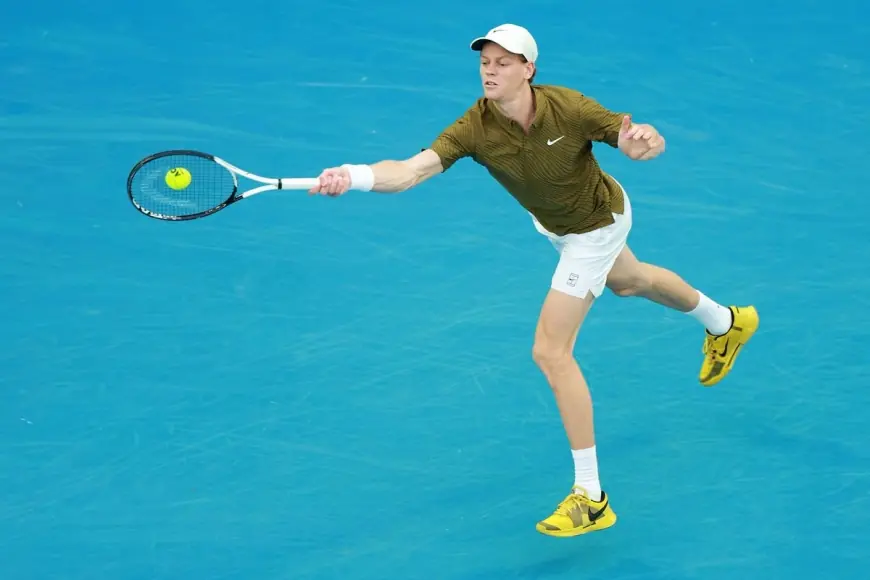
Jannik Sinner moved a step closer to a third straight title at Australian Open 2026, beating Ben Shelton in straight sets to book a blockbuster semifinal against Novak Djokovic. The win keeps Sinner tennis in the center of the tournament narrative, with the top end of the men’s draw tightening around a familiar group of contenders as the finish line nears.
Sinner vs Shelton ends in straight sets, and the Djokovic matchup is next
Sinner defeated Shelton 6-3, 6-4, 6-4 on Wednesday, Jan. 28, 2026 (ET), in a quarterfinal that rarely swung out of the Italian’s control. Shelton’s left-handed serve created flashes of danger, but Sinner’s return positioning and steady baseline patterns repeatedly forced the American into longer points and narrower margins.
The result also extends the one-sided nature of the Sinner Shelton rivalry. It was another straight-sets entry in a matchup that has increasingly looked like a difficult stylistic puzzle for Shelton: huge first-strike power, but not enough sustained pressure to pry open Sinner’s service games or prevent the top seed from resetting rallies on his terms.
Further specifics were not immediately available regarding any lingering physical issues Sinner dealt with earlier in the event, beyond his indication that he has been feeling better as the tournament has progressed.
Djokovic advances the hard way, and the health questions linger
Djokovic’s path into the same semifinal bracket has been unusual even by late-round Grand Slam standards. In his quarterfinal, Lorenzo Musetti retired with a leg injury after building a two-set lead, sending Djokovic through without needing to complete the match. The severity of Musetti’s injury has not been disclosed publicly, and no full public timeline has been released for his recovery outlook.
Djokovic, a 10-time Australian Open champion, now gets the matchup the tournament has been building toward: a meeting with the two-time defending champion on hard courts that have historically rewarded his precision and return quality. At this stage, the key tactical themes are easy to name even before the first ball: Djokovic’s ability to neutralize Sinner’s pace with early contact and direction changes, and Sinner’s ability to hit through patterns that once belonged almost exclusively to Djokovic in Melbourne.
Some specifics have not been publicly clarified about Djokovic’s condition following earlier issues during the tournament, including how any foot problem might affect his movement over a best-of-five match.
Where Casper Ruud fits in, and why Shelton’s run still mattered
Casper Ruud’s role in this story is as the stepping-stone that set up the Sinner rematch. Shelton reached the quarterfinals by coming back to beat Ruud in four sets, 3-6, 6-4, 6-3, 6-4, a result that reinforced Shelton’s growing confidence on big courts even as it ended Ruud’s tournament in the fourth round.
For Shelton, that win over Ruud was a reminder that his ceiling in Melbourne remains high: explosive serve, improving defense, and a willingness to play forward when the moment demands it. For Ruud, the early exit means another season of recalibration on faster hard courts, where margins can feel smaller against the tour’s biggest first-strike players.
How the Australian Open knockout format shapes these late rounds
The Australian Open is a single-elimination tournament, which means every round is a one-match test with no second chances. In the men’s draw, matches are best of five sets, so momentum can swing multiple times and endurance becomes a weapon. Quarterfinals reduce the field to eight, semifinals to four, and the final to two, with each step magnifying both the physical load and the tactical familiarity between top players.
Retirements and walkovers also count as advances, even when they leave questions about form unanswered. That reality is part of why late-round matchups can feel so volatile: a player may arrive fresher than expected, or arrive with fewer live reps than their opponent, and both scenarios can reshape what “in form” really means.
Who’s affected, and what the next milestone is on the calendar
Two groups feel the ripple effects immediately: ticket holders and in-stadium fans who drive the atmosphere in Melbourne, and viewers in North America who often have to plan around very early start times in Eastern Time. A Sinner vs Djokovic semifinal is also the kind of pairing that reshapes attention across the men’s field, impacting sponsors, broadcasters, and even other players whose matches may be scheduled around the headline slot.
For players, the stakes are obvious: a Grand Slam semifinal is not only a shot at the biggest title in tennis, but also a major boost in ranking points and season-long positioning. For the rest of the tour, it is another signal that the top of the men’s game is still defined by a small circle of names that can absorb pressure across five sets.
The next verifiable milestone is the men’s singles semifinals, scheduled for Friday, Jan. 30, 2026 (ET), with the winners advancing to the men’s final on Sunday, Feb. 1, 2026 (ET).