























National Trust Creates New Bird Island by Sinking Three Barges

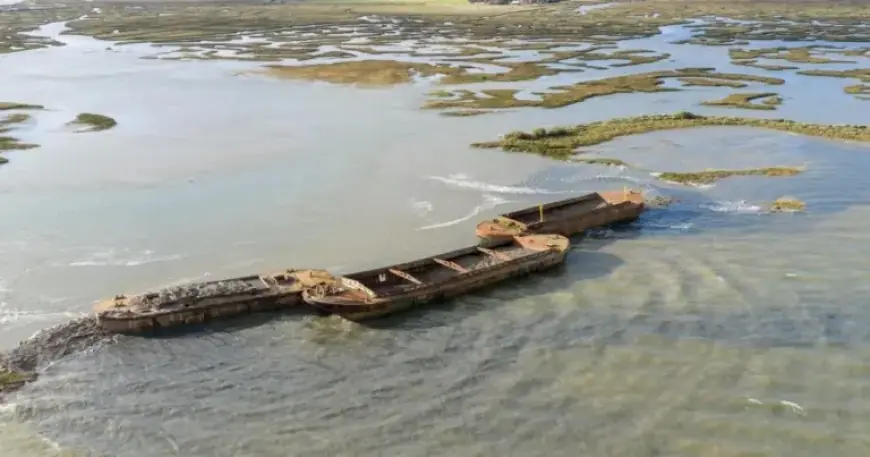
The National Trust has initiated an innovative environmental project by creating a new bird island in the Blackwater Estuary, Essex. This unique habitat is constructed using three decommissioned Thames lighters sunk and surrounded by sediment. This effort aims to enhance the local wildlife while recycling historical industrial vessels.
Project Details
The creation of the new bird island involves the use of approximately 8,000 cubic meters of sediment. This volume is comparable to three Olympic swimming pools. A specialized dredge barge will make about 170 trips from Maldon Harbour to transport the necessary mud for the project.
Construction of the Island
The three barges, measuring between 20 and 32 meters long, were originally used for transporting goods from the Port of London in the 1950s. Prior to sinking, holes were cut in their hulls to prepare them as stable structures. The barges were filled with sediment for stability and secured in place to form the new habitat.
Bird Habitat and Wildlife Impact
This innovative habitat aims to attract various bird species, including:
- Dunlin
- Curlew
- Lapwing
- Ringed plover
- Little terns
- Avocets
Katy Gilchrist, Coastal Project Manager for the National Trust, emphasized the project’s significance as “the ultimate act of marine recycling.” She noted that it transforms retired vessels into essential wildlife sanctuaries.
Environmental Benefits
Once completed, the island will provide an essential 0.55 hectares (1.4 acres) of new habitat, roughly the size of a football pitch. It will serve as a refuge for bird species, especially those in decline, offering safety above the highest tides and shielding them from disturbances common onshore.
Future Expectations
Matt Wilson, Countryside Manager for the National Trust, shared hopes of observing diverse bird species, including oystercatchers, Brent geese, and redshank. This new sanctuary will also help mitigate erosion of the existing saltmarsh at Northey Island. By protecting this vital habitat, the project aims to enhance the region’s biodiversity.
The establishment of the bird island not only supports the local wildlife but also aids in carbon storage within the marine ecosystem. As tidal forces continue to impact the saltmarsh, this initiative promises to safeguard both the environment and its delicate balance.