
























Australian Open 2026: Semifinal Lineups Set as Extreme Heat Shapes the Second Week in Melbourne

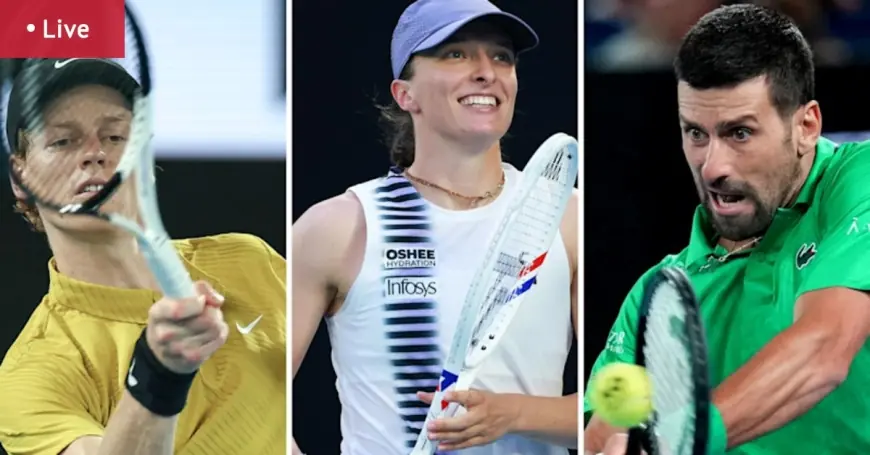
The Australian Open 2026 has reached the business end of the tournament, with the men’s and women’s semifinal fields now in place after a blistering stretch of heat and high-stakes quarterfinals at Melbourne Park. Several top seeds advanced with authority, while a handful of matches swung on momentum shifts, late-set nerve, and in one case, an injury retirement that reshaped the men’s bracket.
With finals weekend approaching, the tournament is balancing marquee matchups with conditions that have already forced significant on-court adjustments.
Men’s bracket: Alcaraz, Sinner, Zverev, and Djokovic make the last four
Carlos Alcaraz moved into the semifinals by turning back Australia’s Alex de Minaur 7-5, 6-2, 6-1, pulling away after a tight opening set to keep his title hopes alive. Alcaraz remains in position to chase a career milestone with two wins left in Melbourne, and his form has tightened as the draw narrows.
Alexander Zverev also punched his ticket, surviving a tense quarterfinal against 20-year-old Learner Tien 6-3, 6-7(5), 6-1, 7-6(3). Zverev leaned heavily on his serve to escape pressure in the biggest moments, closing out the match with a steady fourth-set tiebreak after Tien extended rallies and refused to fade.
On the other side, defending champion Jannik Sinner beat Ben Shelton 6-3, 6-4, 6-4, controlling the baseline and limiting Shelton’s opportunities to attack on return. Novak Djokovic advanced after Lorenzo Musetti retired injured despite leading by two sets, a sudden turn that sent Djokovic through and set up a semifinal collision with Sinner. Some specifics have not been publicly clarified about Musetti’s full recovery timeline beyond the immediate injury setback.
Women’s bracket: Sabalenka, Svitolina, Rybakina, and Pegula advance
Aryna Sabalenka continued a dominant run by defeating teenager Iva Jovic 6-3, 6-0 to reach the semifinals without dropping a set in the tournament so far. Sabalenka’s pace from the ground and ability to shorten points have played especially well in punishing daytime conditions, where long exchanges can become a physical tax.
Elina Svitolina booked her spot by upsetting Coco Gauff 6-1, 6-2, capitalizing on a shaky service day from Gauff and redirecting pace to keep rallies on her terms. The Sabalenka–Svitolina semifinal carries added emotional weight given the broader geopolitical tension surrounding Ukrainian players and opponents from Belarus and Russia, and their recent meetings have not followed the usual post-match handshake tradition. The reason for any additional protocols or matchday arrangements has not been stated publicly.
In the other semifinal, Elena Rybakina reached the last four by beating Iga Swiatek 7-5, 6-1, using her serve and first-strike patterns to deny Swiatek time to construct points. Jessica Pegula joined her after a breakthrough win over Amanda Anisimova 6-2, 7-6(1), overcoming a second-set push to earn her first Australian Open semifinal appearance.
How the extreme-heat system works and why it matters this year
Heat has been more than a talking point at Australian Open 2026; it has shaped scheduling, crowd flow, and match rhythm. The tournament uses a heat-stress scale that weighs multiple environmental factors rather than relying on air temperature alone, and organizers can pause play on outdoor courts when conditions reach the highest danger level. On the main show courts, play can continue with the roofs closed and climate control engaged, which changes everything from ball speed to player recovery.
That mechanism matters because it does not just protect players from heat illness; it also influences competitive fairness. A match halted on an outside court can reset momentum, while a roof-closure can shift the feel of the court and the bounce of the ball. A full public timeline has not been released for how often the most severe threshold might be triggered through the remainder of the tournament.
What this means for fans, players, and the road to the finals
Players are managing more than tactics right now: hydration, recovery windows, and the mental strain of stop-start play are becoming part of match preparation. Fans are also feeling the effect. Extreme temperatures can thin daytime attendance, push spectators into shaded areas and indoor spaces, and reduce the usual festival-like atmosphere across the grounds. Event staff and ball kids face elevated safety demands as well, with heat rotations and medical vigilance becoming a bigger operational piece of each session.
Looking ahead, the next on-court milestones are the women’s singles semifinals, followed by the men’s singles semifinals, with the tournament scheduled to conclude with championship matches over finals weekend, ending Sunday, Feb. 1, 2026, in Eastern Time.