

























Arijit Singh steps away from new playback singing assignments, signals shift toward classical roots and independent music

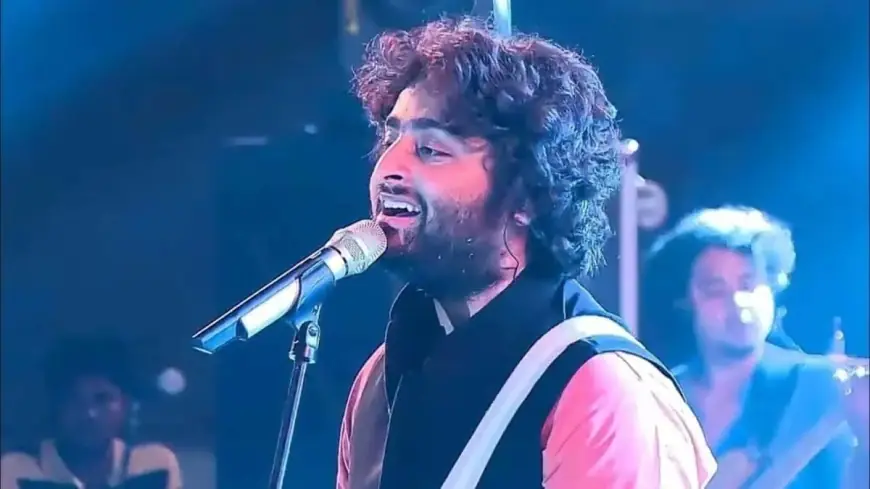
Arijit Singh has announced he will stop taking any new playback singing assignments, a major change for a voice that has shaped film music across India for more than a decade. The message, shared Tuesday, January 27, 2026, ET, sparked an immediate wave of reaction from listeners and the film industry, not because he is leaving music altogether, but because he is stepping back from the movie-by-movie pipeline that has defined his public output.
He has indicated he intends to keep making music and continue evolving as an artist, including a renewed focus on Indian classical training and creating work outside the traditional playback system. The reason for the change has not been stated publicly beyond his desire to reset creatively and return to fundamentals.
A career move that changes the sound of film music overnight
In the modern Hindi film ecosystem, playback singers become shorthand for emotion: romance, heartbreak, longing, celebration. Singh’s vocal style has been central to that language, and his catalog is intertwined with an era of film music that leaned heavily on intimate, melody-first storytelling.
That is why this announcement lands as more than a personal career update. When a singer of Singh’s scale stops accepting new film assignments, it affects the creative planning of upcoming soundtracks, the casting of voices for lead actors, and even the marketing of films that rely on signature songs to build anticipation.
Key terms have not been disclosed publicly, including whether he will consider one-off collaborations in films under special circumstances, or whether the decision is meant to be absolute for the foreseeable future.
How playback singing works, and what it means to “call it off”
Playback singing is a specialized process built around coordination. Music directors compose and arrange a track, lyricists shape the narrative, and singers record vocals in a studio while producers manage schedules, budgets, and approvals. The recorded voice is then synchronized with the on-screen performance, and the finished song becomes part of the film’s storytelling and promotion.
For a top-tier playback singer, this often means working on multiple films at once, sometimes recording several versions of the same song, and revisiting tracks late in production as edits change. Stepping away from new assignments doesn’t erase work already completed, but it does close the door on future bookings that are typically planned months in advance.
A full public timeline has not been released detailing which unreleased recordings are already completed, which are in progress, and what may still be pending in studio sessions.
Why the shift points to classical music and an independent lane
Singh has framed the change as a return to learning and a desire to start again creatively. For many professional singers, classical training is not just a foundation but a lifelong practice: voice culture, breath control, raga understanding, and the discipline of daily riyaaz. Re-centering that work can be an artistic reset, especially for someone whose schedule has been dominated by commercial deadlines.
The other part of the pivot is independence. Moving away from film assignments creates space to release music on his own terms, choose collaborators differently, and explore styles that don’t have to match a script or a star’s screen persona. It also changes the pace: independent releases can be more deliberate, with fewer external constraints, but they also demand a different kind of planning around production, promotion, and live performance strategy.
Some specifics have not been publicly clarified about how frequently he plans to release new independent work, or whether he will adopt a project-based approach rather than a steady stream of singles.
Who is affected next: fans, filmmakers, and working musicians
The most immediate impact is on fans who associate his voice with key moments in their own lives and with the emotional peaks of major films. For listeners, the shift can feel like losing a familiar throughline in mainstream soundtracks, even if he continues making music elsewhere.
Film producers and music directors are also directly affected. Casting a playback voice is not a last-minute decision at the top end of the industry; it can shape composition choices, vocal ranges, orchestration, and even which lyrics “sit” naturally inside a melody. Replacing that voice at scale will require recalibration, and it may open doors for other male vocalists to take on roles that were once viewed as tailor-made for Singh’s tone.
Working musicians, arrangers, and studio teams may feel the shift in a different way. A star playback workflow can generate substantial studio activity across multiple projects. If Singh’s film work slows down, that volume may redistribute across other singers and productions rather than disappear, but the short-term reshuffling could be significant.
What comes next and the next concrete milestone
Singh’s statement leaves the key question of timing: not whether he will keep making music, but when audiences will hear the first clear output of this new phase. The next verifiable milestone is the release schedule of upcoming films already in production that may still feature vocals recorded earlier, alongside any formal announcement of an independent project such as an album, EP, or dedicated classical performance series.