























Alex Pretti shooting in Minneapolis triggers protests, evidence-preservation court fight, and renewed scrutiny of federal enforcement

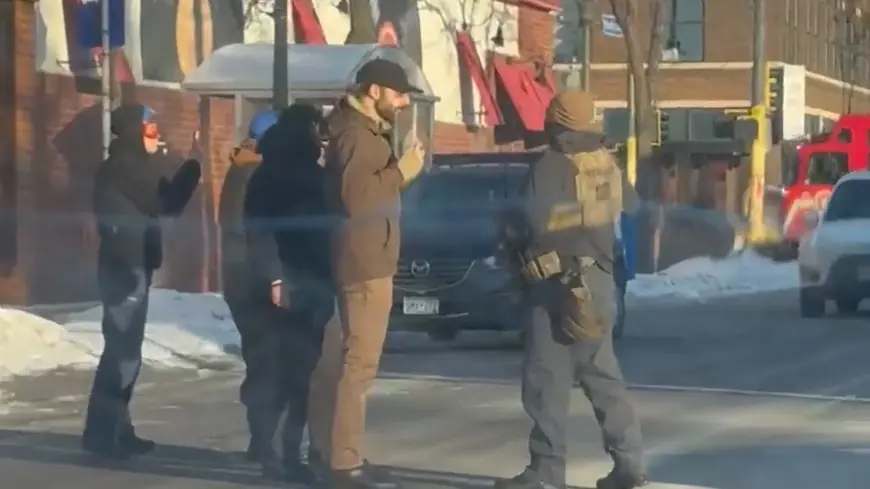
The Alex Pretti shooting has become the defining public-safety and civil-rights flashpoint in Minneapolis this week, colliding with an expanded federal immigration enforcement presence and a fast-moving push for transparency. Alex Jeffrey Pretti, identified by family members and public statements as a 37-year-old ICU nurse, died after being shot during a confrontation involving federal officers in south Minneapolis on Saturday, January 24, 2026, in an incident that has since fueled protests, political fallout, and a legal battle over evidence control.
Officials have confirmed the shooting occurred near the intersection of 26th Street and Nicollet Avenue, an area that has seen repeated demonstrations since the weekend. Further specifics were not immediately available about the complete sequence of commands and actions in the seconds immediately before gunfire.
What’s confirmed so far about the confrontation near 26th and Nicollet
Authorities and city leaders have said Pretti was shot during an encounter involving federal officers connected to immigration enforcement operations. Video clips from bystanders have circulated widely online, and the footage shows a tense street-level interaction with people recording on phones, a chaotic scuffle, and then rapid gunfire. Those videos have intensified demands for a unified, time-stamped public timeline that explains when force was used, what precipitated it, and whether de-escalation options were attempted.
Federal officials have stated Pretti was armed. The fact that he was carrying a firearm has become central to the dispute over what officers perceived and what level of threat, if any, existed at the moment shots were fired. Family statements and public advocates have pushed back strongly on implications that carrying a gun alone justified lethal force, arguing that legality and threat are not the same question.
Some specifics have not been publicly clarified, including whether Pretti fired his weapon, whether his firearm was drawn or reached for, and the exact number of shots fired during the encounter.
The evidence fight moves to court as state officials seek control and access
Within days, the case expanded from a local tragedy into a legal clash over who holds the most important material in a federal-involved shooting. State and county officials pursued court action to preserve evidence and prevent any loss or alteration of materials tied to the incident. The practical stakes are straightforward: in high-conflict, high-visibility incidents, delays in securing body-worn camera footage, radio traffic, weapons, and phones can undermine public trust and complicate criminal review.
This is where process matters as much as politics. In a typical officer-involved shooting investigation, investigators aim to lock down the scene, photograph and map evidence, recover shell casings and firearms, secure medical and autopsy records, and collect all available video sources including body cameras, nearby cameras, and bystander recordings. When more than one agency is involved, chain-of-custody procedures become the backbone of credibility: who collected what, when they collected it, where it was stored, and how access was documented.
Key terms have not been disclosed publicly about exactly which devices and recordings were secured first, how quickly all relevant body-camera footage will be shared with state investigators, and whether any recordings were captured on Pretti’s phone.
Second Amendment rhetoric collides with immigration enforcement and use-of-force standards
The shooting has also become an unusual Second Amendment battleground. National political voices and gun-rights advocates have argued over whether Pretti’s lawful carry status should matter, and if so, how. The core legal and investigative question, however, tends to be narrower than the rhetoric: what did officers reasonably perceive in the moment, what threat was present, and whether the response was proportional and consistent with policy and law.
That debate is unfolding against a broader backdrop of anger about federal immigration operations in Minneapolis. Protesters have demanded that federal agencies explain why officers were operating in the neighborhood, what authority was being exercised, and how crowd interactions were handled when people began filming. City leaders have also raised concerns about strain on local resources and the ripple effects of unrest, including disruptions to nearby residents and businesses.
Who is affected and what residents are experiencing on the ground
The stakeholder impact is immediate for multiple groups. Residents and small businesses near the Eat Street corridor are dealing with protest-driven traffic changes, safety perimeters, and uncertainty about how long disruptions will last. Immigrant families and advocacy groups say the federal presence has heightened fear and confusion around day-to-day activities, even for those not directly involved in enforcement actions. Health care colleagues and patients are also impacted in a different way, as the death of an ICU nurse resonates through workplaces where staffing and experience are already under pressure.
Online fundraising pages have circulated for Pretti’s family, but donation claims and descriptions vary, and not every detail circulating on social media is verifiable.
What comes next: the next concrete milestones in the investigation
In the days ahead, the most consequential developments are likely to be procedural rather than rhetorical. The next verifiable milestone is a court hearing tied to the evidence-preservation action and related filings, which should clarify what materials must be preserved, how quickly they must be produced to state authorities, and what limits exist on access and release. Another key milestone will be medical examiner findings that can establish injury details and help investigators align forensics with video and witness accounts.
Until those steps are completed, the public picture will remain contested—shaped by partial footage, competing interpretations, and unanswered questions about how a confrontation in Minneapolis escalated into a fatal shooting.