

























Darren Cahill coach stays in focus as Sinner’s Australian Open run heats up

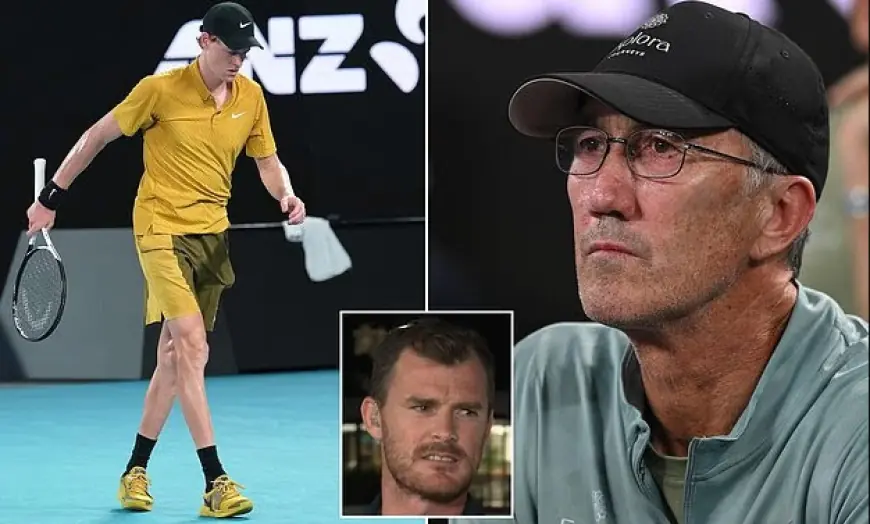
The Darren Cahill coach storyline has taken on fresh urgency at the Australian Open, where Cahill remains in Jannik Sinner’s corner during a tournament shaped by punishing conditions and tight scheduling. By Wednesday, January 28, 2026 ET, Sinner had powered into the semi-finals, and the discussion around his team has shifted from long-term plans to immediate decisions that can swing matches.
Cahill’s presence this fortnight also stands out because, a year ago, Sinner publicly indicated the partnership was expected to end after the 2025 season. The exact terms of Cahill’s current commitment, including how much of the 2026 calendar he intends to travel, have not been disclosed publicly.
A retirement plan that turned into a 2026 extension
Cahill has been one of the most recognizable coaching figures in modern tennis, with a reputation built on calm problem-solving and long-haul player development. When Sinner previously described 2025 as the expected final chapter, it fit a broader theme: veteran coaches often scale back after years of constant travel.
Instead, Cahill is still part of Sinner’s coaching setup at the 2026 Australian Open, working alongside Simone Vagnozzi. In the weeks leading into Melbourne, the team framed Cahill’s continued role as a deliberate choice tied to Sinner’s ongoing evolution, not just a victory lap after past milestones. Some specifics around how responsibilities are divided day to day between coaches have not been publicly clarified.
The heat-policy moment that pulled coaching into the spotlight
Sinner’s tournament has already featured a reminder of how quickly a match can turn in extreme conditions. During his third-round contest, he battled cramps in oppressive heat, and play was paused under the event’s extreme heat policy as the stadium environment shifted.
This is where the coach’s job becomes less about tactics and more about triage. In tennis, coaches cannot speak to players during play at every moment, but the points where they do interact can be decisive: changeovers, set breaks, and the short windows when a player is physically struggling and needs a simple plan. The process is practical: stabilize breathing, shorten decision-making, pick safer patterns, and manage energy so the player can get to the next reset point without panicking or over-hitting.
In Sinner’s case, the mid-match pause created a rare recovery window. Cahill later described the team’s mindset as focusing on survival and self-management until conditions allowed Sinner to reset physically and mentally.
Scheduling debate adds pressure beyond the baseline
The days after that heat-affected match brought a separate controversy: whether Sinner’s team sought a later start time for his next round to maximize recovery. Cahill said the team did not request a night session and emphasized that, even when an opening for a later slot existed, they were comfortable sticking with the schedule.
Jamie Murray, a multiple-time major doubles champion, publicly questioned that account and said he found it difficult to believe a team would not at least explore every scheduling option after such a draining effort. Tournament organizers have not released a public timeline that confirms what requests, if any, were formally made or logged.
The larger point is less about one match slot and more about what modern elite teams prioritize. Recovery is now treated as part of performance, not an afterthought, and start times can affect everything from hydration strategy to warmup timing to sleep cycles.
Who feels the ripple effects, and what comes next
Two groups feel the impact immediately: players and their teams, who must manage health and performance under strict match timelines, and fans, whose tickets and viewing windows hinge on scheduling decisions that can change late. Tournament staff and broadcasters are also pulled into the equation, balancing player welfare, stadium logistics, and the need to stage marquee matches at set times.
Cahill’s ongoing role matters because Sinner’s season is not just about defending titles; it is about staying durable through heat, pressure, and the constant tactical adjustments rivals force at the top level. The next concrete milestone is Sinner’s Australian Open semi-final against Novak Djokovic, where Cahill’s steadying influence and the team’s recovery approach will be tested again on the sport’s biggest stage.