On June 15 the U.S. Embassy in Nassau issued a security alert advising Americans to avoid renting jet skis in the Bahamas, warning that safety rules are not being enforced and that operators have solicited tourists in ways that put them at risk.
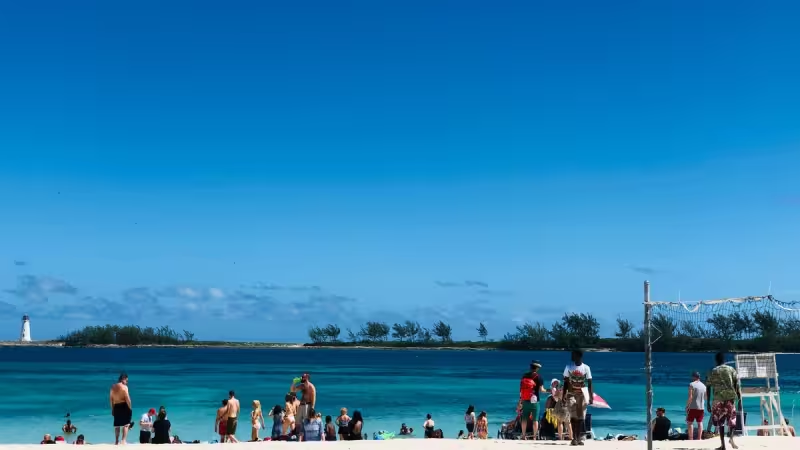
The alert named specific hotspots — the Cruise Port, Junkanoo Beach, Arawak Cay and the small islands east of Paradise Island — and said some visitors reported being solicited for rides from downtown Nassau and Paradise Island beaches before being taken to isolated islands where assaults and other incidents occurred.

The notice tied the warnings to a string of incidents: since August 2024, six Americans have been hospitalized in jet ski accidents, three of them evacuated to the United States for emergency care, and there have been multiple reports of sexual assault involving Nassau-based jet ski operators. Three American women reported sexual assaults in 2024 and two more reported assaults in 2025.
A local newspaper reported in April 2025 that two U.S. women said they were taken to isolated islands and raped after accepting jet ski rides; one of the alleged victims was a 23-year-old cruise passenger. The man accused in that case has since been charged. The embassy also noted a death in August 2025 when an unlicensed operator in an unregistered boat struck an American riding a jet ski in waters near Paradise Island.
The alert explicitly flagged the practical danger: it warned travelers about the risks of operating or accepting rides from operators of jet skis because safety regulations are not being reliably enforced. It urged Americans to avoid renting jet skis and to be wary of solicitations from operators near busy tourist landing points.
Those numbers give the notice its immediate weight. Six hospitalizations, multiple sexual-assault reports spanning two years, one fatal collision and a high-profile April 2025 allegation that led to a criminal charge make this more than an abstract advisory—the embassy tied the guidance to concrete incidents and specific locations where tourists congregate.
Context matters: the Bahamas remains a heavily trafficked cruise and vacation destination for American travelers, and the State Department had already placed the country under a Level 2 travel advisory as of June 15, urging visitors to "exercise increased caution" because of violent crime, including armed robberies and sexual assaults. The embassy’s warning focuses narrower still on jet ski operators and the marine activities around Nassau.
The friction is obvious. Vacationers come expecting water sports and short excursions; some local operators offer quick, lucrative rides. But the pattern of reported assaults and safety failures tied to jet skis presents a clear clash between tourism demand and local enforcement capacity. The embassy’s guidance implicitly acknowledges that a tourist’s decision to accept a ride can lead to situations outside the view and reach of law enforcement.
There is one regulatory change already in place that addresses part of the problem: a law that took effect in March 2026 prohibits jet ski operators from riding with guests, a move presented as intended to reduce opportunities for unwanted sexual misconduct. Whether that legal change will translate into better safety on the water depends on enforcement and on how quickly operators and rental sites adjust practices.
The embassy alert will change behavior immediately for some visitors; it may also draw attention from cruise lines, tour operators and local authorities. But enforcement remains the open question: will shore-side policing, port controls and beach monitoring rise to meet the warning, or will tourists simply be asked to take the risk-reducing steps themselves? The single consequential unanswered question is whether the March 2026 ban on duplicate rides — combined with the embassy’s June 15 warning — will materially reduce the assaults, injuries and deaths that prompted the notice.